



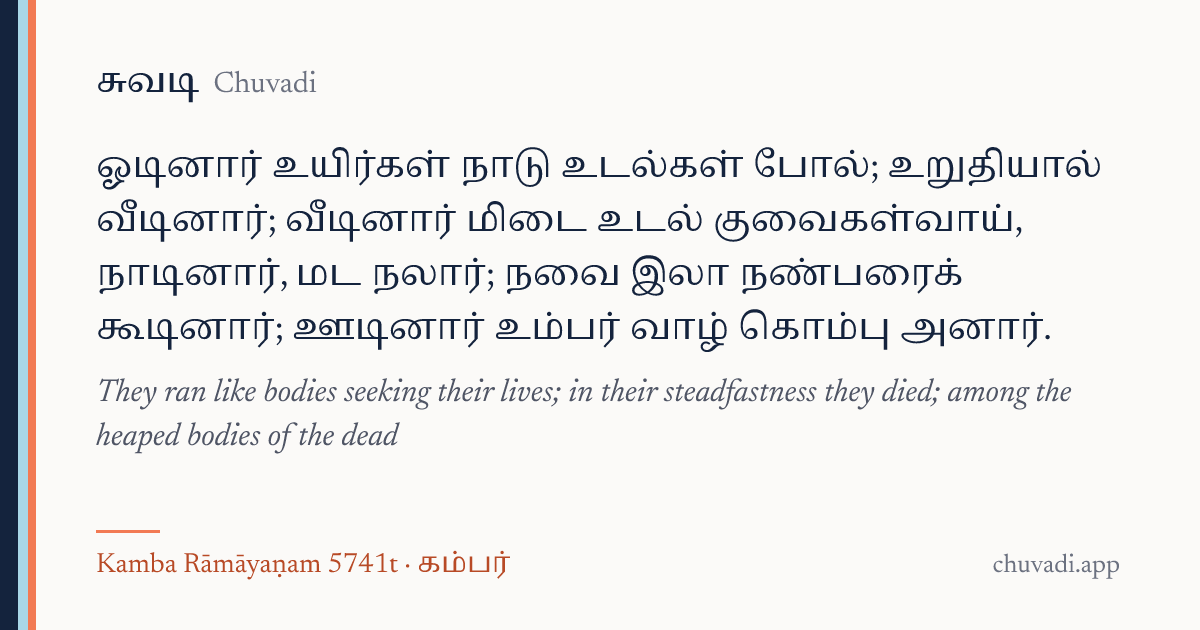
கம்பராமாயணம் 5741t · சுந்தர 11.45
பாடல் · The poem
Tap a word to see its gloss in the commentary and where else it occurs.
பொருள் · Meaning in Tamil
மட நலார் - பேதைமைத்தன்மை உடைய அரக்கமகளிர்; உயிர்கள் நாடு உடல்கள் போல ஓடினார் - தமது உயிர்களைத் தேடிச் செல்லும் உடல்கள் போல (தமது கணவரைத் தேடிக்கொண்டு) ஓடினார்கள்; உறுதியால் வீடினார் - அவ்வாறு ஓடியவர்கள் தம் கற்பின் திண்மையால் உயிரை விட்டு மாண்டனர்; வீடினார் மிடை உடல் குவைகள் வாய் - இறந்து கிடந்த அரக்க வீரரின் பிணக் குவியல்களிடையே; நாடினார் - தம் கணவன்மார் உடலைத் தேடினர்; நவை இலா நண்பரைக் கூடினார் - குற்றம் அற்ற தம் கணவன்மாரைச் சேரப் பெற்றார்கள்; உம்பர் வாழ் கொம்பு அனார் ஊடினார் - (வீர சுவர்க்கம் சேர்ந்த அக்கணவன்மார்களைத் தழுவிய) தேவலோகத்து வாழ்கின்ற பூங்கொடி போன்ற அமர மகளிர் பிணங்கினார்கள்.
நண்பர் என்ற சொல் இங்கே கணவரைக் குறித்தது. மடந்தையோடு எம்மிடை நட்பு என்ற குறளை நினைக. 'தரைமகள்தன் கொழுநன்தன் உடலந் தன்னைத் தாங்காமல் தன்னுடலால் தாங்கி விண்ணாட்டு அரமகளிர் அவ்வுயிரைப் புணரா முன்னம் ஆவி ஒக்கவிடுவாளைக் காண்மின் காண்மின் (கலி - பரணி - 483) என்ற பாடல் ஒப்பிட்டுச் சிந்திக்கத்தக்கது.
ஆங்கிலம் · English translationAI
Translation
- They ran like bodies seeking their lives; in their steadfastness
- they died; among the heaped bodies of the dead
- the tender women searched; they joined their faultless loved ones;
- and the creeper-like women who live in heaven sulked.
What the poem says
The widows run about like bodies searching for their own souls, looking for their husbands among the piles of corpses, and in their constancy they die and are reunited with them.
Warriors who die in battle were believed to go to heaven and be welcomed by celestial nymphs; here the nymphs sulk because the faithful wives have arrived to claim their husbands first. The commentary compares a verse from the Kaliṅkattupparaṇi with the same idea.