



கம்பராமாயணம் 5741u · சுந்தர 11.46
பாடல் · The poem
Tap a word to see its gloss in the commentary and where else it occurs.
பொருள் · Meaning in Tamil
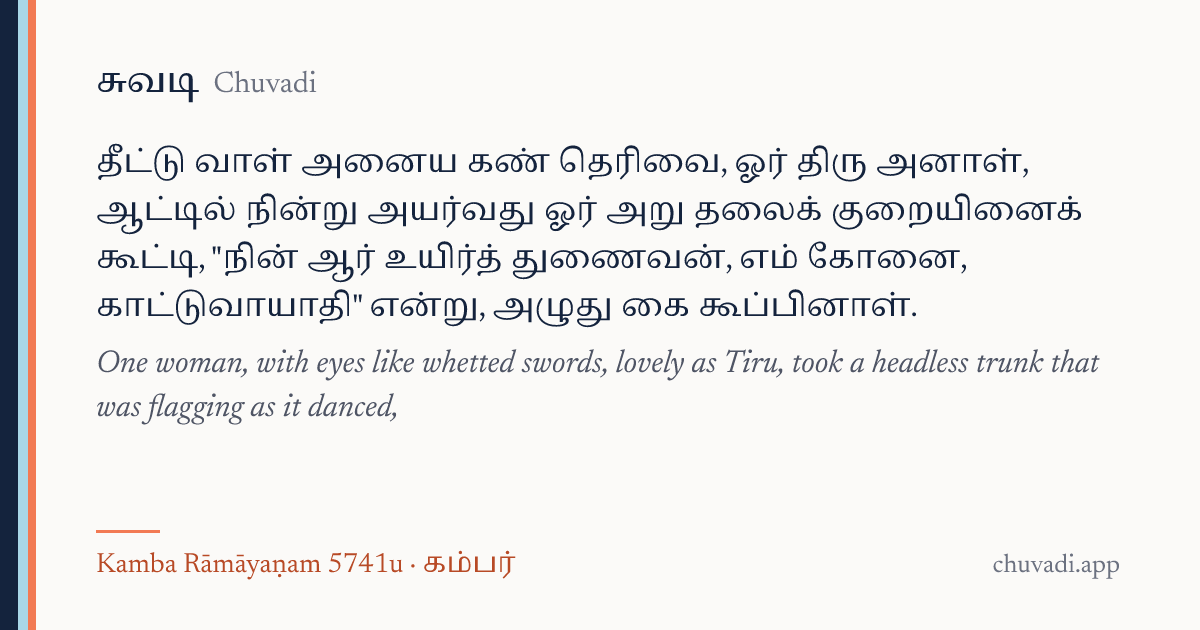
தீட்டுவாள் அனையகண் - தீட்டப் பெற்ற வாள் போன்ற கண்களை உடைய, திரு அனாள் ஓர் தெரிவை - இலக்குமி போன்ற ஒரு அரக்கி; ஆட்டில் நின்று அயர்வது ஓர் அறு தலைக் குறையினைக் கூட்டி - கூத்தாடும் தொழிலில் இருந்து சோர்வதான தலையற்றதோர் உடலை (கவந்தத்தை) தலையோடு சேர்த்து; (அதனை நோக்கி) “நின் ஆர் உயிர்த் துணைவன் - 'உனது ஒப்பற்ற உயிர்த் துணைவனாகிய, எம் கோவினை - எமது தலைவனை; நீ காட்டுவாய் ஆதி” என்று - நீ எனக்குக் காட்டுவாயாக ' என்று சொல்லி; அழுது கை கூப்பினாள் - அழுதவளாய்த் தனது கைகளைக் குவித்து வணங்கினாள்.
வீரம் மிடைந்த அவல ஓவியமாகக் கணவனைத் தேடும் அரக்கி சித்தரிக்கப்பட்டுள்ளது அருமை.
ஆங்கிலம் · English translationAI
Translation
- One woman, with eyes like whetted swords, lovely as Tiru,
- took a headless trunk that was flagging as it danced,
- joined the head to it, and said, 'Show me your dear life's companion, my lord,'
- and wept, and folded her hands in prayer.
What the poem says
A headless body, still moving in the death-dance that headless warriors were said to perform on the battlefield, is beginning to slow down. A beautiful demon woman sets a head on it and, weeping with joined hands, begs it to show her its dear companion, her husband.
The commentary admires this picture of grief mingled with heroism.