



கம்பராமாயணம் 5741v · சுந்தர 11.47
பாடல் · The poem
Tap a word to see its gloss in the commentary and where else it occurs.
பொருள் · Meaning in Tamil
ஓர் எழுத அரும்கொம்பு அனாள் - சித்திரத்தில் எழுதமுடியாத மிக்க அழகுள்ள பூங்கொம்பு போன்ற ஒரு அரக்கர்மகள்; தலையை ஏந்தினாள் - (இறந்த கணவனது) தலையைக் கையில் ஏந்திக் கொண்டு; நின்று ஆடுவான் காந்தன் உயர் கவந்தத்தினை - நின்று கூத்தாடுகின்ற தன் கணவனது உயர்ந்த உடல் குறையினைப் பார்த்து; ' வேந்த ! நீ அலசினாய் - கணவனே ! நீ வெகு நேரம் ஆடியதால் இளைத்து விட்டாய்; நடம் விடுதியால் - கூத்தாடுதலை விடுவாய்; எனா - என்று சொல்லி; பூந்தளிர் கைகளால் - மலரையும் தளிரையும் போன்ற தனது கைகளால்; மெய் உறப் புல்லினாள் - (அரக்கனுடைய) உடலை இறுகத் தழுவிக் கொண்டாள்.
முன் செய்யுளின் கற்பனை மேலும் விரிந்து பேரவல வீரத்தைப் புலப்படுத்திற்று.
ஆங்கிலம் · English translationAI
Translation
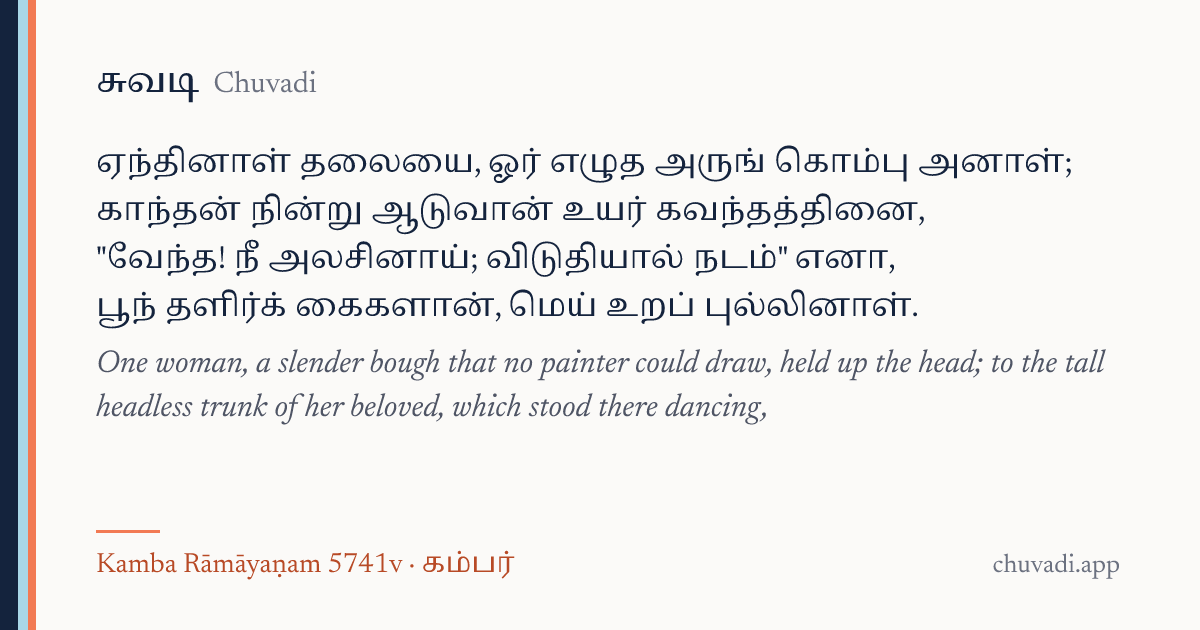
- One woman, a slender bough that no painter could draw, held up the head;
- to the tall headless trunk of her beloved, which stood there dancing,
- she said, 'My king, you are worn out; stop your dancing,'
- and with her hands like tender flowering shoots she clasped his body close.
What the poem says
Another woman, too lovely to be painted, holds her husband's severed head while his headless body goes on dancing. She tells him he is tired and should stop, and hugs his body tightly with her soft hands. The scene extends the pathos and heroism of the previous verse.