



கம்பராமாயணம் 5746 · சுந்தர 12.5
பாடல் · The poem
Tap a word to see its gloss in the commentary and where else it occurs.
பாட வேறுபாடு · Project Madurai reads
பொருள் · Meaning in Tamil
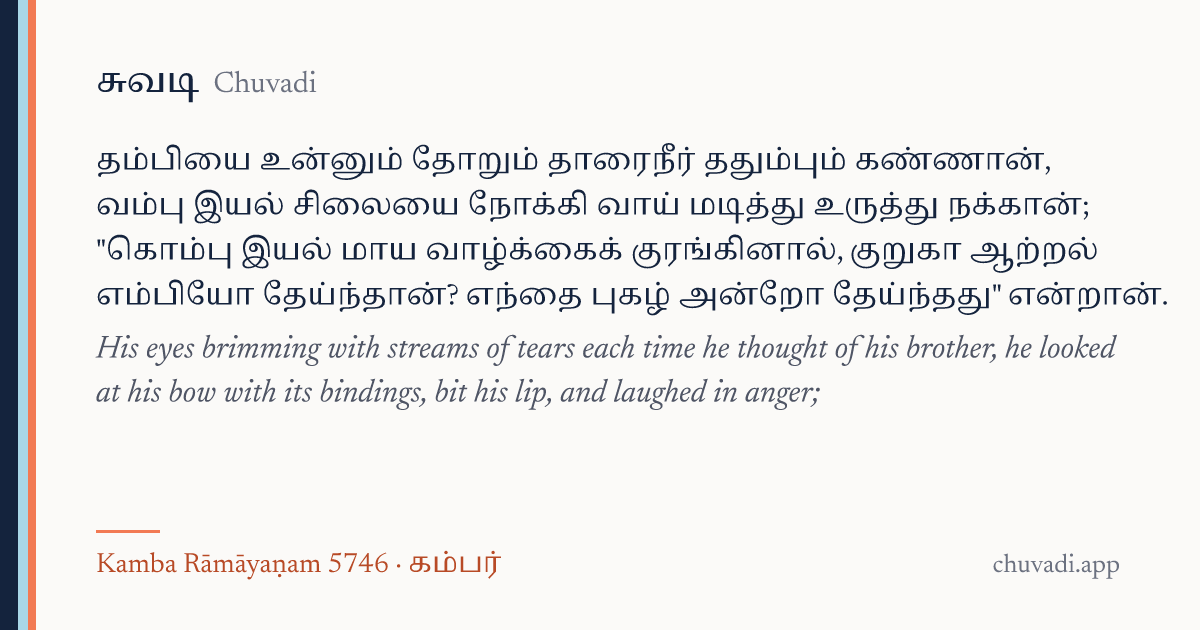
தம்பியை உன்னும்தோறும் தாரை நீர் ததும்பும் கண்ணான் - தனது தம்பி அக்கன் இறந்ததை நினைக்கும் பொழுதெல்லாம், தாரையாக நீர் ஒழுகும் கண்களை உடைய மேகநாதன்; வம்பு இயல் சிலையை நோக்கி - கட்டமைந்த தனது வில்லைப் பார்த்து; வாய் மடித்து உருத்து நக்கான் - தன் வாயிதழை மடித்துக் கொண்டு, கோபத்துடன் சிரித்தான்; கொம்பு இயல் மாய வாழ்க்கைக் குரங்கினால் - மரக் கொம்புகளிலே உலாவுகின்ற நிலையில்லாத வாழ்வை உடைய இந்த ஒரு குரங்கினால், குரங்கா ஆற்றல் எம்பியோ தேய்ந்தான் - வளையாத வலிமை வாய்ந்த எனது தம்பியோ அழிந்தான் (இல்லை); எந்தை புகழ் அன்றோ தேய்ந்தது - எனது தந்தையாகிய இராவணனுடைய புகழ் அல்லவா மெலிவுற்று அழிந்தது என்று கூறி வருந்தினான்.
போருக்குச் செல்லும் மேகநாதனின் எண்ணத்தைப் புலப்படுத்தியது. குரங்கா - வளையாது.
ஆங்கிலம் · English translationAI
Translation
- His eyes brimming with streams of tears each time he thought of his brother,
- he looked at his bow with its bindings, bit his lip, and laughed in anger;
- 'Is it my brother of unyielding strength who has been worn away by a monkey that lives its fleeting life on branches?
- Is it not my father's fame that has been worn away?' he said.
What the poem says
Weeping whenever he thinks of Akkaṉ, Intiracittu glances at his bow, bites his lip and gives a bitter laugh. It is not really his brother who has been destroyed by a mere monkey that swings in the trees, he says, but their father's glory.