



கம்பராமாயணம் 5755 · சுந்தர 12.14
பாடல் · The poem
Tap a word to see its gloss in the commentary and where else it occurs.
பாட வேறுபாடு · Project Madurai reads
பொருள் · Meaning in Tamil
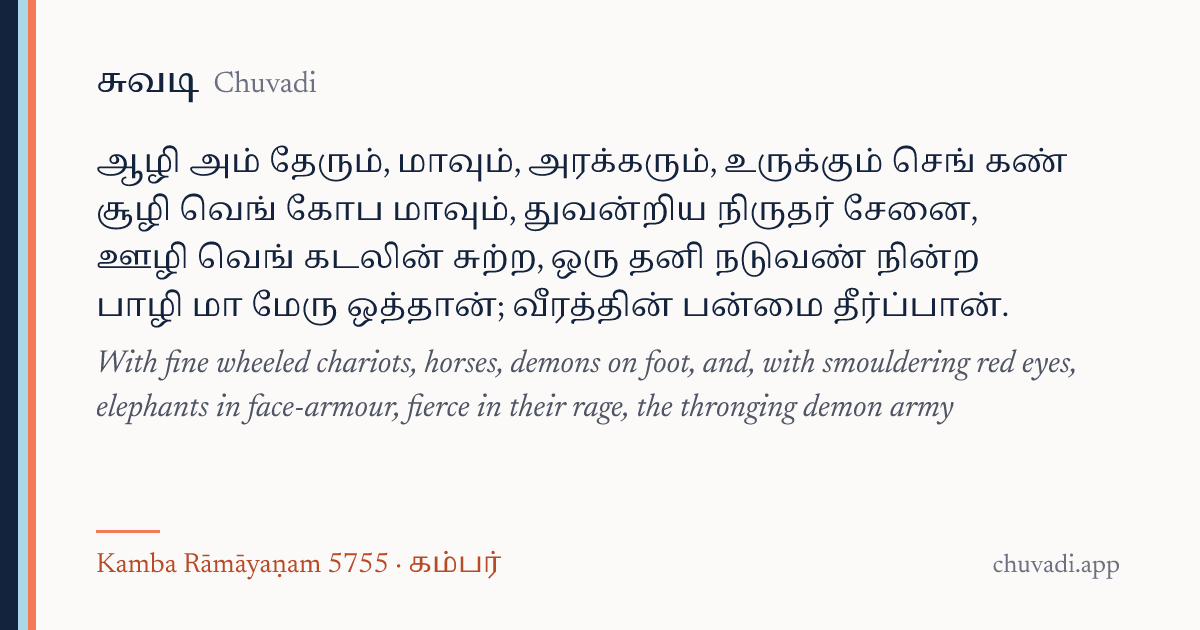
ஆழி அம் தேரும் - சக்கரங்களோடு கூடிய அழகிய தேரும்; மாவும், அரக்கரும் - குதிரைகளும், காலாட்படையினராகிய அரக்கர்களும்; உருக்கும் செங்கண் - கோபித்து நோக்குகின்ற; சூழி வெங்கோபமாவும் - சிவந்த கண்களை உடையனவும் முகபடாத்தை அணிந்தனவும் கொடிய சினத்தை உடையனவுமான யானைகளும்; துவன்றிய நிருதர் சேனை - கூடி நிறைந்த அரக்கர் படை; ஊழிவெங்கடலின் சுற்ற - யுகமுடிவின் காலத்தில் பொங்கி எழும் கடலைப் போன்று தன்னைச் சூழ்ந்து வர; வீரத்தின் பன்மை தீர்ப்பான் - வீரத்தின் சிறப்பு பலரால் பங்கிட்டுக் கொள்ளப் பெறாது, தன் ஒருவனுக்கே உரிமையாகப் பெற்ற மேகநாதன்; தனி நடுவண் நின்ற - ஒன்றேயாகத் தனித்து அவ் வெள்ளத்தின் இடையே விளங்கி நின்ற; ஒரு பாழிமா மேரு - ஒப்பற்ற பருத்த மகா மேரு என்னும் மலையை; ஒத்தான் - ஒத்து விளங்கினான்.
அரக்கர் நால்வகைப் படையும் கடலாகவும், கடல் நடுவே நின்ற மேருமலை இந்திரசித்தாகவும் கூறப்பட்டது. வீரத்தின் பன்மை தீர்ப்பான் என்பது பிறரது வீரத்தை வென்றொழிப்பவன் என்று பொருள்படும்.
ஆங்கிலம் · English translationAI
Translation
- With fine wheeled chariots, horses, demons on foot, and, with smouldering red eyes,
- elephants in face-armour, fierce in their rage, the thronging demon army
- ringed him like the cruel sea at the end of an age; standing alone in its midst
- he was like massive, peerless Mēru, he who lets no one else share in valour.
What the poem says
Intiracittu, also called Mēkanātaṉ, stands at the centre of his fourfold army: chariots, horses, foot soldiers and armoured elephants. The host around him is like the ocean that floods the world at the end of an age, and he rises from its midst like Mount Mēru, the great mountain at the centre of the world.
He is called the one who "ends the plurality of valour": he defeats every other hero, so that valour belongs to him alone.