



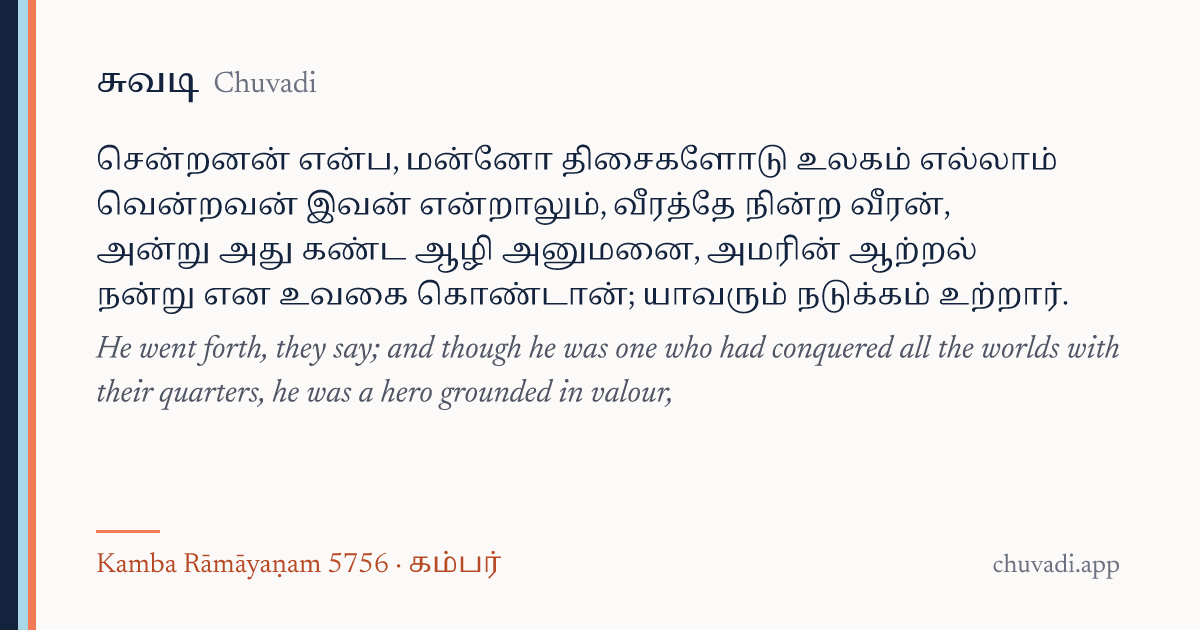
கம்பராமாயணம் 5756 · சுந்தர 12.15
பாடல் · The poem
Tap a word to see its gloss in the commentary and where else it occurs.
பாட வேறுபாடு · Project Madurai reads
பொருள் · Meaning in Tamil
சென்றனன் இவன் - இவ்வாறாகப் போருக்குச் சென்ற இந்த மேகநாதன்; திசைகளோடு உலகம் எல்லாம் வென்றவன் என்றாலும் - எட்டுத் திக்குகளோடு மூவுலகங்களையும் வென்று புகழ் பெற்றவனாயினும்; வீரத்தே நின்ற வீரன் - வீரத் தன்மையிலே நிலை பெற்ற மகாவீரன் (ஆதலால்); அன்று அது கண்ட - அந்நாளில் போர்க்களச் சிதைவாகிய வீரச் செயலைப் புரிந்த; ஆழி அனுமனை - கடல் போன்ற காம்பீரியத் தோற்றத்து அனுமனைக் குறித்து; அமரின் ஆற்றல் - (இவனது) போர் வல்லமை; நன்று என - நன்றாயுள்ளது என்று பாராட்டி; உவகை கொண்டான் - மகிழ்ச்சி கொண்டான்; யாவரும் நடுக்கம் உற்றார் - அது கண்டோர் அனைவரும் (என்ன விளையுமோ) என்று அச்சம் அடைந்தார்கள்.
வீரச் செயலின் அருமை பெருமைகளை அறிந்து பாராட்டுவது உயர்ந்த வீரர்க்கு இயல்பு. மேகநாதன் வீரத்தே நின்ற வீரன் ஆதலால், அனுமனைப் பாராட்டி, அமரின் ஆற்றல் நன்று என உவகை கொண்டான் என்க. என்ப; மன்; ஓ - அசை நிலைகள்.
ஆங்கிலம் · English translationAI
Translation
- He went forth, they say; and though he was one who had conquered
- all the worlds with their quarters, he was a hero grounded in valour,
- so seeing Aṉumaṉ, deep as the sea, who had done that day's deed, he said, "His strength in battle
- is fine!" and was glad; and everyone else trembled.
What the poem says
Intiracittu reaches the field and sees the destruction Aṉumaṉ has caused. Though he has conquered every world and direction, he is a true warrior, and true warriors recognise and admire great feats. So he praises Aṉumaṉ's prowess and is pleased to have such an opponent.
His own followers, seeing their prince delighted rather than enraged, are filled with dread at what may follow.