



கம்பராமாயணம் 5765 · சுந்தர 12.24
பாடல் · The poem
Tap a word to see its gloss in the commentary and where else it occurs.
பாட வேறுபாடு · Project Madurai reads
பொருள் · Meaning in Tamil
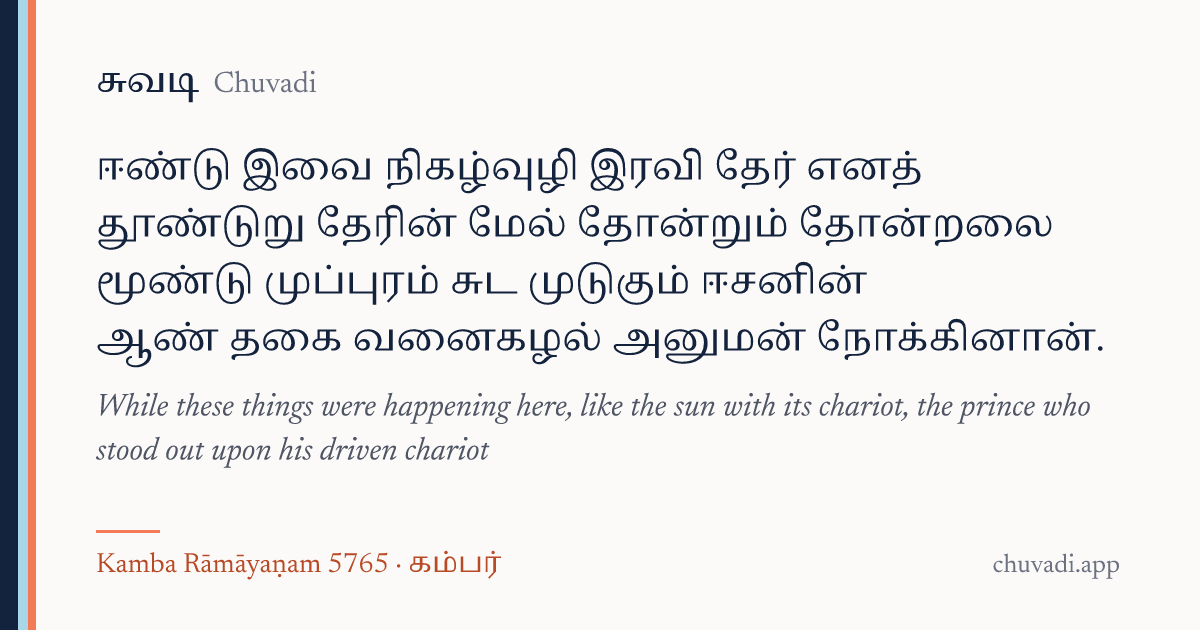
ஈண்டு இவை நிகழ்வுழி - இவ்விடத்தில் இச்செயல்கள் நடக்கும்போது; இரவி தேர் என - சூரியனும் அவனுடைய தேரும் போல; தூண்டு உறும் தேரின் மேல் தோன்றும் தோன்றலை மூண்டு - செலுத்தப்பட்ட தேரின் மீது விளங்கும் இராவணன் புதல்வனான இந்திரசித்தை ஒற்றம் மேற்கொண்டு; முப்புரம் சுட முடுகும் ஈசனின் - திரிபுரங்களை எரித்தற்கு விரைந்து செல்லும் சிவபெருமானைப் போன்ற; ஆண்தகை வனைகழல் அனுமன் நோக்கினான் - ஆண்மைக் குணம் மிக்க பூண்ட வீரக்கழலை உடைய அனுமன் பார்த்தான்.
இரவி, தேர் உம்மைத்தொகை. அனுமனுக்குச் சிவபிரான் உவமை. அவன் சிவபிரான் அம்சமாக அவதரித்தவன் என்பதைக் குறிக்க வந்தது.
ஆங்கிலம் · English translationAI
Translation
- While these things were happening here, like the sun with its chariot,
- the prince who stood out upon his driven chariot
- was watched intently by Aṉumaṉ, like Īcaṉ rushing in fury to burn the Three Cities,
- manly, wearing wrought anklets of valour.
What the poem says
Meanwhile Aṉumaṉ studies Intiracittu, who rides his chariot like the sun riding its own.
Aṉumaṉ is compared to Śiva, here called Īcaṉ, charging out to burn the Three Cities of the demons. The comparison is pointed, the commentary notes, because Aṉumaṉ was born as a portion of Śiva.