



கம்பராமாயணம் 5791 · சுந்தர 12.50
பாடல் · The poem
Tap a word to see its gloss in the commentary and where else it occurs.
பாட வேறுபாடு · Project Madurai reads
பொருள் · Meaning in Tamil
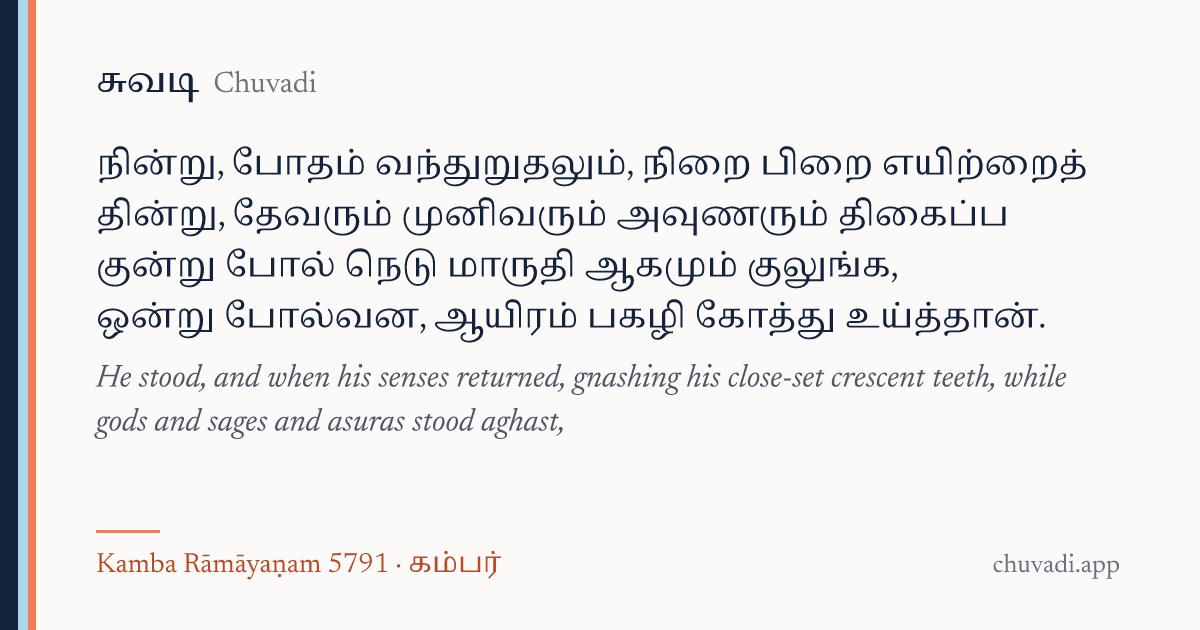
நின்று - (இந்திரசித்து) சிறிது போது அயர்ச்சியுற்று நின்று; போதம் வந்து உறுதலும் - பிறகு அறிவு வந்து கூடின அளவில்; நிறை பிறை எயிற்றை தின்று - தன் வாயில் நிறைந்துள்ளனவும் பிறைச்சந்திரன் போன்றனவுமான பற்களைக் கோபத்தினால் கடித்து; தேவரும், முனிவரும் அவுணரும் திகைப்ப - தேவர்களும் இருடிகளும் அசுரர்களும் யாதாகுமோ என்று ஏக்கமுற; குன்று போல் நெடு மாருதி ஆகமும் குலுங்க - மலை போன்ற உயர்ந்த வடிவமுள்ள அனுமனது உடலும் நடுங்க; ஒன்று போல்வன - ஒரே தன்மையான (வேறுபாடு இல்லாத); ஆயிரம் பகழி கோத்து உய்த்தான் - ஆயிரம் அம்புகளை, வில்லில் பூட்டி அனுமன் மீது செலுத்தினான்.
ஆங்கிலம் · English translationAI
Translation
- He stood, and when his senses returned, gnashing his close-set crescent teeth,
- while gods and sages and asuras stood aghast,
- so that even the body of tall, hill-like Māruti shook,
- he fitted a thousand arrows, each like the next, and sent them flying.
What the poem says
Intiracittu stands dazed for a moment, then comes to himself and grinds his crescent-shaped teeth in fury. While the gods, sages and asuras watch anxiously, he shoots a thousand identical arrows at once, hard enough to make even the mountainous Aṉumaṉ shudder.