



கம்பராமாயணம் 581 · பால 10.29
பாடல் · The poem
Tap a word to see its gloss in the commentary and where else it occurs.
பாட வேறுபாடு · Project Madurai reads
பொருள் · Meaning in Tamil
இம் மங்கை - இத் தன்மையைச் சீதையானவள்; மலர்மேல் நின்று - செந்தாமரை மலர் மேலிருந்து (இறங்கி); இவ்வையத்திடை வைக - இந்த மண்ணுலகில் தங்கியிருக்கும் பொருட்டு; பலகாலும் - பல காலமாக; தம் மெய் நனி - தமது உடம்பு (விரதங்களால்) மிகவும்; வாடும்படி- வாட்டம் அடையுமாறு; நோற்றார் - அருந்தவம் புரிந்தவர்கள்: அலகு ஓவு இல்லா - எண்ணிக்கை குறைவு இல்லாத, அந்தணரோ - அந்தணர்கள்தாமோ?; நல்அறமேயோ- நல்ல தருமதேவதைதானோ?; உலகோ - இந்நிலவுலகு தானோ?; வானோ - விண்ணுலகுதானோ?; உம்பர் கொலோ - எல்லாத் தேவர்களுமோ?; ஈது உணரேம் - இதன் உண்மையை அறிகின்றோம் இல்லை.
சீதை இலங்கையில் சிறையிலிருந்து வானவர்க்கும் நிலவுலகில் வாழும் அந்தணர் முதலோர்க்கும் பெருந்துன்பம் செய்து வந்த இராவணன் முதலான அரக்கர்களை அழித்தும் பாவம் அகலவும், புண்ணியம் ஓங்கவும் செய்யப்போவதால் வேதியர் முதலோரால் வருந்திச் செய்யப்பட்ட தவத்தின் பயனாலேதான் அச் சீதை இப்பூமியில் வாழ்கிறாள் என்பது கருத்து. கொல் - அசைநிலை.
ஆங்கிலம் · English translationAI
Translation
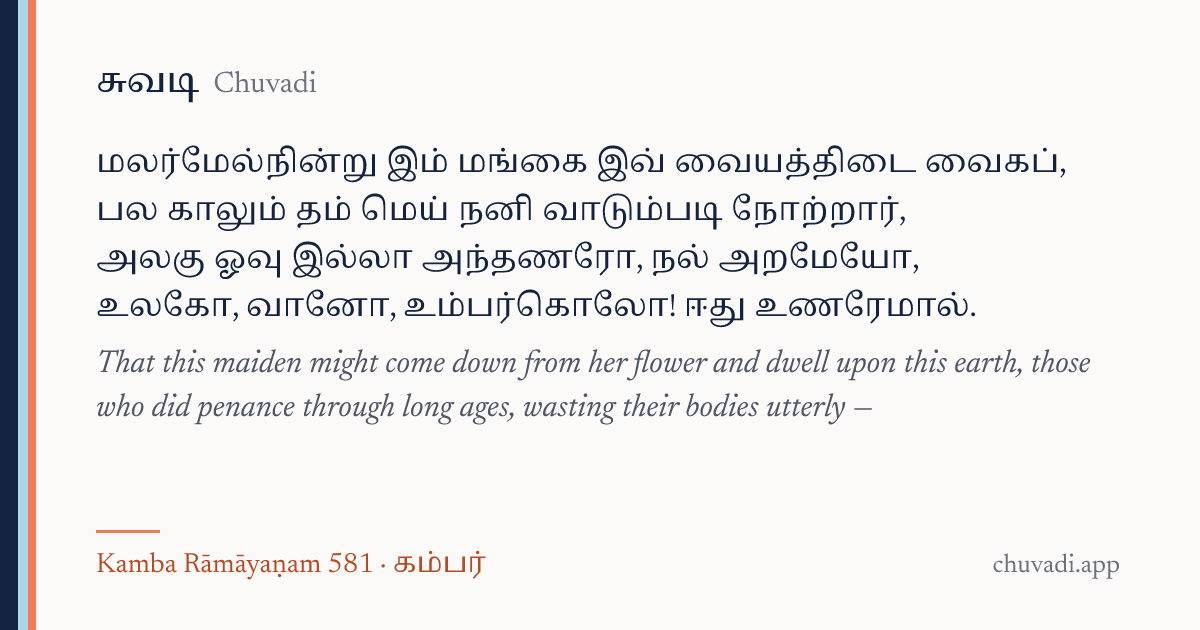
- That this maiden might come down from her flower and dwell upon this earth,
- those who did penance through long ages, wasting their bodies utterly —
- were they the countless brahmins, or good Dharma itself,
- or the earth, or the heavens, or the gods? This we cannot tell.
What the poem says
The poet wonders whose long penance brought Lakṣmī down from her lotus to live on earth as Cītai. Was it the brahmins, Dharma, the earth, heaven or the gods? The commentary explains the deeper point. Cītai's captivity in Laṅkā will lead to the destruction of Irāvaṇaṉ and the demons who torment gods and sages alike, so all of them had reason to pray for her coming.