



கம்பராமாயணம் 5840 · சுந்தர 13.36
பாடல் · The poem
Tap a word to see its gloss in the commentary and where else it occurs.
பொருள் · Meaning in Tamil
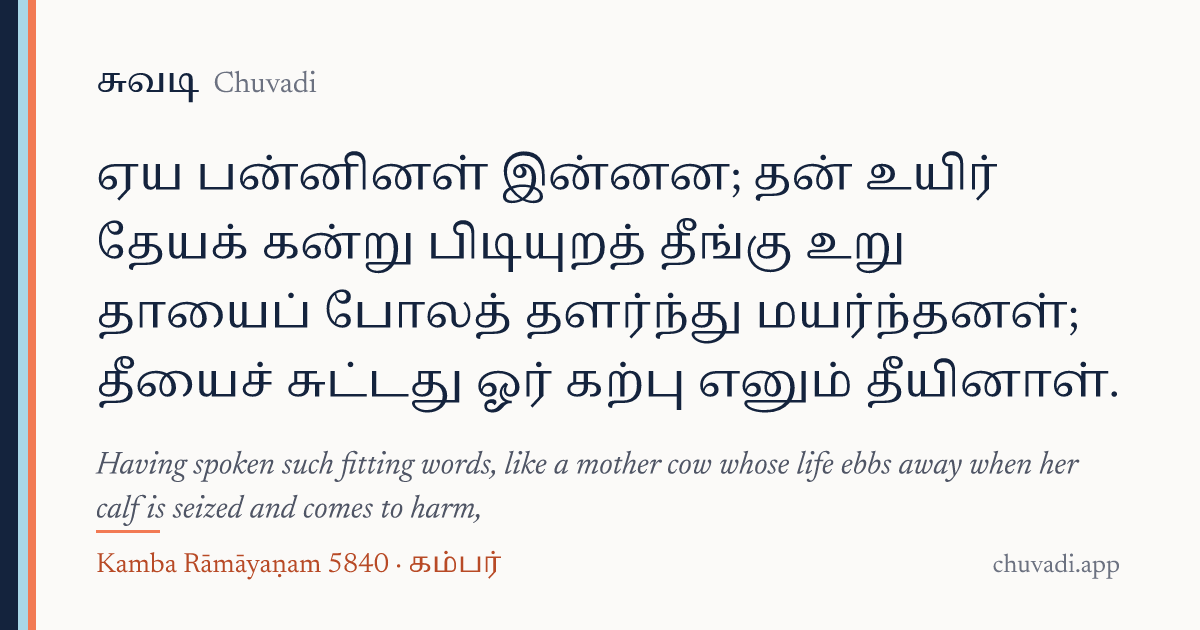
தீயை சுட்டது ஓர் கற்பு எனும் தீயினாள் - நெருப்பையும் சுட்டு அவிக்கும் ஒரு கற்பு என்னும் பெரிய தீயை உடைய சீதாபிராட்டி; இன்னன ஏய பன்னினள் - இத்தன்மையான வார்த்தைகளைத் தகுதியாகச் சொன்னவளாய்; தன் உயிர் தேய கன்று பிடி உற தீங்கு உறும் தாயைப் போல - தனது ஆன்மவலி குன்றும்படி தன்கன்று (புலி முதலிய கொடிய மிருகத்தினிடம்) பிடிபட வருந்தும் தாய்ப்பசுவைப் போன்று; தளர்ந்து மயர்ந்தனள் - சோர்வுற்று மயக்கம் அடைந்தாள்.
“தீயைச் சுட்டது ஓர் கற்பு” - சுட்டது என்பது காலம் கருதாது தன்மை கருதியதாகும். இது யுத்தகாண்ட இறுதியில் சீதாபிராட்டியின் கற்புச் சோதனையில் நிரூபிக்கப்படுவதாகும். “கற்பெனும் தீயினாள்” என்று முடிவது, அத்தீயே, பின்பு அனுமன் வாலில் இட்ட தீயாக மாறி, இலங்கையைச் சுடுவதற்குக் காரணமாவதைக் குறிப்பித்தவாறு. “மடவார் துயர் வீணாகாது” என்பதற்கு இது ஒரு சான்று.
ஆங்கிலம் · English translationAI
Translation
- Having spoken such fitting words, like a mother cow
- whose life ebbs away when her calf is seized and comes to harm,
- she grew faint and swooned,
- she whose chastity is a fire that could burn fire itself.
What the poem says
Her lament over, Cītai faints like a cow whose calf has been carried off by a wild beast.
She is called a woman whose chastity is a fire that can burn fire itself, foreshadowing the fire ordeal at the end of the war, which will leave her unharmed. The phrase also hints at what is coming soon: that same fire will pass into the flame set to Aṉumaṉ's tail and burn Ilaṅkai. A good woman's grief, the commentary observes, is never in vain.