



கம்பராமாயணம் 5843 · சுந்தர 13.39
பாடல் · The poem
Tap a word to see its gloss in the commentary and where else it occurs.
பாட வேறுபாடு · Project Madurai reads
பொருள் · Meaning in Tamil
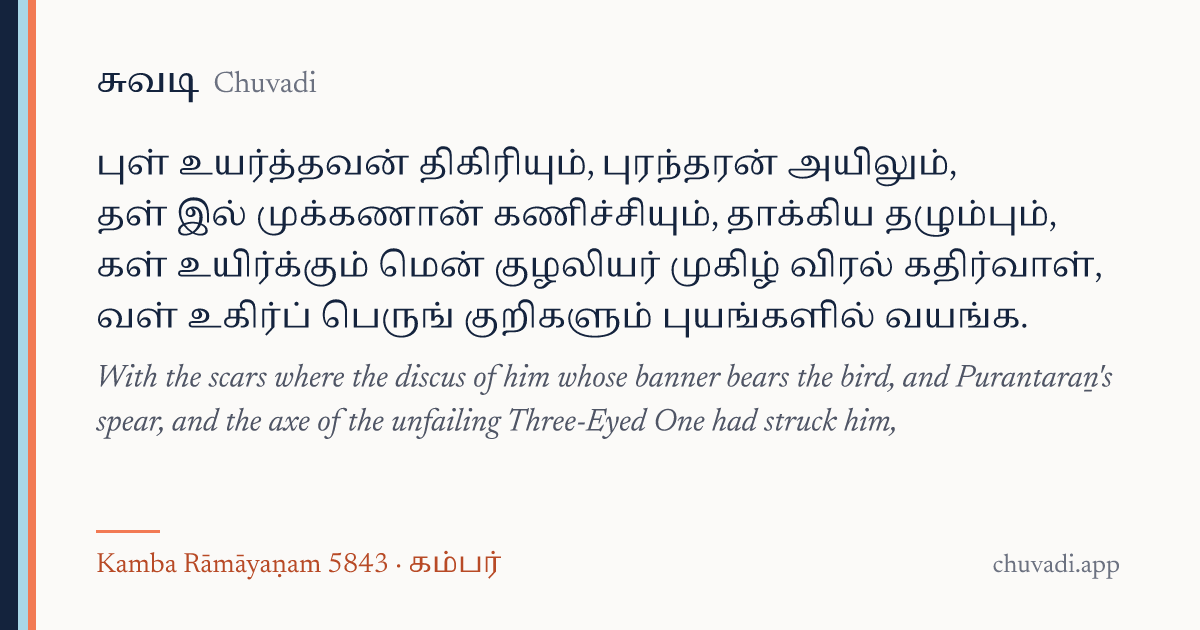
புள் உயர்த்தவன் திகிரியும் - கருடப் பறவை விளங்க உயர்த்தப்பெற்ற கொடியை உடைய திருமாலினது சக்கராயுதமும்; புரந்தரன் அயிலும் - இந்திரனது வச்சிராயுதமும்; தள் இல் முக்கணான் கணிச்சியும் - விலக்கமுடியாத, முக்கண்ணனாகிய சிவபிரானது சூலாயுதமும்; தாக்கிய தழும்பும் - தம் மீது பட்டு உண்டாக்கிய வடுக்களும்; கள் உயிர்க்கும் மென் குழலியர் - தேனைச் சொரியும் மிருதுவான கூந்தலை உடைய தன் காதல் மகளிர்; முகிழ் விரல் - அரும்பு போல் குவிந்த விரல்களில் உள்ள; கதிர்வாள் வள் உகிர் - சுடரோடு கூடிய வாள் போன்ற கூரிய நக நுனிகளால் உண்டாகிய; பெரும் குறிகளும் புயங்களில் வயங்க - பெரிய அடையாளங்களும் பெரிய தோள்களில் விளங்கவும். இராவணனது வீரத்துக்கும் காதலுக்கும் அடையாளமாக விளங்குகின்றன அவன் தோள்களில் காணப்படும் வடுக்கள் என்பது கருத்து.
ஆங்கிலம் · English translationAI
Translation
- With the scars where the discus of him whose banner bears the bird, and Purantaraṉ's spear,
- and the axe of the unfailing Three-Eyed One had struck him,
- and the bright, blade-like, sharp nails on the bud-like fingers
- of women whose soft hair breathes honey had left their great marks, shining on his arms.
What the poem says
Irāvaṇaṉ's arms carry two kinds of marks. Some are battle scars left by the weapons of the gods: the discus of Viṣṇu, who flies the eagle Garuḍa on his banner, Intiraṉ's thunderbolt and Śiva's axe.
Others are love marks, scratched by the sharp nails of his many women. Together they advertise his valour and his amours.