



கம்பராமாயணம் 5863 · சுந்தர 13.59
பாடல் · The poem
Tap a word to see its gloss in the commentary and where else it occurs.
பொருள் · Meaning in Tamil
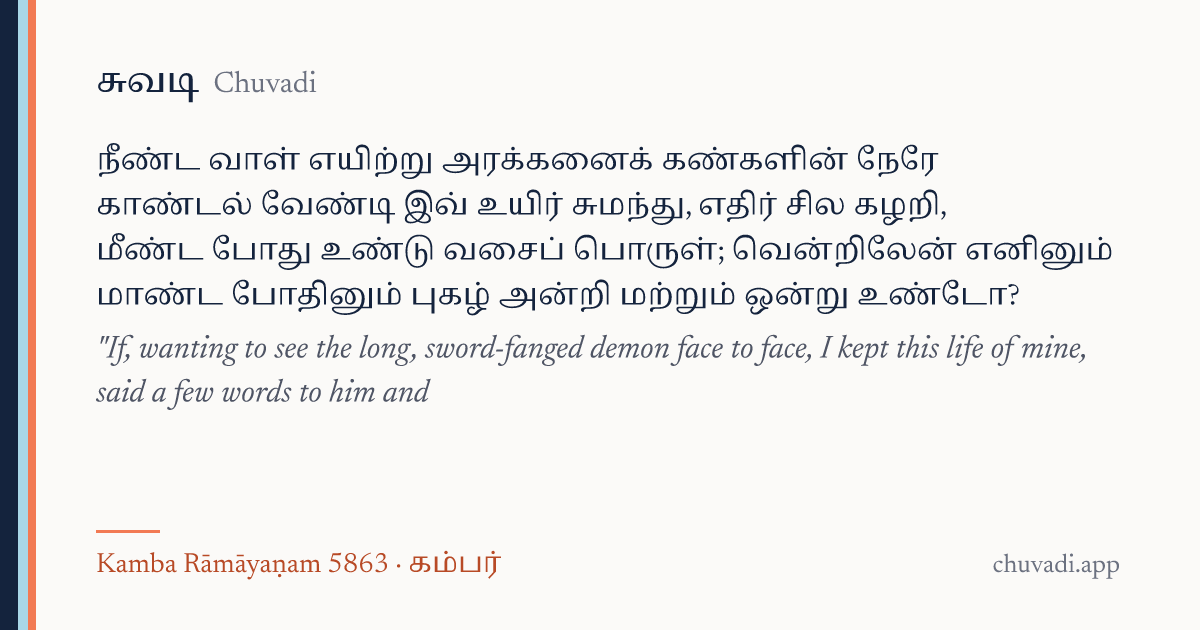
நீண்ட வாள் எயிறு அரக்கனை - நீண்ட வாளாயுதம் போன்று கூரிய பற்களை உடைய இராவணனை; கண்களின் நேரே காண்டல் வேண்டி - நான் கண்களினால் நேராகப் பார்க்க விரும்பி; இவ் உயிர் சுமந்து - இந்த என் உயிரை உடம்பில் வைத்துக் கொண்டிருந்து; எதிர் சில கழறி - (இவனைக் கண்டபின்) இவன் எதிரிலே சில வார்த்தைகளைச் சொல்லி; மீண்ட போது - திரும்பிச் சென்ற போதும்; வசை பொருள் உண்டு - எனக்குப் பழியாகிய நிந்தனையே ஏற்படும்; வென்றிலேன் எனினும் - (அவ்வாறன்றி இவனை எதிர்த்துப் போர் செய்தால்) இங்கு இவனை வெல்லாவிட்டாலும்; மாண்ட போதினும் - (இவன் கையால்) இறந்தாலும்; புகழ் அன்றி மற்றும் ஒன்று உண்டோ? - யான் அடைவது புகழே அல்லாமல், வேறு ஒன்று நிகழுமோ? (புகழே உண்டாகும்; இகழ்ச்சி உண்டாகாது என்றபடி)
“அரக்கனைக் காண்டல் வேண்டி, உயிர் சுமந்து, சில கழறி, மீண்ட போது வசைப் பொருள்தான் உண்டு; அவ்வாறில்லாமல், இவனை எதிர்த்துப் போர் புரிந்தால், வென்றாலும் மாண்டாலும் எனக்கு வருவது புகழே! இகழ்ச்சியில்லை” என்று அனுமன் கருதினான் என்க.
ஆங்கிலம் · English translationAI
Translation
- "If, wanting to see the long, sword-fanged demon face to face,
- I kept this life of mine, said a few words to him and
- went back, there would be shame in it; but even if I do not win,
- even if I die, can anything but glory come of it?"
What the poem says
Aṉumaṉ continues to talk himself into a fight. To have let himself be dragged here only to look at Irāvaṇaṉ, say a few words and go home would be disgraceful.
If he fights, though, he wins glory whatever happens, whether he wins or is killed.