



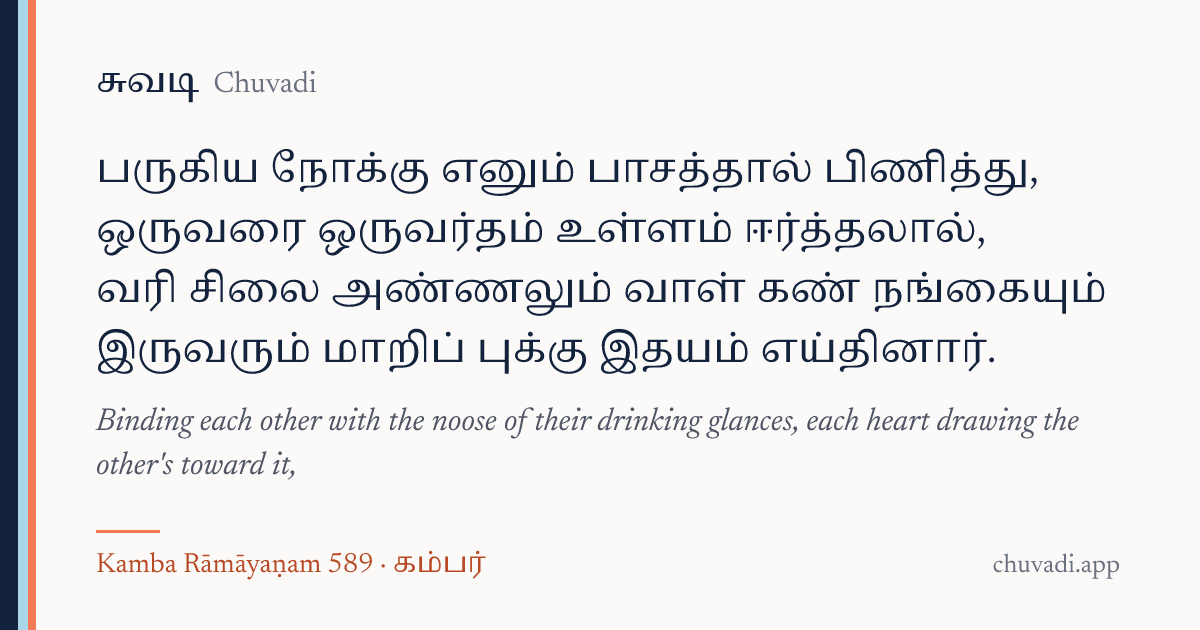
கம்பராமாயணம் 589 · பால 10.37
பாடல் · The poem
Tap a word to see its gloss in the commentary and where else it occurs.
பொருள் · Meaning in Tamil
பருகிய நோக்கு - (தமக்குள் ஒருவரது அழகை ஒருவர் விழுங்கிய கண்பார்வை; எனும் பாசத்தால் பிணித்து - என்னும் கயிற்றால் கட்டி; ஒருவரை ஒருவர் தம் உள்ளம் - ஒருவரை மற்றொருவரது மனம்; ஈர்த்தலால் - இழுத்து நின்றதால்; வரிசிலை அண்ணலும் - கட்டமைந்த வில்லையுடைய இராமனும்; வாள்கண் நங்கையும்- வாள் போன்ற கண்களையுடைய பெண்களில் சிறந்த சீதையும்; இருவரும் - ஆகிய இருவரும்; இதயம் மாறிப் புக்கு - (ஒருவர்) மனத்துள் (ஒருவர்) மாறிப் புகுந்து; எய்தினார் - அடைந்தார்கள்.
சீதை, இராமன்: இருவரும் தம் கண் பார்வையால் காதல் கொண்டு ஒருவரது மனத்தில் மற்றொருவர் குடிகொண்டார் எனலாம். இங்கே இராமனுக்குச் சீதையும், சீதைக்கு இராமனும் உயிராவார்கள் என்பது குறிப்பு. விற்படையும் வாட்படையும்: தலைமகனாகிய இராமனுக்கு விற்படை. ஆதலால் தலைவியான சீதைக்கு வாள்படை கூறியது நயம். 'தானும் தன்னுடைத் திண்பால் நெஞ்சினைத் திரிதல் ஒன்றின்றி என்னுழை நிறீஇ' (பெருங் 3:86:06 -97)
'நாட்டம் இரண்டும் அறிவுடம் படுத்தற்குக் கூட்டி யுரைக்கும் குறிப்புரையாகும்' (தொல். பொருள். 66
ஆங்கிலம் · English translationAI
Translation
- Binding each other with the noose of their drinking glances,
- each heart drawing the other's toward it,
- the lord of the banded bow and the lady with sword-bright eyes,
- the two of them, changing places, entered each other's heart.
What the poem says
Their looks are a rope, and each pulls the other's heart toward itself until they change places. Irāmaṉ now dwells in Cītai's heart and she in his, and each has become the other's life. The weapons are matched: the hero bears a bow and the lady has eyes like swords. The commentary cites the old grammar Tolkāppiyam, which says the meeting of two pairs of eyes is a sign that speaks without words.