



கம்பராமாயணம் 590 · பால 10.38
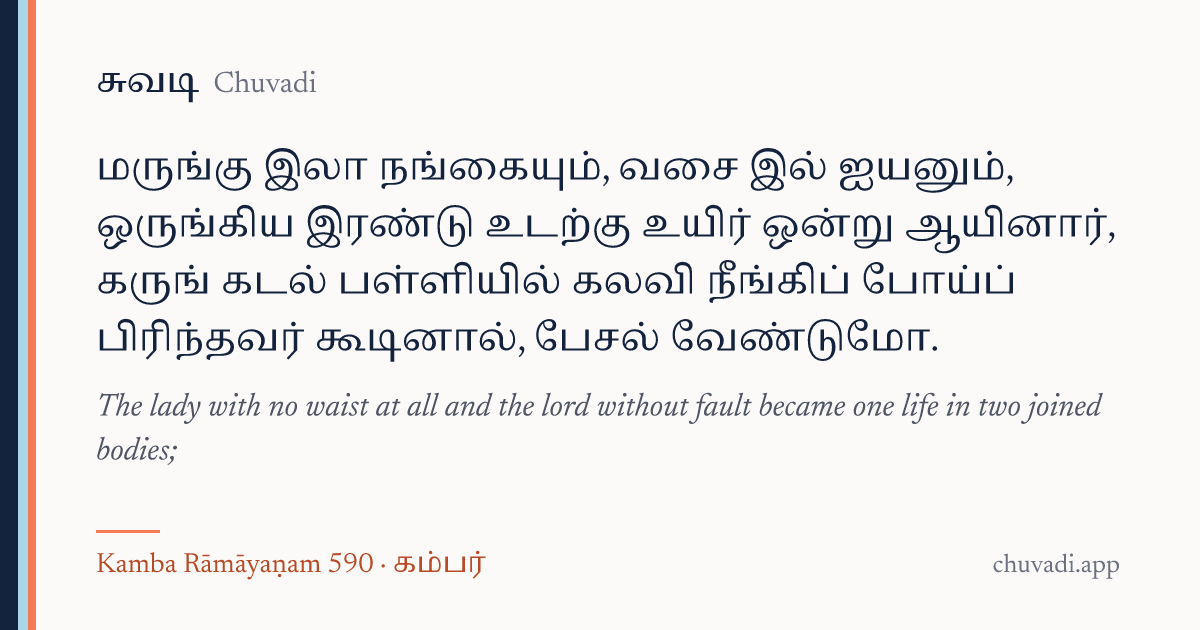
பாடல் · The poem
Tap a word to see its gloss in the commentary and where else it occurs.
பொருள் · Meaning in Tamil
மருங்கு இலா நங்கையும் - இடையில்லாத (நுண்ணிய இடையைக் கொண்ட) சீதையும்; வசை இல் ஐயனும் - குற்றம் இல்லாத இராமனும் (ஒருவர் மேல் ஒருவர் கொண்ட மிக்க காதலால்); ஒருங்கிய இரண்டு உடற்கு - ஒன்றுபட்ட இரண்டு உடல்களுக்கு; உயிர் ஒன்று ஆயினார் - ஓர் உயிர் என்று சொல்லுமாறு ஆனார்கள்; கருங்கடல் பள்ளியில் - மிகப் பெரிய பாற்கடலில் ஆதிசேடனாகிய பாம்புப் படுக்கையிலே; கலவி நீங்கி - (ஒருவரோடு ஒருவர் கலந்திருந்த) கூட்டம் நீங்கி; போய்ப் பிரிந்தவர் - (தனித்தனியே) பிரிந்து சென்றவர்கள்; கூடினால் - மீண்டும் (ஓர் இடத்தில் சேர்ந்தால்; பேசல் வேண்டுமோ? - (அவர்களுக்குள் உண்டாகும் காதலைச் சொல்லவும் வேண்டுமோ?
ஈருடல் ஓருயிர் - இராமனும் சீதையும் ஒருவரை ஒருவர் பார்த்த அளவில் இரு உடல்களுக்கு ஓர் உயிர் அமைந்ததுபோல மனம் ஒன்றுபட்டார்கள் என்றார்கள். 'காகத்து இரு கண்ணிற்கு ஒன்றே மணி கலந்தாங்கு' (திருக்கோவை) அவ்விருவர் ஆன்மாவும் ஒன்றே என்று காட்டுகிறார். கரிய கடல் நீலமணி நிறத்தவனான திருமாலின் திருமேனிச் சாயையால் அப்பாற்கடலின் நிறம் மாறியது என்பது குறிப்பு. நயம்: சீதை மருங்கு இலா நங்கை; இராமன் வசை இல் ஐயன்.
ஆங்கிலம் · English translationAI
Translation
- The lady with no waist at all and the lord without fault
- became one life in two joined bodies;
- when those who left their union on the couch in the dark sea
- and went apart meet once more, need anything be said?
What the poem says
Irāmaṉ and Cītai become one soul in two bodies. Kampaṉ explains why. They are Viṣṇu and Lakṣmī, who lay together on the serpent couch in the Ocean of Milk and parted to be born on earth. Of course such lovers recognise each other at once. The sea is called "dark" because it takes the colour of Viṣṇu's sapphire-blue body. The commentary quotes the Tirukkōvaiyār on the crow's two eyes that share a single pupil. Cītai's waist is so slender it seems not to exist.