



கம்பராமாயணம் 5901 · சுந்தர 13.97
பாடல் · The poem
Tap a word to see its gloss in the commentary and where else it occurs.
பாட வேறுபாடு · Project Madurai reads
பொருள் · Meaning in Tamil
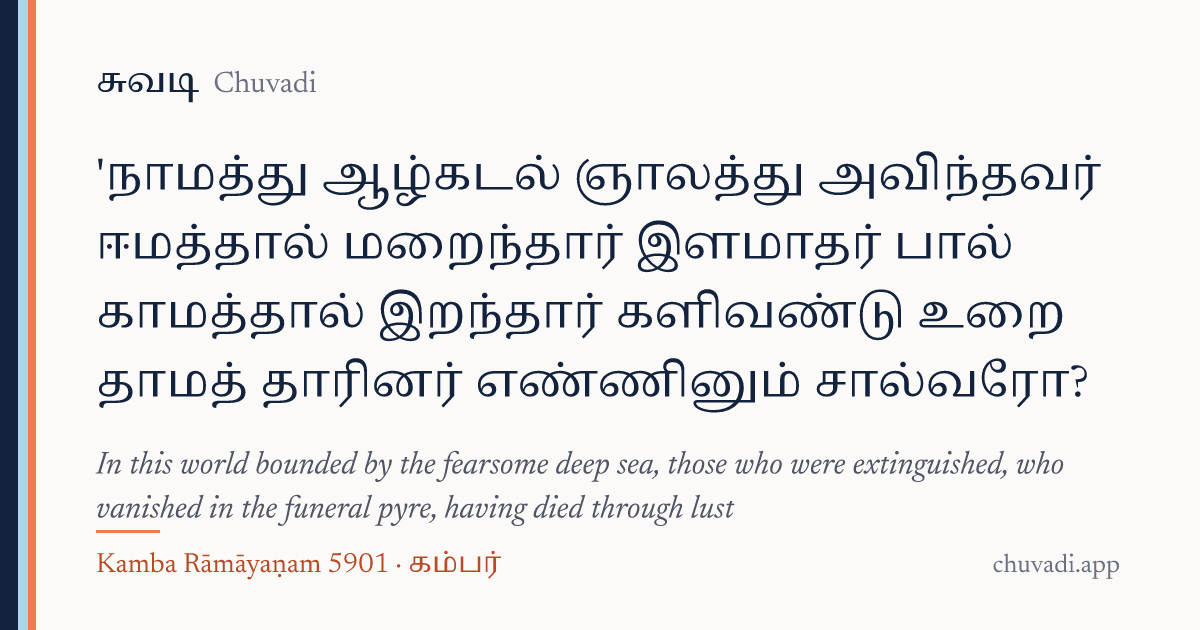
நாமத்து ஆழ்கடல்ஞாலத்து - அச்சம் தரத்தக்கஆழ்ந்த கடல் சூழ்ந்த இந்த நில உலகில்; இள மாதர் பால் காமத்தால் இறந்தார் - இளமகளிரிடம் கொண்ட மோகத்தால் வரம்பு கடந்து நடந்தவரான; களி வண்டு உறை தாமம் தாரினர் - (தேனைப்பருகியதால்) களிப்புக் கொண்ட வண்டுகள் மொய்க்கும் மலர் மாலை அணிந்த ஆடவர்கள்; அவிந்தவர் ஈமத்தால் மறைந்தார் எண்ணினும் சால்வரோ - புகழ் முதலிய யாவும் அவிந்தவராய், சுடுகாட்டு நெருப்பால் அழிந்து போனவர்கள் எண்ணிக்கையில் அடங்குவார்களோ ? (எண்ணற்றவராவர் என்றபடி). இஞ்ஞாலத்தில், காமத்தால், இறந்தவர் அவிந்தவராகி, ஈமத்தால் மறைந்தவர் எண்ணற்றவர் என்றபடி. களி வண்டுறை தாமத்தாரினர்; அரசர்களைக் குறித்தது.
ஆங்கிலம் · English translationAI
Translation
- In this world bounded by the fearsome deep sea, those who were extinguished,
- who vanished in the funeral pyre, having died through lust
- for young women, men wearing garlands where
- drunken bees dwell, could they be counted even if one tried?
What the poem says
Countless kings, garlanded men around whose flowers the honey-drunk bees swarm, have overstepped all bounds in their desire for young women, lost all their glory, and ended on the funeral pyre. Their number is past counting. The warning to Irāvaṇaṉ is plain.