



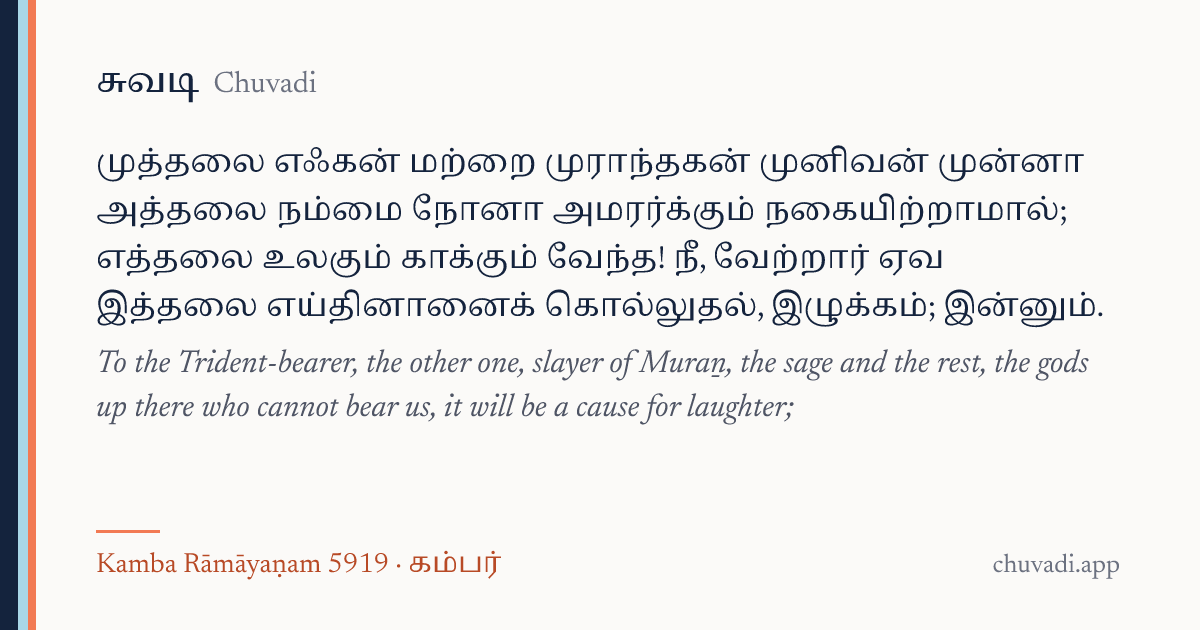
கம்பராமாயணம் 5919 · சுந்தர 13.115
பாடல் · The poem
Tap a word to see its gloss in the commentary and where else it occurs.
பாட வேறுபாடு · Project Madurai reads
பொருள் · Meaning in Tamil
எத்து அலைஉலகம் காக்கும் வேந்த ! - மோதுகின்ற அலைகள் நிறைந்த கடல் சூழ்ந்த உலகம் முழுவதையும் ஆளுகின்ற அரச ! ; வேற்றார் ஏவ இத்தலை எய்தினானை - பகைவர் ஏவி அனுப்ப இங்குத் தூதனாய் வந்து சேர்ந்த இவனை; நீ கொல்லுதல் இழுக்கம் - நீ கொல்வது குற்றமுடைத்தாகும். (மேலும்); முத்தலை எஃகன் - மூன்று தலை கொண்ட சூலாயுதத்தை உடைய சிவபெருமானும்; மற்றை முராந்தகன் - மற்று முள்ள முரன் என்னும் அசுரனை அழித்த திருமாலும்; முனிவன் - பிரம்ம தேவனும்; முன்னா - முதலான; நம்மை நோனா - நம் ஆக்கத்தைக் கண்டு பொறாத; அத்தலை அமரர்க்கும் நகையிற்று ஆம் - அந்த வானத்தில் உள்ள தேவர்களுக்கும் இகழ்ந்து சிரிப்பதற்கு இடமாகும்.
“எத் தலை உலகும்காக்கும்' என்பதற்கு “எவ்விடத்து எல்லா உலகங்களையும் காக்கின்ற ' என்று பொருள் கூறல் சிறந்ததாயின் கொள்க. தூதரைக் கோறல் தக்கார் யார்க்கும் நகைப் புலனாம் என்ற வீடணன், இதனால், நம்மை நோனா அமரர்க்கும் நகையிற்றாம் என்று சொல்கின்றான்.
ஆங்கிலம் · English translationAI
Translation
- To the Trident-bearer, the other one, slayer of Muraṉ, the sage and the rest,
- the gods up there who cannot bear us, it will be a cause for laughter;
- king who guards the world ringed by beating waves, that you
- should kill one who came here sent by others is a disgrace, besides.'
What the poem says
Vīṭaṇaṉ continues: killing a messenger sent by the enemy would disgrace the ruler of the world, and it would make him a laughing stock to the gods who envy the demons' power, Civaṉ with his trident, Tirumāl who slew the demon Muraṉ, Piramaṉ and the rest.