



கம்பராமாயணம் 5944 · சுந்தர 13.140
பாடல் · The poem
Tap a word to see its gloss in the commentary and where else it occurs.
பாட வேறுபாடு · Project Madurai reads
பொருள் · Meaning in Tamil
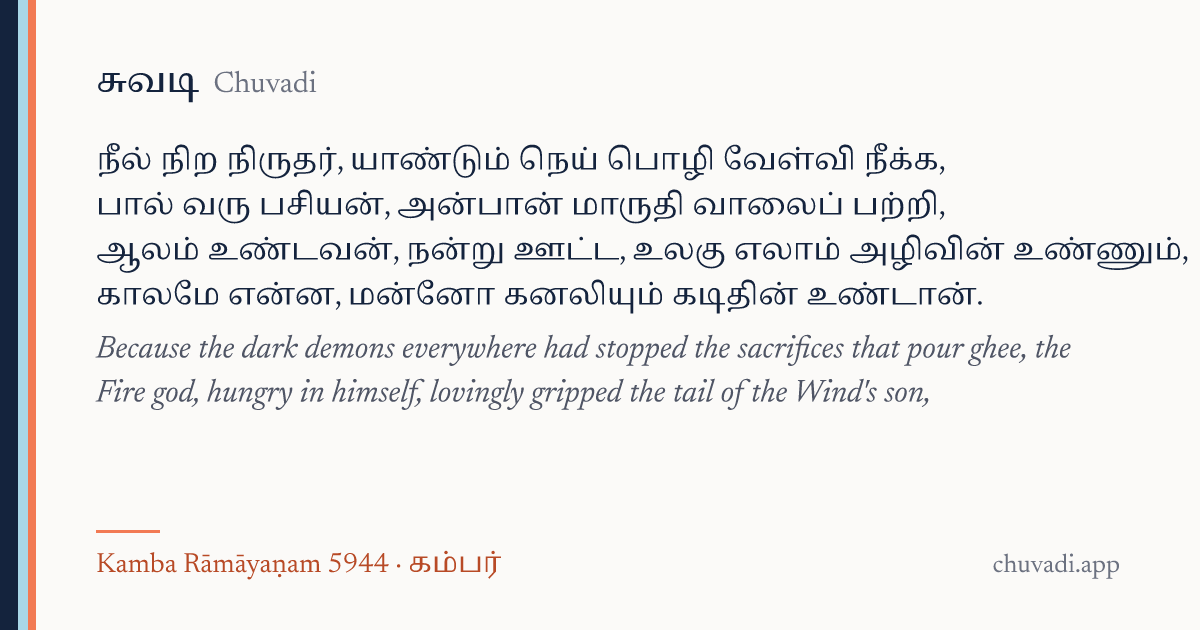
நீல் நிறநிருதர் யாண்டும் நெய் பொழி வேள்வி நீக்க - கருநிறத்தவர்களான அரக்கர்கள் எங்கும், நெய் சொரிந்து செய்யும் யாகங்களைப் புரிய வொட்டாமல் நீக்கி விட்டதனால்; பால் வரு பசியன் - தன்னிடத்தே மிக்க பசி உடையவனான; கனலியும் - அக்கினி தேவனும்; மாருதி வாலை அன்பான் பற்றி - அனுமனது வாலை அன்புடன் தனக்கு ஆதாரமாகப் பற்றிக் கொண்டு; ஆலம் உண்டவன் நன்று ஊட்ட - விஷத்தை உண்ட சிவபெருமானே ஏவி உண்பிக்க; உலகு எலாம் அழிவின் உண்ணும் காலமே என்ன - உலகம் முழுவதையும் ஊழி முடிவில் எரிக்கின்ற காலத்தைப் போல; கடிதின் உண்டான்- இலங்கை நகரை விரைவாக எரித்து அழித்தான்.
யாகங்களைச்செய்ய வொட்டாமல் அரக்கர்கள் தடுத்ததனால், உணவின்றிப் பசியினால் வருந்திய தீக்கடவுள், இப்போது, அனுமனது வாலைப் பற்றிக் கொண்டு, இலங்கை நகரை எரித்து, பசி அடங்கினான், என்பது கருத்து. அனுமனுக்கு, ஆலம் உண்டவனும், வாலின் தீக்கு, யுகாந்தகாலத் தீயும், இலங்கைக்கு உலகமும் உவமைகள்.
ஆங்கிலம் · English translationAI
Translation
- Because the dark demons everywhere had stopped the sacrifices that pour ghee,
- the Fire god, hungry in himself, lovingly gripped the tail of the Wind's son,
- and, as the one who drank the poison fed him well,
- like time that devours all the worlds at their end, he ate swiftly.
What the poem says
Agni, god of fire, has gone hungry because the demons stopped all sacrifices, which feed him with poured ghee. Now, clinging to Aṉumaṉ's tail as Civaṉ, who once swallowed the world-poison, feeds him, he devours Ilaṅkai as swiftly as the fire at the end of time.
This verse ends the chapter of the release from bonds; the next, the Burning of Ilaṅkai, describes the city in flames.