



கம்பராமாயணம் 60 · பால 2.40
பாடல் · The poem
Tap a word to see its gloss in the commentary and where else it occurs.
பொருள் · Meaning in Tamil
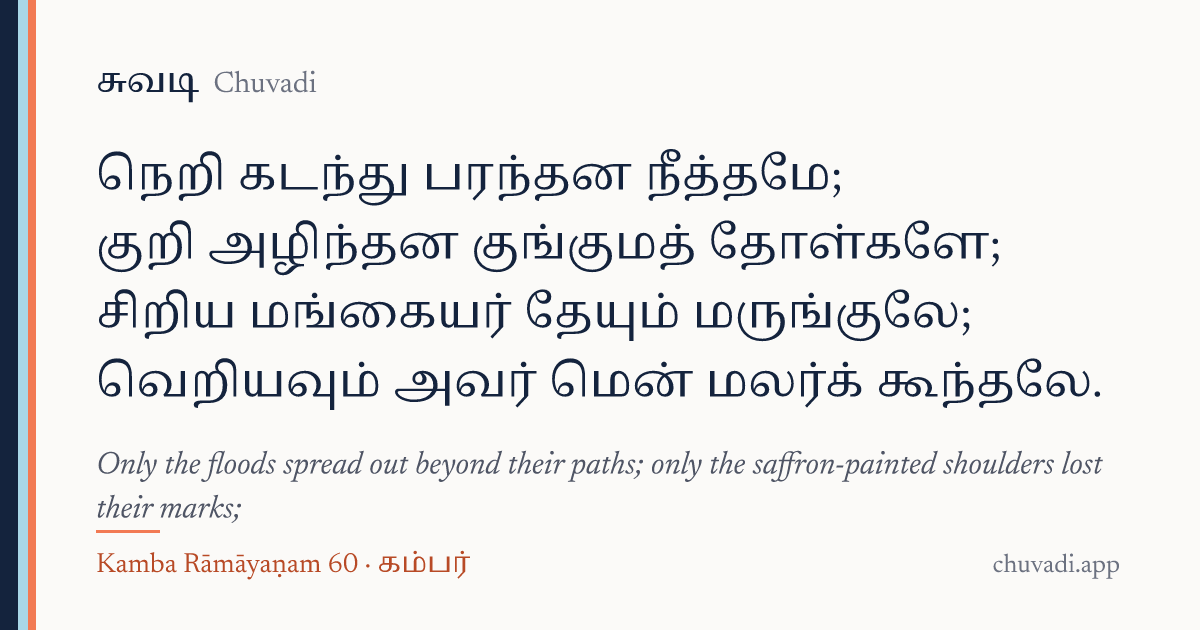
நெறி கடந்து பரந்தன நீத்தமே - செல்லும் வழிகடந்து பரந்து செல்வது (அந்த நாட்டில்) வெள்ளமேயாம்; குறி அழிந்தன குங்குமத் தோள்களே - அடையாளம் அழிந்தவை அந்த நாட்டு மகளின் குங்குமம் அணிந்த தோள்களேயாம்; சிறிய மங்கையர் தேயும் மருங்குலே - அங்குச் சிறியவை பெண்களின் மெல்லிய இடைகளேயாம்; வெறியவும் அவர் மென்மலர்க் கூந்தலே - மணம் உடையவை அந்த நாட்டுப் பெண்களின் மலர்சூடிய கூந்தலேயாம் நெறி கடத்தல்: வழி தவறி நடத்தல். வெள்ளம் தான் நெறிகடந்து செல்லுமே யல்லாது அந்நாட்டு மக்கள் வழித் தவறான வழியில் செல்லமாட்டார்கள் செய்து குறியழிந்தவை குங்குமத் தோள்களே தவிர, தமக்குரிய குறியிலிருந்து மக்கள் மாறுபடமாட்டார்கள். சிறியவை தேயும் மருங்குலே அல்லாது வேறு சிறிய செயல்கள் அந்நாட்டில் நிகழா. வெறியவும் கூந்தலே அல்லது வெறி கொண்டு அலையும் நிலை அங்கில்லை. குறி: தானியக் குவியல் - முதலியவற்றிற்குச் செய்யும் அடையாளம். இது சிலேடை பற்றி வந்த ஒழிப்பணி. வெறி: மணம் வெறுமை அல்லது குடி வெறி என்பதும் பொருளாம். 38-ம் பாடல் தொடங்கி இப்பாட்டு முடிய அந்த நாட்டு மக்கள் நல்லன கொண்டு, அல்லன நீக்கி வாழ்ந்த வாழ்வு பேசப்பட்டது.
ஆங்கிலம் · English translationAI
Translation
- Only the floods spread out beyond their paths;
- only the saffron-painted shoulders lost their marks;
- only the waists of the women, wasting thin, were small;
- only their soft, flower-decked hair was heady.
What the poem says
A famous verse built on puns that work by exclusion: certain things exist in Kōcalam only in a harmless sense. "Going beyond the path" means straying from right conduct, but in Kōcalam only the river in flood goes beyond its course. "Losing one's mark" can mean departing from one's proper standard, but there only the saffron designs on women's shoulders get rubbed away. Nothing there is "small" or mean except the women's slender waists. And veṟi, which can mean intoxication or frenzy as well as fragrance, applies only to the scent of their flowered hair.
The verse closes the poet's account of how the people lived, keeping what is good and shunning what is not.