



கம்பராமாயணம் 6063 · சுந்தர 15.55
பாடல் · The poem
Tap a word to see its gloss in the commentary and where else it occurs.
பொருள் · Meaning in Tamil
அனுமனும்எய்தினன் - அனுமனும் அவ்விடத்தைஅடைந்தான்; எய்தி ஏந்தல் தன் மொய் கழல் தொழுகிலன் - வந்து சேர்ந்து பெருமையிற் சிறந்தவனான இராமபிரானது வலிய கழல் அணிந்த திருவடிகளை வணங்காதவனாய், முளரி நீங்கிய தையலை நோக்கிய - தாமரை மலரை விட்டு நீங்கி (பூமியில் அவதரித்த) திருமகளாகிய பிராட்டியை, அவள் இருக்கும் தென் திசை நோக்கிய; தலையன் கையினன் - தலையையும் கைகளையும் உடையவனாய் (திரும்பி); வையகம் தழீஇ நெடிது இறைஞ்சி வாழ்த்தினான் - நிலத்தைத் தழுவியது போன்று படிந்து நீட்சியாக நிலத்தில் கிடந்தபடியே வணங்க, பிராட்டியை வாழ்த்தினான். சீதா பிராட்டி கற்புத் திண்மையுடன் இலங்கையில் இருக்கின்றாள் என்ற உண்மையை, இராமபிரான் முதலில் அறிந்து கொள்வதற்காக, அனுமன் தென் திசை நோக்கி வணங்கி, வாழ்த்தினான் என்க. மொய் - வலிமை; சீதை, திருமகளின் அவதாரம் என்பதை “முளரி நீங்கிய தையல்” என்ற தொடர் காட்டுகின்றது.
ஆங்கிலம் · English translationAI
Translation
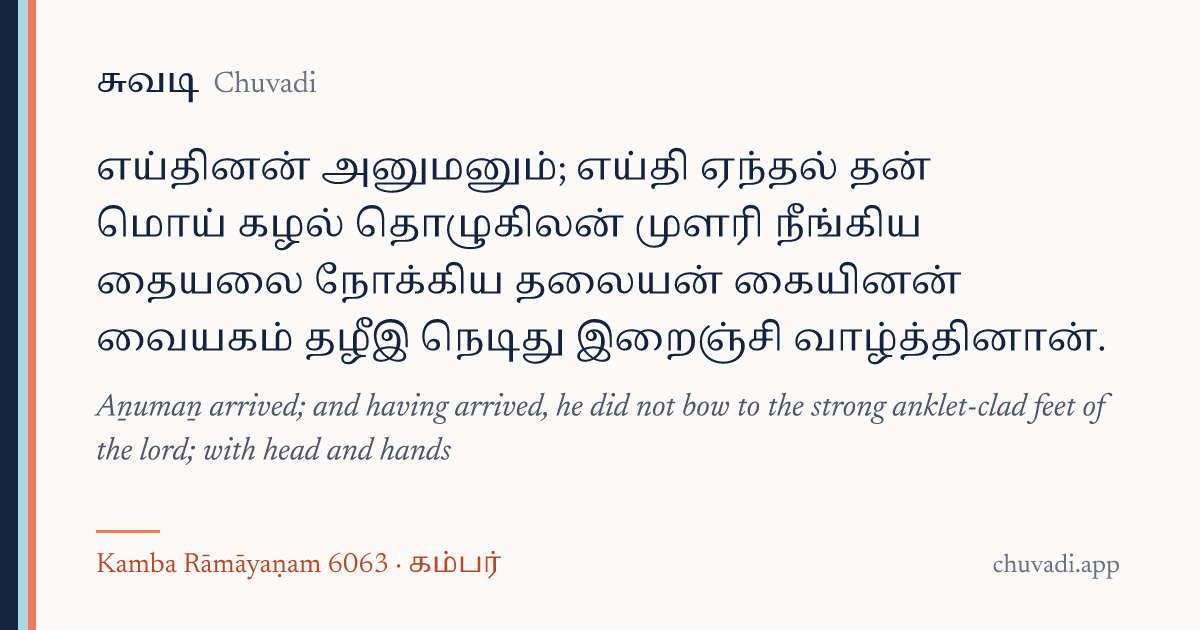
- Aṉumaṉ arrived; and having arrived, he did not bow
- to the strong anklet-clad feet of the lord; with head and hands
- turned toward the lady who left the lotus,
- he embraced the earth, bowed long and low, and blessed her.
What the poem says
This is the act that gives the canto its name. Instead of first saluting Irāmaṉ, Aṉumaṉ turns south, where Cītai is, and prostrates full length on the ground in her honour. Cītai is called the lady who left the lotus because she is Lakṣmī, the goddess seated on a lotus, born on earth.
By this silent gesture Aṉumaṉ lets Irāmaṉ know at once that Cītai lives, chaste and steadfast, in the south.