



கம்பராமாயணம் 6073 · சுந்தர 15.65
பாடல் · The poem
Tap a word to see its gloss in the commentary and where else it occurs.
பொருள் · Meaning in Tamil
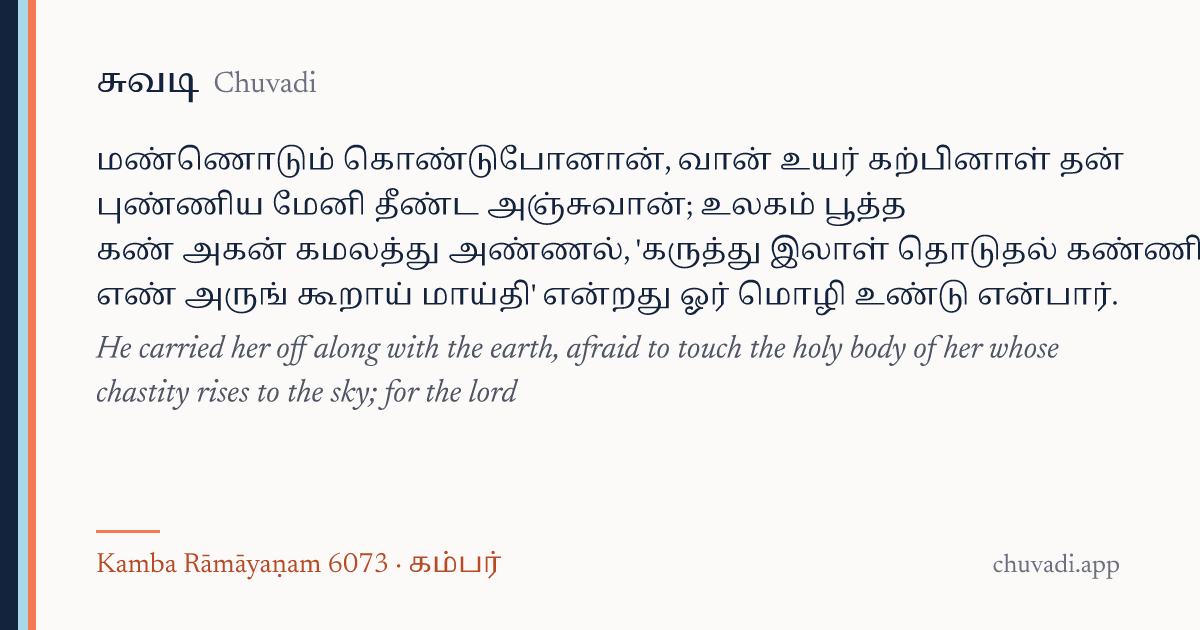
கண் அகன்கமலத்து உலகம் பூத்த அண்ணல் - இடம் அகன்ற திருமாலின் திரு உந்தித் தாமரை மலரில் தோன்றி உலகத்தைப் படைத்த பிரமதேவன்; கருத்து இலாள் தொடுதல் கண்ணின் - (இராவணனை நோக்கி விருப்பம் இல்லாத பெண்ணை நீ வலிதாகத் தீண்டுதல் செய்வையானால்; எண்அரும் கூறாய் மாய்தி - நினைப்பதற்கு அரிதான கூறுகளாகப் பிளப்புண்டுஇறப்பாய்; என்றது ஓர் மொழி உண்டு என்பார் - என்று இட்டதாகிய ஒருசாப வார்த்தை உண்டு என்று சொல்வார்கள்; வான் உயர் கற்பினாள் தன்புண்ணிய மேனி தீண்ட அஞ்சுவான் - (ஆதலால் இராவணன்) மிகச்சிறந்த கற்பு நிலையை உடையவளான பிராட்டியினது பரிசுத்தமானதிருமேனியைத் தீண்டுவதற்கு அச்சம் உற்றவனாய், மண்ணொடும் கொண்டுபோனான் - நிலத்தோடு எடுத்துக் கொண்டு போனான்.
பிராட்டி, தூயசாலையில் இருப்பதற்கும், இராவணன் பிராட்டியைத் தீண்டாமைக்கும் காரணம் கூறப்பட்டது. பிரமன் இராவணனுக்குச் சாபம் இட்ட வரலாறு, திரிசடை மூலம் பிராட்டி அறிந்திருந்தாள். அது (கம்ப 5363) பிராட்டியால் அனுமனுக்குத் தெரிவிக்கப்பட்டது.
ஆங்கிலம் · English translationAI
Translation
- He carried her off along with the earth, afraid
- to touch the holy body of her whose chastity rises to the sky; for the lord
- of the wide lotus that blossomed the world once said, If you touch a woman unwilling,
- you will die split into countless pieces; so, they say, there is such a word.
What the poem says
This explains why Cītai's hut came with her: Irāvaṇaṉ dug up the ground beneath her rather than touch her, because Piramaṉ, the creator born from the lotus in Viṣṇu's navel, had cursed him to shatter into innumerable pieces if he ever laid hands on an unwilling woman. Cītai had learned of this curse through the demoness Tiricaṭai and passed it on to Aṉumaṉ.