



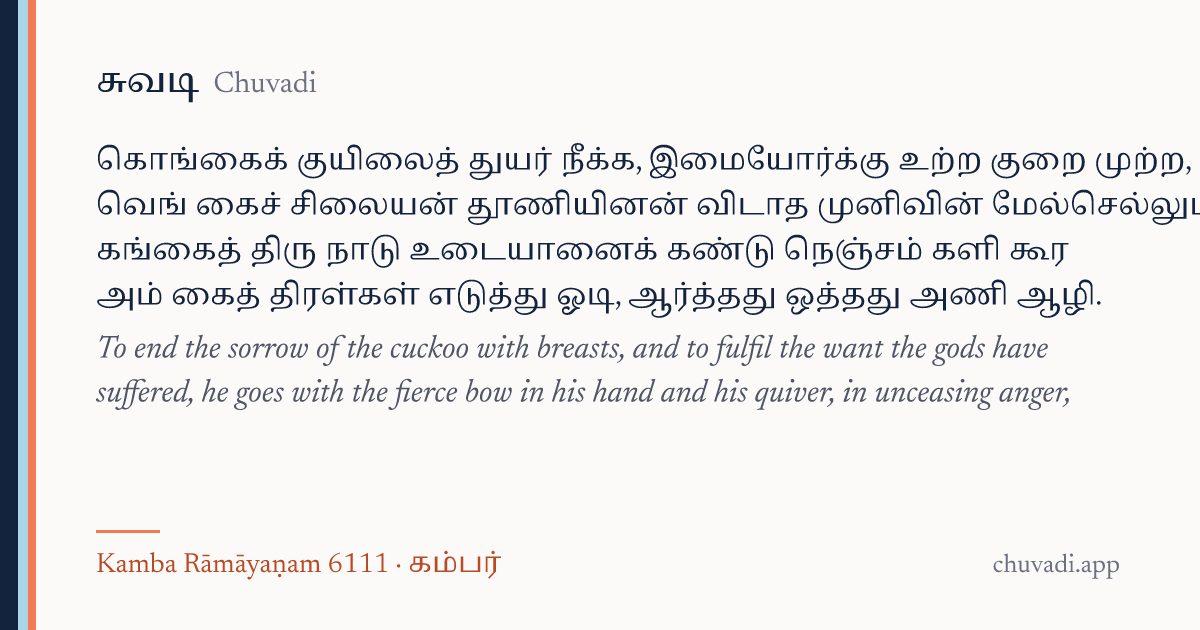
கம்பராமாயணம் 6111 · யுத்த 1.10
பாடல் · The poem
Tap a word to see its gloss in the commentary and where else it occurs.
பாட வேறுபாடு · Project Madurai reads
பொருள் · Meaning in Tamil
அணி ஆழி - அந்த அழகிய கடல்; கொங்கைக் குயிலை - மார்பகங்களை உடைய குயில் போன்றவளான சீதா பிராட்டியை; துயர் நீக்க -அவளுக்கு நேர்ந்த துன்பத்தைப் போக்கவும்; இமையோர்க்கு - தேவர்களுக்கு; உற்ற குறை முற்ற- உண்டான குறையை முடித்து வைக்கவும்; வெங்கைச் சிலையன் - கையிலே பகைவர்க்குப் பயத்தைத் தோற்றுவிக்கும் வில்லைப் பிடித்தவனாய்; தூணியினன் - அம்பறாத்தூணியையும் தாங்கியவனாய், விடாத முனிவின் மேற்செல்லும் - நீங்காத கோபத்தோடு பகைவர் மேற்செல்லும்; கங்கைத் திருநாடு உடையானை - கங்கையாறு பாயும் கோசல நாட்டுக்குரியவனான ராமனை; கண்டு நெஞ்சம் களிகூர - பார்த்து, மனம் மகிழ்ச்சி கொள்ள; அம் கைத் திரைகள் எடுத்து - அலைகளாகிய கைகளை எடுத்து; ஓடி ஆர்த்தது ஒத்தது -ஓடிவந்து வரவேற்பதை ஒத்தது;
கொங்கைக் குயில் - கொங்கைகளை உடைய குயில் போன்றவளான சீதாபிராட்டி (இல்பொருள் உவமை) கோசலம் கங்கை நீரால் வளம் பெற்றுள்ளது என்பதால் "கங்கைத் திருநாடுடையான்" என்றார் தேவர்களின் குறை தீர, சீதாபிராட்டி சிறை புகுந்தாள் ஆதலால், சீதையின் துயர் தீர தேவர்களின் குறை நீங்குமல்லவா? "குயிலைத் துயர் நீக்க இமையோர் உற்ற குறை முற்ற” என்றது கருதத்தக்கது. 'நீக்கி' என்று பாடம் கொண்டால் "துயர் நீக்கி, குறை முற்ற' என இயையும். சீதைத்துயர் தீர, தேவர் குறை தானே நீங்கும் என்பது தெளிவாகும்.
ஆங்கிலம் · English translationAI
Translation
- To end the sorrow of the cuckoo with breasts, and to fulfil the want the gods have suffered,
- he goes with the fierce bow in his hand and his quiver, in unceasing anger,
- the lord of the blessed Gaṅgā country; seeing him, its heart overflowing with joy,
- raising its lovely hands of waves and running forward, the ornate sea seemed to roar a welcome.
What the poem says
The sea seems to rush forward with its waves raised like hands, shouting with joy to greet Irāmaṉ, the lord of Kōcalam, the land watered by the Gaṅgā. He comes armed and angry to relieve Cītai, a cuckoo with a woman's breasts, an impossible image, and in doing so to free the gods from Irāvaṇaṉ's oppression. The commentary notes that ending Cītai's suffering will itself end the gods' distress.