



கம்பராமாயணம் 612 · பால 10.60
பாடல் · The poem
Tap a word to see its gloss in the commentary and where else it occurs.
பாட வேறுபாடு · Project Madurai reads
பொருள் · Meaning in Tamil
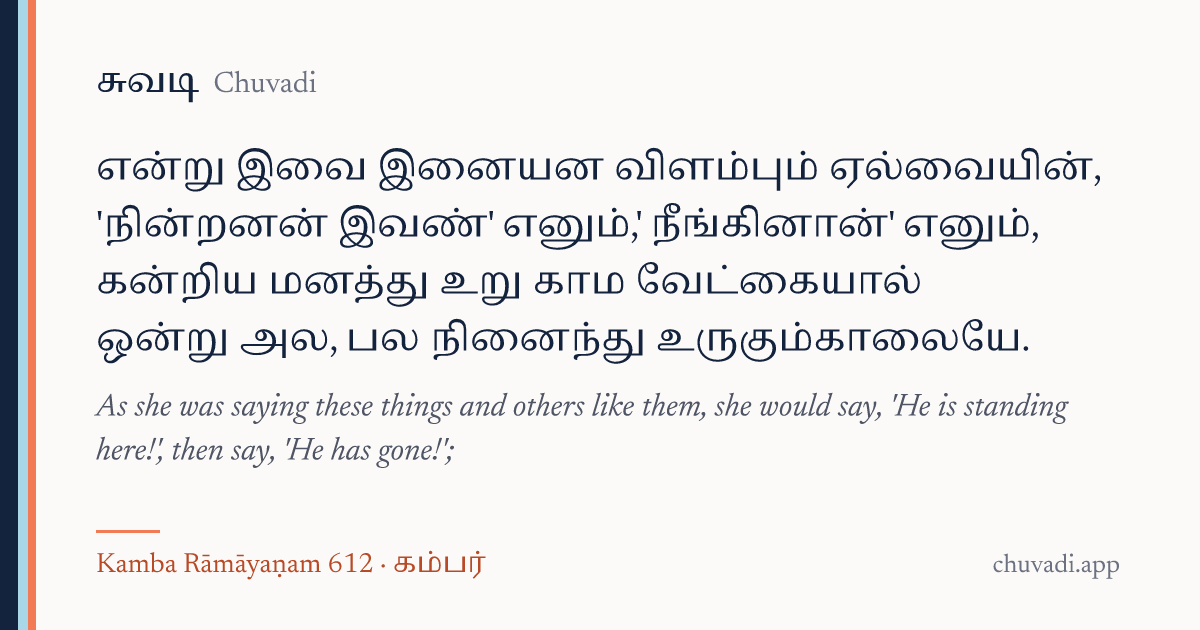
என்று இவை - என்று இவற்றையும்; இனையன - இவை போன்ற பலவற்றையும்; விளம்பும் ஏல்வையின் - (சீதை) தனக்குள் கூறுகின்ற பொழுதில்; இவண் நின்றனன் எனும்- (உரு வெளிப்பாட்டில் அவன் தன் எதிரில் தோன்ற) நான் முன்பு பார்த்த வீரன் இதோ இங்கு நிற்கின்றான் என்பாள்; நீங்கினான் எனும் - (உடனே அவ்வுரு மறைதலால்) நீங்கிவிட்டான் என்பாள்; கன்றிய மனத்து - (இவ்வாறு சீதை வெதும்பிய மனத்தில்; உறு காம வேட்கையால் - மிகுந்த காம விருப்பத்தால்; ஒன்று அல பல நினைந்து - ஒன்று மட்டுமல்ல, பலவற்றையும் எண்ணி எண்ணி; உருகும் காலை - மனம் உருகும்பொழுது; காம வேட்கை; காமனால் உண்டாகிய வேட்கை; காமமாகிய வேட்கை.
ஆங்கிலம் · English translationAI
Translation
- As she was saying these things and others like them,
- she would say, 'He is standing here!', then say, 'He has gone!';
- and with the love-longing that filled her bruised heart,
- as she thought not one thing but many, and melted —
What the poem says
Cītai has visions. One moment she sees the young man standing in front of her and cries "He is here!" The next moment he vanishes and she says "He has gone!" Her bruised heart is full of longing, and she melts with a thousand thoughts. The sentence carries on into the next verse, where evening falls.