



கம்பராமாயணம் 6163 · யுத்த 2.51
பாடல் · The poem
Tap a word to see its gloss in the commentary and where else it occurs.
பாட வேறுபாடு · Project Madurai reads
பொருள் · Meaning in Tamil
ஐயா! - அரக்கர்குலத் தலைவனே! ஒருவன் இல் உறை - வேறு ஒருவனது இல்லத்தில் அவன் மனைவியாகத் தங்கி இருக்கின்ற; தவத்தியை - தவ ஒழுக்கமுள்ள ஒரு பெண்மணியை; இரங்காய் - (அவளுக்காகச் சிறிதும்) இரக்கப்படாது; வன் தொழிலினாய் - (அவளைக் கவர்ந்து வருதலாகிய கொடிய செயல் செய்தவனாய்; மறை துறந்து - நீ கற்ற வேத நெறிகளை எல்லாம் கைவிட்டு; என்று சிறை வைத்தாய் - எந்த நாள் அசோக வனத்தில் சிறை வைத்தாயோ; அன்று அரக்கர் புகழ் ஒழிவதாயின -அந்த நாளே அரக்கர் புகழ் அழியலாயிற்று; புன்தொழிலினால் - அற்பமான காரியங்களைச் செய்வதால்; இசை பொறுத்தல் - புகழ் பெற நினைப்பது; புலமைத்தோ - அறிவுடைமை ஆகுமோ? தவத்தியை-இரங்காய், வன்தொழிலினாய் மறை துறந்து என்று சிறை வைத்தாய் அன்று அரக்கர் புகழ் அழிவதாயின என இயையும் பல வகையாலும் புகழ் சேர்ந்தமையை 'ஆயின' என்ற பன்மைச் சொல் குறித்தது.
ஒருவன்-இராமன் தவத்தி- சீதை. வன்தொழில்- வஞ்சனை செய்து கவர்ந்த செயல் 'மறை துறந்து' என்பதற்கு 'முறை துறந்து' என்பது பாடமாயின் அரச நீதியை விட்டு என்பது பொருளாகும். இசை-புகழ். தீய செயலால் புகழ் பெற நினைப்பது அறிவுடைமை அன்று என்பது கருத்து. பொறுத்தல் - தாங்குதல், சுமத்தல். "எளிதென இல்லிறப்பான் எய்தும் எஞ்ஞான்றும் விளியாது நிற்கும் பழி” (குறள் 145) இங்கு நினைவு கூரத்தக்கது.
ஆங்கிலம் · English translationAI
Translation
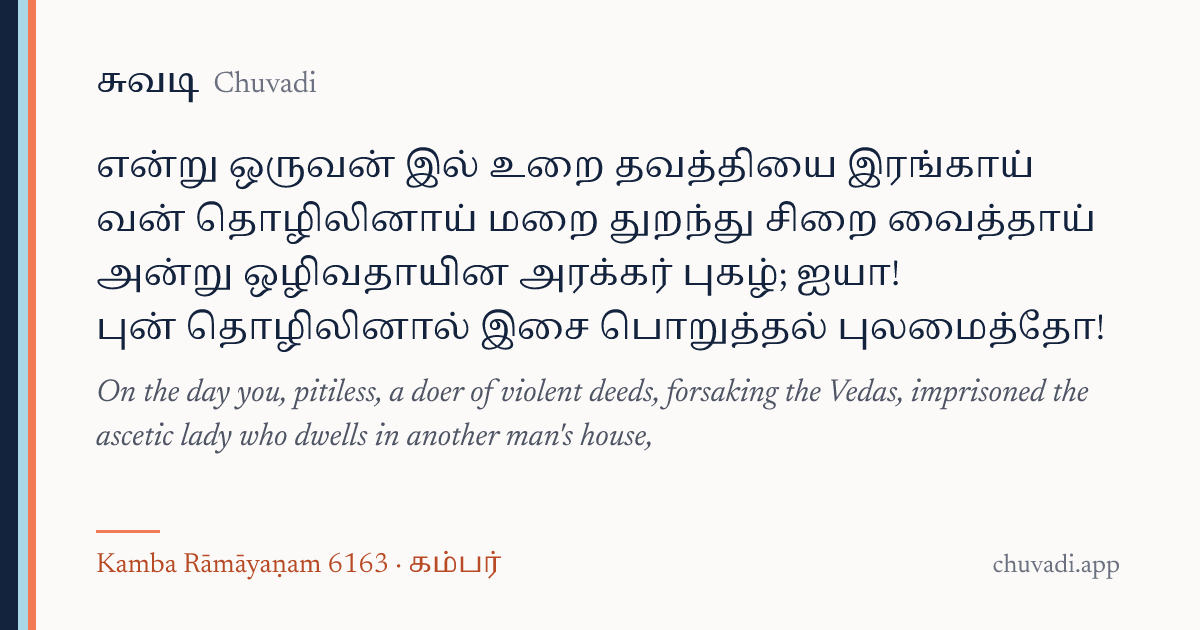
- On the day you, pitiless, a doer of violent deeds, forsaking the Vedas, imprisoned
- the ascetic lady who dwells in another man's house,
- on that day the glories of the demons began to perish; sire,
- is it wisdom to try to carry fame by base deeds?
What the poem says
Kumpakaruṇaṉ tells Irāvaṇaṉ that the demons' glory began to die the day he abandoned the teaching of the Vedas and, without pity, imprisoned Cītai, a chaste woman who belonged to another man's home. No one wins fame through vile deeds. The commentary compares a Tirukkuṟaḷ couplet: the man who thinks it easy to violate another's home earns undying disgrace.