



கம்பராமாயணம் 6183 · யுத்த 2.71
பாடல் · The poem
Tap a word to see its gloss in the commentary and where else it occurs.
பாட வேறுபாடு · Project Madurai reads
பொருள் · Meaning in Tamil
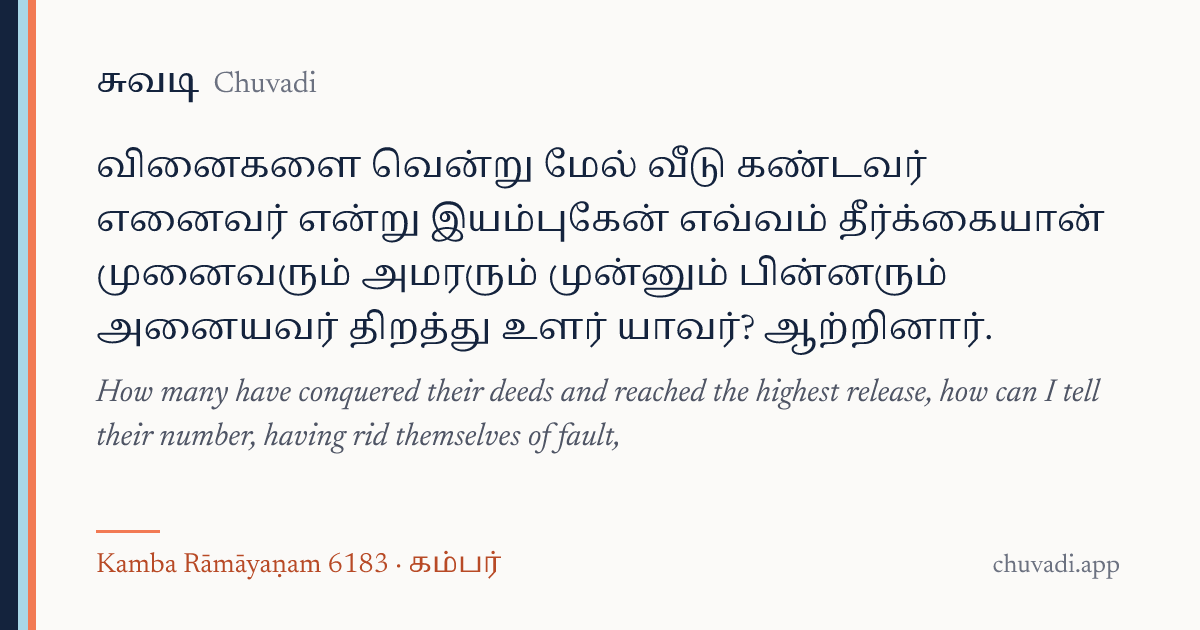
முனைவரும் அமரரும் - முனிவர்களும் தேவர்களும் ; முன்னும் பின்னரும் - முற்காலத்தும் பிற்காலத்தும், எவ்வம் தீர்க்கையான் - குற்றமான செயல்களை விட்டு விட்டமையால்; வினைகளை வென்று - இருவினைகளையும் வென்று; மேல் வீடு கண்டவர் - மேலான பரமபதத்தை அடைந்தவர்கள்; எனைவர் என்று இயம்புகேன் - எத்தனை பேர் என்று சொல்லுவேன்; அனையவர் திறத்து - அந்த அசுரர் முதலானவர்களுள்; யாவர் ஆற்றினார் உளர் - வீட்டின்பம் பெற்றவர் யாருளர்?
முனைவர் - முனிவர்கள். எனைவர் - எவ்வளவினர். நல்வினை தீவினை இரண்டினுள் நல்வினையும் பிறப்புக்குக்காரணமாதலால் 'வினைகளை' வென்று என்றார். மேல்வீடு - உயர்ந்த வீட்டின்பம். எவ்வம்-குற்றம்.
ஆங்கிலம் · English translationAI
Translation
- How many have conquered their deeds and reached the highest release,
- how can I tell their number, having rid themselves of fault,
- sages and gods, in former times and later?
- But among those others, who is there that achieved it?
What the poem says
Countless sages and gods, past and present, have overcome both good and bad karma and won final liberation by giving up wrongdoing. Vīṭaṇaṉ asks whether any of the Asuras and their like ever reached it. Both kinds of karma are mentioned because even good deeds bind one to rebirth.