



கம்பராமாயணம் 6203 · யுத்த 2.91
பாடல் · The poem
Tap a word to see its gloss in the commentary and where else it occurs.
பாட வேறுபாடு · Project Madurai reads
பொருள் · Meaning in Tamil
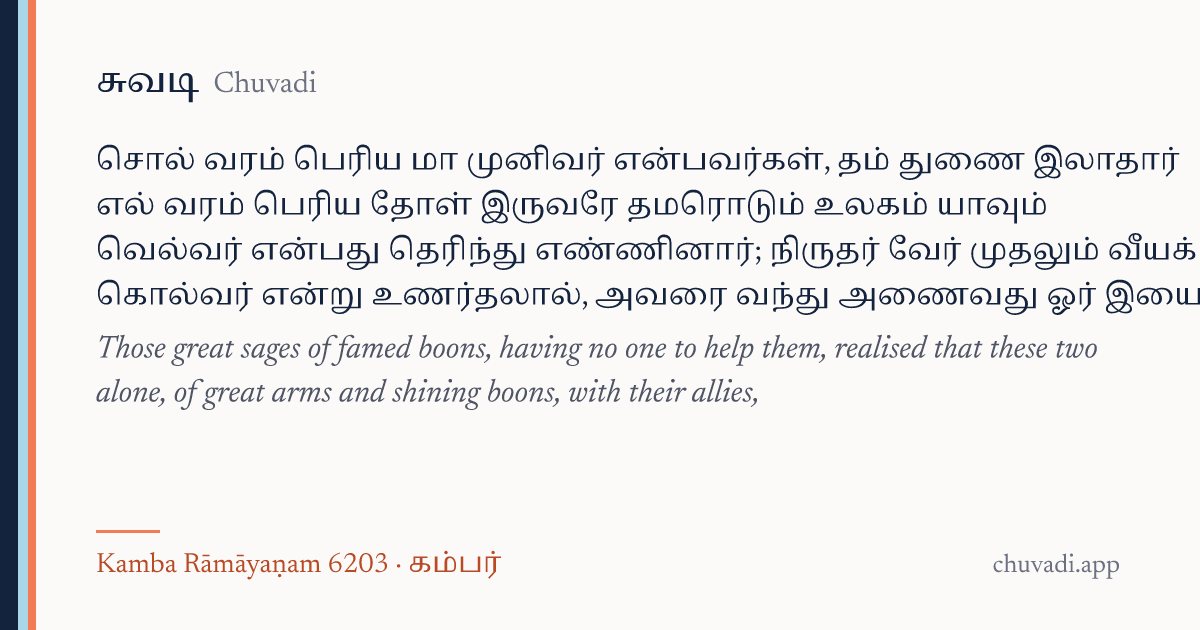
சொல்வரம் பெரிய - எவரும் வியந்து கூறும் வரபலம் மிக்க; மாமுனிவர் என்பவர்கள் - சிறந்த முனிவர்கள் என்போர்; தம் துணையிலாதார் - தமக்கு வரும் துன்பங்களைப் போக்கும் துணைவர் இல்லாதவராய்; எல் வரம் பெரியதோள் - சிறந்த வரபலம் பெற்ற பெரிய தோள்களையுடைய; இருவரே - இராமனும் இலக்குவனுமாகிய இருவர் மட்டுமே; தமரொடும் உலகம் யாவும் வெல்வர் - தமரோடு உலகனைத்தும் வெல்ல வல்லவராவர்; என்பது தெரிந்து - என்பதைத் தெரிந்து கொண்டதால்; எண்ணினார் - நினைத்துப் பார்த்தவர்கள்; நிருதர் வேர் முதலும் வீயக் கொல்வர் - அரக்கர்கள் அடியோடு அழிந்து படுமாறு கொல்வார்கள்; என்று உணர்தலால் - என்று அறிந்துணர்வதால்; அவரை வந்து அணைவதோர் - அந்த வீரர்களைத் துணையாகக்கொண்டு அடைவதற்காக ஒரு; இயைபு கொண்டார் - தொடர்பு கொண்டார்கள்.
சொல்வரம்-வியந்து கூறும் வரபலம்.
ஆங்கிலம் · English translationAI
Translation
- Those great sages of famed boons, having no one to help them,
- realised that these two alone, of great arms and shining boons, with their allies,
- could conquer all the world; reflecting on this,
- knowing they would kill the demons root and all, they sought them out and joined them.
What the poem says
Vīṭaṇaṉ explains why the sages of the forest attached themselves to Irāmaṉ. With no other defender against the demons' harassment, they recognised that these two brothers alone could destroy the demon race entirely.