



கம்பராமாயணம் 6205 · யுத்த 2.93
பாடல் · The poem
Tap a word to see its gloss in the commentary and where else it occurs.
பாட வேறுபாடு · Project Madurai reads
பொருள் · Meaning in Tamil
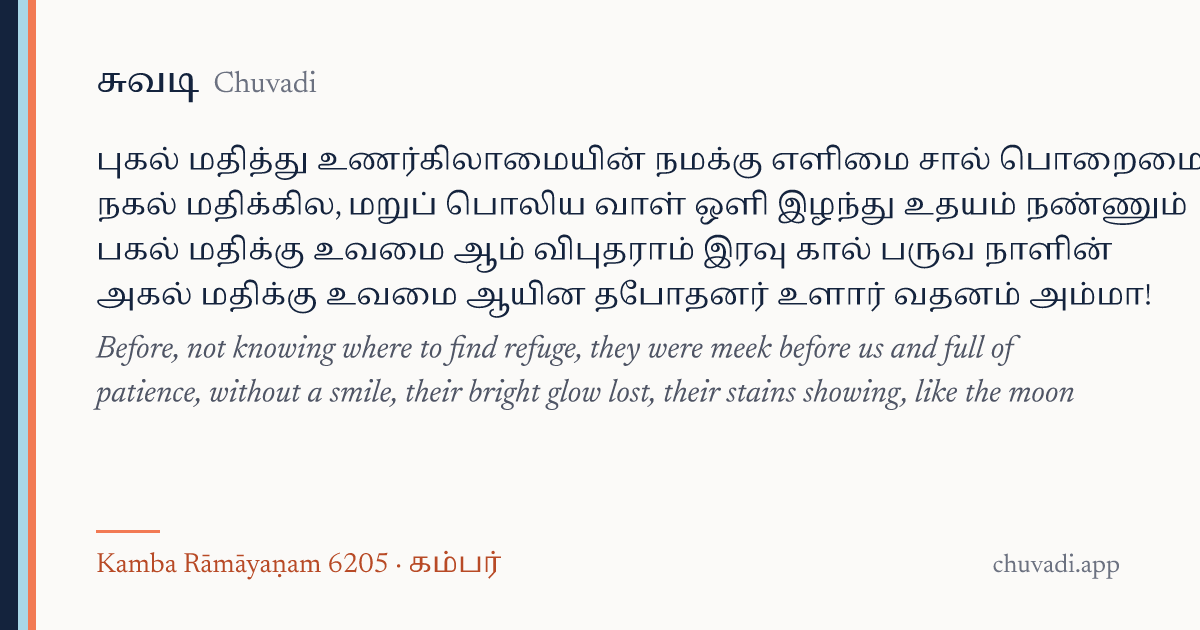
தபோதனர் உளார்வதனம் - தவச்செல்வர்களான முனிவர்களது முகங்களெல்லாம்; புகல்மதித்து உணர்கிலாமையின்- முன்பு, தங்களுக்குப் பாதுகாப்பு எதுவென மதித்து அறியாமையால்; நமக்கு எளிமை சால் - நமக்கு எளியவர்களாகவும்; பொறைமை கூர - மிகுந்த பொறுமை உள்ளவர்களாகவும்; நகல் மதிக்கில - மகிழ்ச்சி இல்லாதவர்களாகவும்; மறுப்பொலிய வாள் ஒளி இழந்து - கறை விளங்க, நல்ல ஒளியை இழந்து; உதயம் நண்ணும் - சூரியன் உதித்தபின் காணப்படும்; பகல் மதிக்கு உவமையாம் - பகலில் தோன்றும் மதியை ஒத்துக் காணப்பட்டன; விபுதராம் - தவமுனிவர்களாகிய அவர்கள் (முகங்கள்); இரவு கால் பருவ நாளின் - இரவுக்காலத்தில் பெளர்ணமியில் தோன்றும்; அகல் மதிக்கு உவமை ஆயின - முழு மதிக்கு உவமை ஆயின.
புகல்-பாதுகாப்பான இடம். நகல் - மகிழ்ச்சி. பருவ காலம்-பெளர்ணமி நாள். வதனம்-முகம். தபோதனர்; விபுதர் -முனிவர்கள்.
ஆங்கிலம் · English translationAI
Translation
- Before, not knowing where to find refuge, they were meek before us and full of patience,
- without a smile, their bright glow lost, their stains showing, like the moon
- that lingers by day after the sun has risen; but now, ah, the faces of the sages
- have become like the broad full moon on the night of its season.
What the poem says
Another sign of the times: the faces of the ascetics. While they had no protector, they were pale and joyless before the demons, like the washed-out moon seen in daylight. Now that Irāmaṉ has come, their faces shine like the full moon at night.