



கம்பராமாயணம் 6209 · யுத்த 2.97
பாடல் · The poem
Tap a word to see its gloss in the commentary and where else it occurs.
பொருள் · Meaning in Tamil
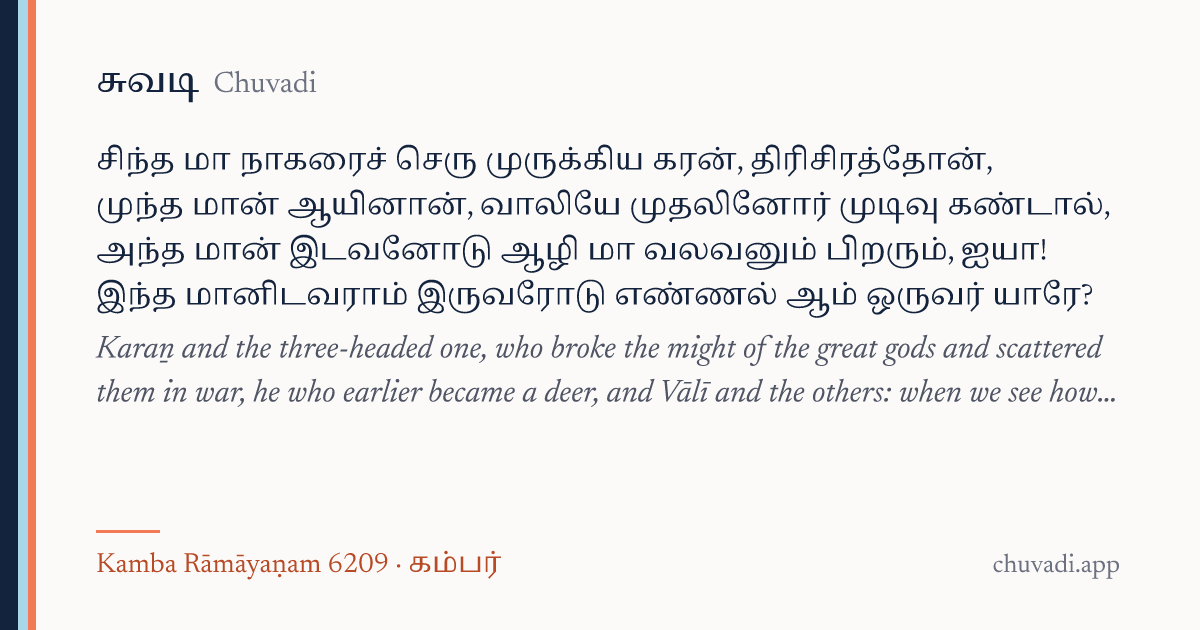
ஐயா - தலைவனே! சிந்த மாநாகரைச் செருமுருக்கிய - சிறந்த தேவர்களை எல்லாம் சிதறும்படி போரில் வலிமை அழித்த; கரன், திரி சிரத்தோன் - கரனும் திரிசிரனும்; முந்த மான் ஆயினான் - முன்னே மாய மானாக வந்த மாரீசனும், வாலியே முதலினோர் - கிட்கிந்தை மன்னனான வாலி முதலானவர்களும்; முடிவு கண்டால் - இராம லக்குவரால் இறந்தழிந்தார்கள் என்பதை அறிந்தால்; அந்த மான் இடவனோடு - மான் போன்ற உமையவளை இடப்புறத்தில் கொண்ட சிவபிரானும்; ஆழிமாவலவனும் - சக்கரப் படையை உடைய வல்லவரான திருமாலும்; இந்த மானிடவராம் - இந்த மனிதர்களாகிய; இருவரோடு - இராமன், இலக்குவன் என்ற இருவருடனே; எண்ணலாம் ஒருவர் யாரே - நிகராக எண்ணத் தகுந்த ஒருவர் யார் இருக்கிறார்கள்?
நாகர்-தேவர்கள். சிந்த-சிதறியோட. செரு-போர். முருக்கிய- வலிமையை அழித்த. மான் இடவன் மானை இடக்கரத்தில் ஏந்திய சிவன் எனவும் கொள்ள இடமுண்டு.
ஆங்கிலம் · English translationAI
Translation
- Karaṉ and the three-headed one, who broke the might of the great gods and scattered them in war,
- he who earlier became a deer, and Vālī and the others: when we see how they ended,
- then, my lord, the one with the deer on his left, the great lord of the discus, and the others:
- who could be counted alongside these two who are men?
What the poem says
Vīṭaṇaṉ lists the strong demons and warriors the brothers have already killed: Karaṉ, Tiricirā, Mārīcaṉ who took the shape of the golden deer, and Vālī. After that, not even Śiva, who holds a deer and has Umā at his left side, or Viṣṇu with his discus, could be called their equal.