



கம்பராமாயணம் 6222 · யுத்த 2.110
பாடல் · The poem
Tap a word to see its gloss in the commentary and where else it occurs.
பொருள் · Meaning in Tamil
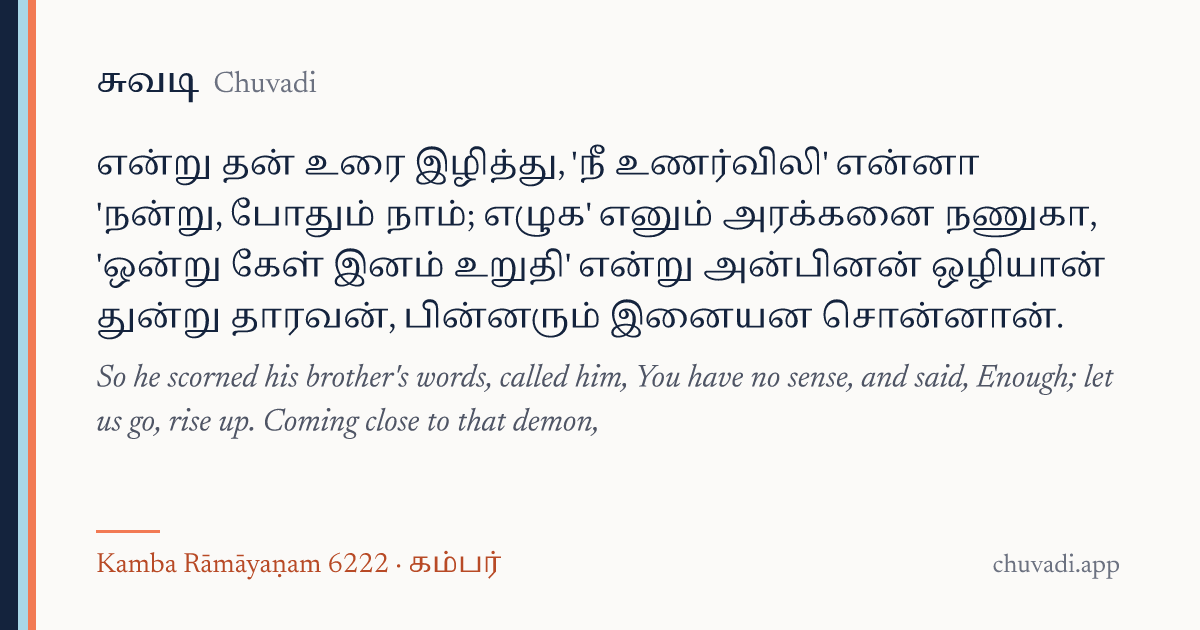
என்று தன் உரை இழித்து - என்றெல்லாம் தான் கூறிய நல்லுரைகளைப் பழித்து; நீ 'உணர்விலி' என்னா - நீ அறிவில்லாதவன் என்று வீடணனைப் பழித்து விட்டு; நன்று போதும் நாம் எழுக - அங்கு திரண்டு நின்ற அசுரர்களைப் பார்த்து நல்லது நாம் போரிடச் செல்வோம்; எனும் அரக்கனை நணுகா - என்று கூறிய இராவணனை நெருங்கி நின்று; ஒன்று கேள் இனம் உறுதி என்று - இன்னும் நான் கூறும் உறுதி ஒன்றினைக் கேள் என்று; அன்பினன் - அன்பு மிக்கவனாய்; ஒழியான் - இராவணனை விட்டு நீங்காதவனாய், துன்றுதாரவன் - நெருங்கிய மலர்மாலை அணிந்த வீடணன்; பின்னரும் இனையன சொன்னான் - மறுபடியும் பின்வருமாறு கூறினான்.
உணர்விலி-அறிவில்லாதவன். போதும்- செல்வோம். என்னா- என்று. நணுகா- நணுகி. இரண்டும் செய்யா என்ற வாய்பாட்டு வினைஎச்சம். 'அன்பினன் ஒழியான்' என்ற தொடர்க்கு இவ்வளவு கேவலப்படுத்தப்பட்ட பின்னும் தமையனிடத்து அன்பு நீங்காதவனாய் என்று பொருள் கொள்ளலாம்.
ஆங்கிலம் · English translationAI
Translation
- So he scorned his brother's words, called him, You have no sense,
- and said, Enough; let us go, rise up. Coming close to that demon,
- saying, Hear one more piece of sound counsel, unwilling to leave him out of love,
- he of the thick garland spoke these words again.
What the poem says
Irāvaṇaṉ ends the debate and calls his demons to war. Yet Vīṭaṇaṉ, still loving his brother after such insults, steps closer and insists on being heard once more.