



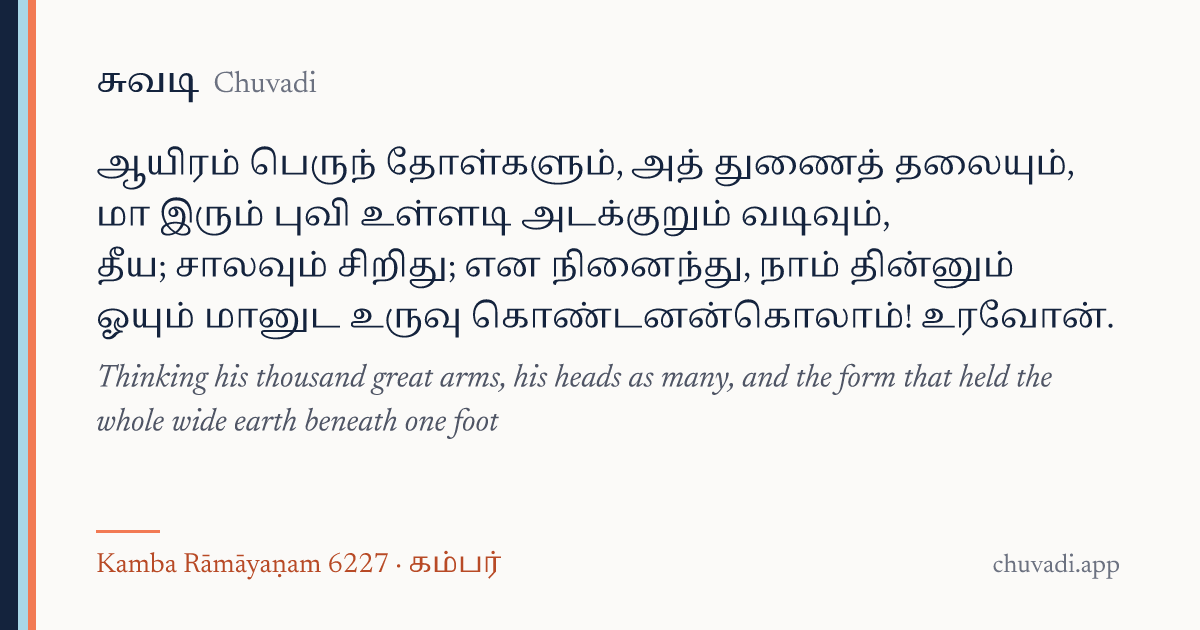
கம்பராமாயணம் 6227 · யுத்த 2.115
பாடல் · The poem
Tap a word to see its gloss in the commentary and where else it occurs.
பாட வேறுபாடு · Project Madurai reads
பொருள் · Meaning in Tamil
ஆயிரம் பெருந்தோள்களும் - ஆயிரம் பெரும்தோள்களையும்; அத்துணைத்தலையும் - அந்த அளவினதான தலைகளையும்; மாஇரும் புவி- பெரிய இந்த உலகம் முழுவதையும்; உள்ளடி அடக்குறும் வடிவும் - தனது ஓரடிக்குள்ளே அடக்கும் பெரியதொரு வடிவமும்; தீய சாலவும் சிறிது என நினைந்து - தீமை தருவன, மிகவும் சிறியவை என்று நினைத்து; உரவோன் - நீ சிறப்பித்துச் சொல்லும் அந்த வலியவன்; நாம் தின்னும் ஓயும் மானுட உருவு - நாம் தின்னத்தகுந்த வலிமையற்ற மனித வடிவத்தை; கொண்டனன் கொல் - கொண்டானோ?
திருமால் ஆயிரம் தோள்களும், ஆயிரம் தலைகளும், ஆயிரம் கைகளும், ஆயிரம் கண்களும் உடையவர் என்பதை "காலாயிரம் முடியாயிரம், ஆயிரம் கை பரப்பி” என்ற அட்டப்பிரபந்தப் பாடலாலும் புருஷ சூக்தத்தாலும் அறியலாம். உலகத்தை ஓரடிக்கீழ் ஒடுக்கிய பெருவடிவம் திருவிக்ரம அவதாரம். அத்தகைய பேருருவம் சிறியது - தீயது என நினைத்து, நாம் தின்னத்தக்க - வலிமையற்ற மனித வடிவைக் கொண்டவனையோ-நம்மை எல்லாம் கொல்ல வல்ல வலிமையுடையவன் என்று கூறினாய் என வீடணனை வெகுண்டும், இராமபிரானை இகழ்ந்தும் கூறினான்.
ஆங்கிலம் · English translationAI
Translation
- Thinking his thousand great arms, his heads as many,
- and the form that held the whole wide earth beneath one foot
- were evil and far too small, has that mighty one
- taken a feeble human shape, fit for us to eat?
What the poem says
Viṣṇu in scripture has a thousand heads and arms, and as Trivikrama he measured the whole world in a single stride. Irāvaṇaṉ scoffs: did this cosmic being think his great forms too small and choose instead the weak body of a man, the demons' food? He mocks both Irāmaṉ and Vīṭaṇaṉ's claim.