



கம்பராமாயணம் 6233 · யுத்த 3.3
பாடல் · The poem
Tap a word to see its gloss in the commentary and where else it occurs.
பாட வேறுபாடு · Project Madurai reads
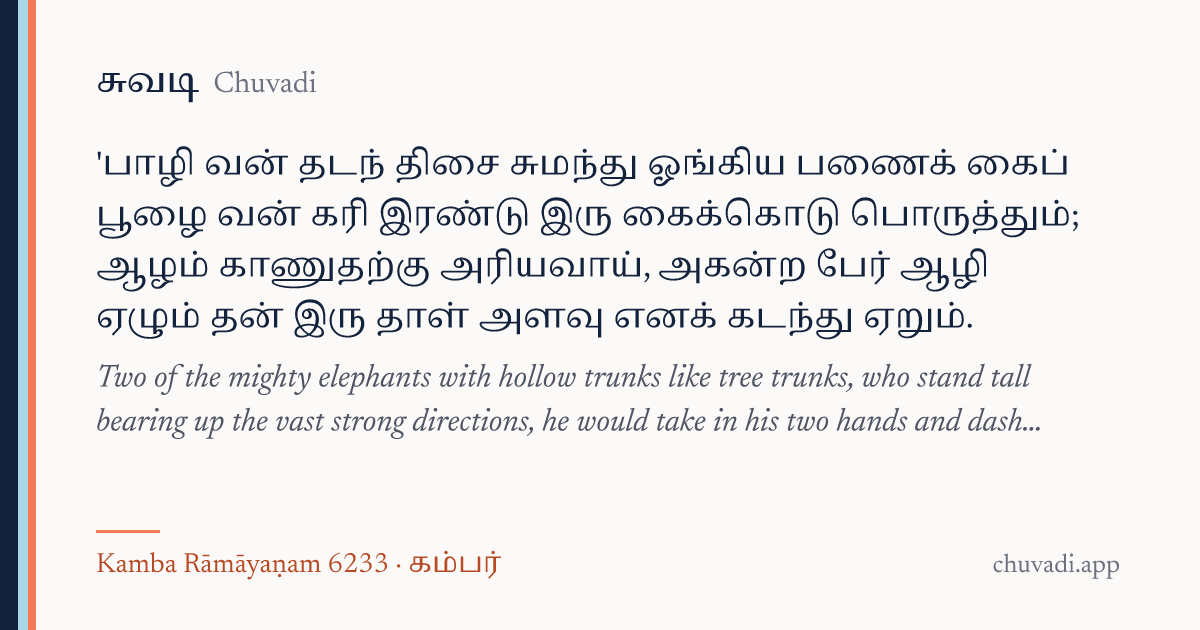
1'பாழி வன் தடம் திசை சுமந்து ஓங்கிய பணைக்கைப்
பூழி வன்கரி இரண்டு இருகை கொடு பொருத்தும்;
ஆழம் காணுதற்கு அரியவாய், அகன்ற பேர் ஆழி
ஏழும் தன் இருதாள் அளவு எனக் கடந்து ஏறும்.
பொருள் · Meaning in Tamil
பாழி வன் தடந்திசை - அகன்ற, வலிய, பெரியதிசைகளை; சுமந்து ஓங்கிய பணைக்கை - சுமந்து உயர்ந்த பருத்த தும்பிக்கைகளில் எல்லாம்; பூழை வன் கரி - உள்துளை உடைய வன்மை மிகுந்த திக்குயானைகளில்; இரண்டு இருகைக் கொடு பொருத்தும் - இரண்டினைத் தனது இரண்டு கைகளிலும் கொண்டு மோத விடுவான்; ஆழம் காணுதற்கு அரியவாய் - ஆழத்தை அளந்தறிய இயலாதனவாகிய; அகன்ற பேர் ஆழி ஏழும்- விசாலமான ஏழு கடல்களையும்; தன் இரு தாள் அளவென - தனது இருபாதங்களின் அளவு உடையன என்னும்படி; கடந்து ஏறும் - கடந்து கரை ஏறுவான்.
ஆங்கிலம் · English translationAI
Translation
- Two of the mighty elephants with hollow trunks like tree trunks, who stand tall bearing up
- the vast strong directions, he would take in his two hands and dash together;
- the seven wide oceans, whose depth none can fathom,
- he would cross and climb out of as if they came only to his two feet.
What the poem says
More of Iraṇiyaṉ's might: he plays with the elephants that hold up the corners of the world, knocking them together, and wades through the seven oceans as if they were ankle-deep.
ஒலிபெயர்ப்பு · Transliteration (ISO 15919)
1'pāḻi vaṉ taṭan ticai cumantu ōṅkiya paṇaik kaip
pūḻai vaṉ kari iraṇṭu iru kaikkoṭu poruttum;
āḻam kāṇutaṟku ariyavāy, akaṉṟa pēr āḻi
ēḻum taṉ iru tāḷ aḷavu eṉak kaṭantu ēṟum.