



கம்பராமாயணம் 6250 · யுத்த 3.20
பாடல் · The poem
Tap a word to see its gloss in the commentary and where else it occurs.
பாட வேறுபாடு · Project Madurai reads
பொருள் · Meaning in Tamil
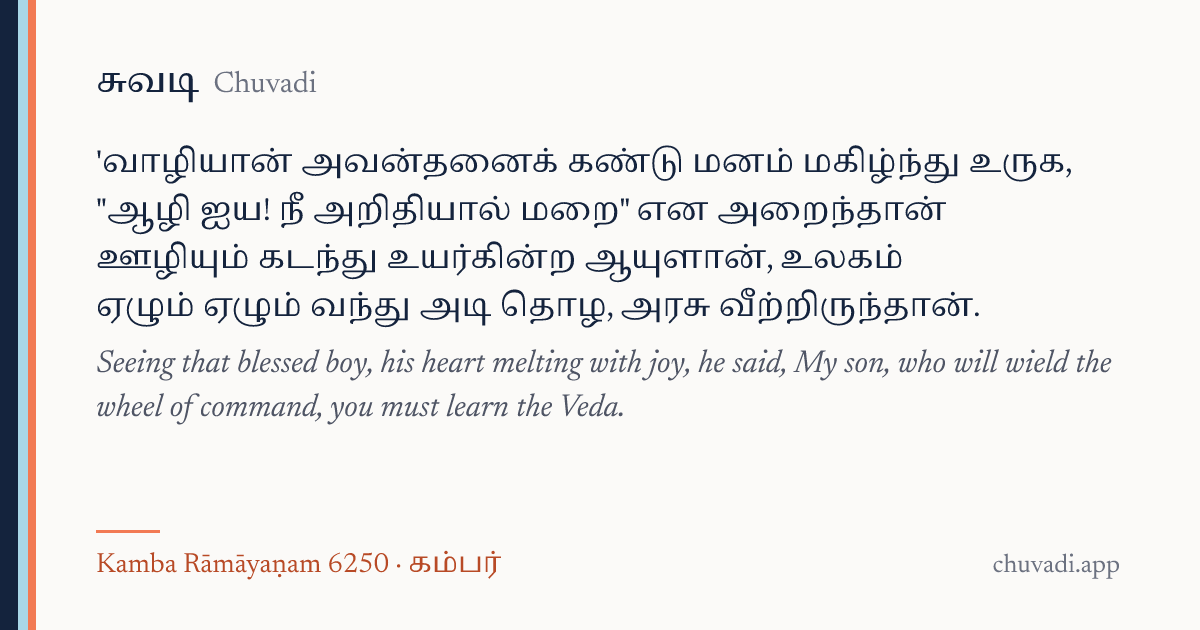
ஊழியும் கடந்து உயர்கின்ற ஆயுளான் - உலக முடிவுக்காலமான ஊழிக்காலத்தையும் கடந்து நீண்ட ஆயுளை உடையவனும்; உலகம் ஏழும் ஏழும் - பதினான்கு உலகங்களும், வந்து அடிதொழ - திரண்டு வந்து தனது பாதங்களில் வீழ்ந்து வணங்குமாறு; அரசு வீற்றிருந்தான் - எல்லா உலகங்களுக்கும் தானே மன்னனாக ஆட்சி செலுத்துபவனுமான இரணியன்; வாழியான் அவன் தனைக் கண்டு - நல்வாழ்வுக்குரிய நற்பேறு பெற்ற பிரகலாதனைப் பார்த்து; மனம் மகிழ்ந்து உருகி - மனம் மிக மகிழ்ந்து உள்ளம் உருகி; ஆழி ஐய நீ அறிதியால் மறை - எனக்குப் பின் எனது ஆணையாகிய சக்கரத்தை இயக்கும் நீ எல்லா வேதங்களையும் கற்பாயாக, என அறைந்தான் - என்று கூறினான்;
ஆழி- ஆணையாகிய சக்கரம். தனக்குப் பின் அரசாள இருப்பவன் என்பதால் இரணியன் 'ஆழி ஐய' என அழைத்தான் என்க. மனம் மகிழ்ந்து உருகி - நெஞ்சு நெகிழ்ந்து உருகி. தந்தைக்கு உரிய இயல்பான அன்பின் நெகிழ்ச்சி இரணியனுக்கும் இருந்தது என்பதைக் கவிச்சக்கரவர்த்தி இப்பாடலில் குறித்து இருக்கிறார்.
ஆங்கிலம் · English translationAI
Translation
- Seeing that blessed boy, his heart melting with joy, he said,
- My son, who will wield the wheel of command, you must learn the Veda.
- So spoke he whose life outlasted the ages of the world's ending,
- who sat enthroned while all the seven and seven worlds came to bow at his feet.
What the poem says
Iraṇiyaṉ, the near-immortal ruler of the fourteen worlds, is moved by a father's tenderness at the sight of his son. He calls him the one who will turn the wheel of royal command after him, and orders that he be taught the Veda.