



கம்பராமாயணம் 6253 · யுத்த 3.23
பாடல் · The poem
Tap a word to see its gloss in the commentary and where else it occurs.
பாட வேறுபாடு · Project Madurai reads
பொருள் · Meaning in Tamil
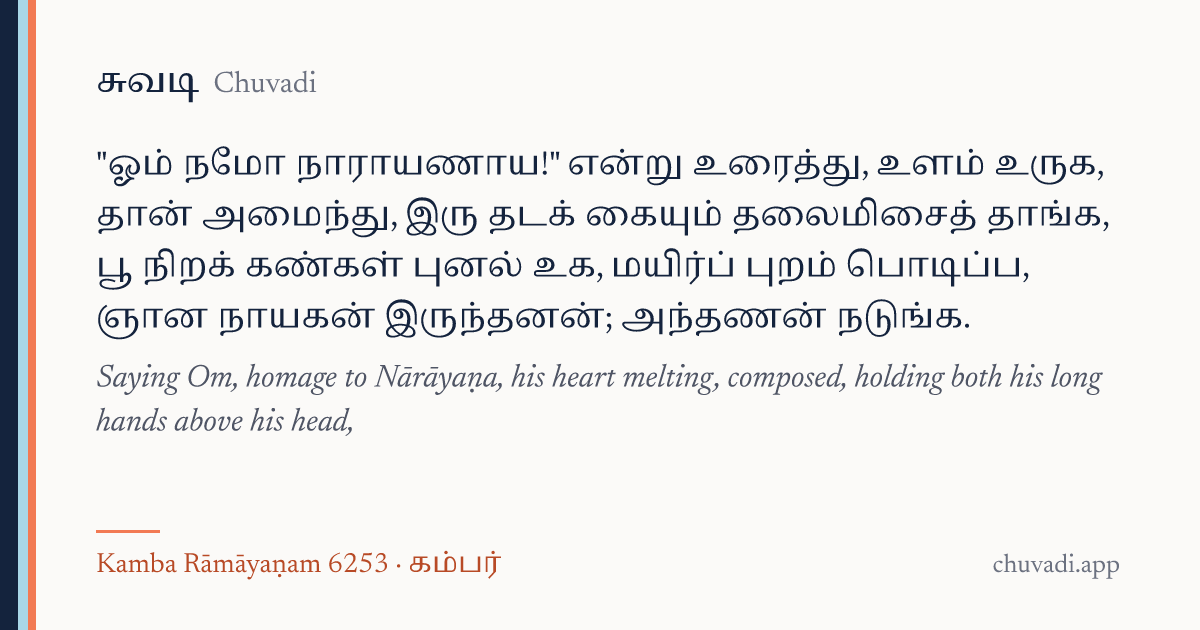
ஞானநாயகன் - ஞானம் மிக்க தலைவனாகிய பிரகலாதன்; 'ஓம் நமோ நாராயணாய! - ஓம் நமோ நாராயணாய நம, என்றுரைத்து - என்னும் திருமந்திரத்தை உச்சரித்து; உளம் உருகி- மனம் நெகிழ்ந்து உருகி; தான் அமைந்து - தான் அடங்கி இருந்து; இருதடக் கையும் தலைமிசை தாங்கி - தனது இரு நீண்ட கைகளையும் தலையின் மீது சேர்த்து; பூநிறக் கண்கள் புனல் உக - தாமரை மலர் போன்ற இரு கண்களிலும் கண்ணீர் பெருக; மயிர்ப் புறம் பொடிப்ப- உடல் முழுதும் மயிர்சிலிர்க்க; இருந்தனன் - அமர்ந்திருந்தான்; அந்தணன் நடுங்கி - அதைக் கண்ட ஆசிரியனாகிய மறையவன் நடுக்க மெய்தி.
கருவிலே திருவுடையவனாகிய பிரகலாதன் இளமையிலேயே ஞானம் மிக்கவனாக, ஏனைய ஞானிகளுக்கெல்லாம் தலைவனாக விளங்கினான் என்பதால் 'ஞான நாயகன்' என்றார். பூ; தாமரை பூவெனப் படுவது பொறிவாழ் பூவே ஆதலின் தாமரை எனப்பட்டது. நிறம்: அழகு. அந்தணன் நடுங்கி என்ற வினை எச்சம் அடுத்த பாடலில் வரும் என்றான் என்ற வினை கொண்டு முடியும்.
ஆங்கிலம் · English translationAI
Translation
- Saying Om, homage to Nārāyaṇa, his heart melting,
- composed, holding both his long hands above his head,
- tears pouring from his flower-like eyes, the hair rising all over his body,
- the master of wisdom sat there, while the Brahmin trembled.
What the poem says
Pirakalātaṉ recites the eight-syllable mantra of Viṣṇu with all the signs of rapt devotion: hands joined above his head, tears in his lotus eyes and hair standing on end. His terrified teacher knows what this will mean when the king hears of it.