



கம்பராமாயணம் 6263 · யுத்த 3.33
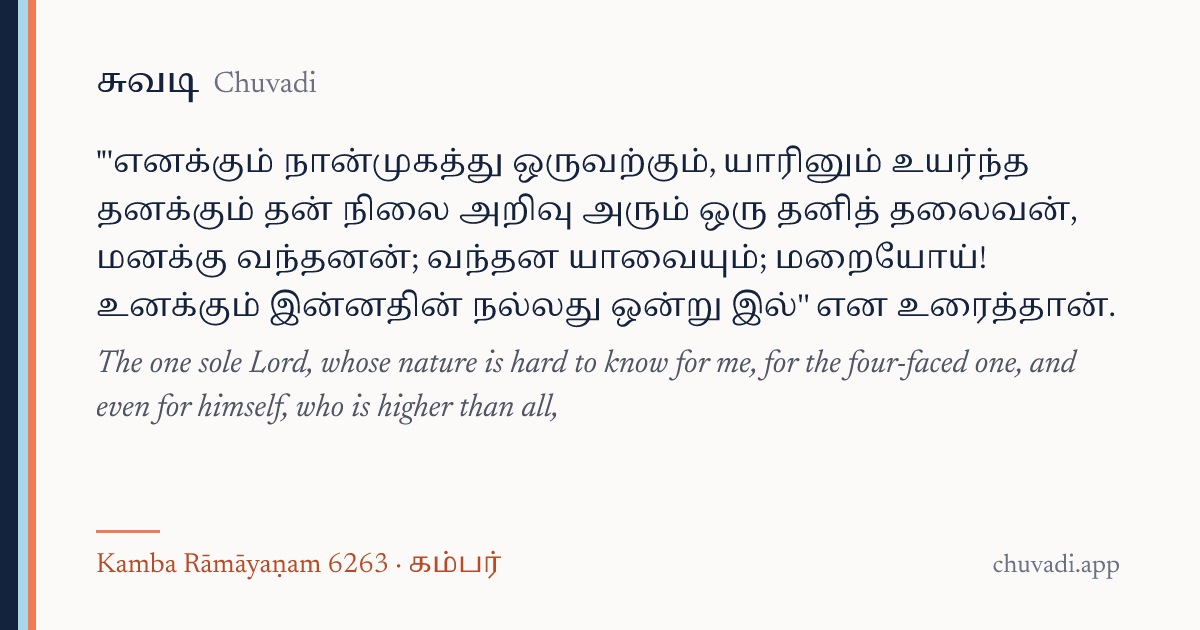
பாடல் · The poem
Tap a word to see its gloss in the commentary and where else it occurs.
பொருள் · Meaning in Tamil
மறையோய் - (வேதங்களைக் கற்ற) வேதியனே; எனக்கும் - எனக்கும்; நான் முகத்து ஒருவற்கும் - நான்கு முகங்களை உடைய பிரமதேவனாகிய அந்த ஒருவனுக்கும்; யாரினும் உயர்ந்த தனக்கும் - எல்லோரை விடவும் மிக உயர்ந்து விளங்கும் தனக்குமே; தன் நிலை அறிவரும் - தனது நிலையை அறிவதற்கு அரிய; ஒரு தனித் தலைவன் - ஒப்பற்ற பெருந்தலைவனாகிய பரமன்; மனக்குவந்தனன் - எனது மனத்தில் கோயில் கொண்டான்; யாவையும் வந்தன - அதனால் எல்லாவகை ஞானங்களும் எளிதில் வந்தெய்தின; உனக்கும் இன்னதின் நல்லது ஒன்று இல் என உரைத்தான் - உனக்கும் இதை விடவேறு நல்லது எதுவுமில்லை என்று கூறினான்.
ஒருதனித்தலைவன் என்பது "உன்னை நீ தானும் உணராதாய்" என்ற வில்லிபாரதப் பாடலையும் (வில்லி. கிருட்டிணன் தூது.30); தனக்கும் தன் தன்மை அறிவரியான் என்பதையும் (நம்மாழ்வார் 2892) நினைவுறுத்தும். மனக்கு - மனத்துக்கு என்பதன் தொகுத்தல் விகாரம். இன்னதின் - இதைவிடவும். ஒரு தனி - மீமிசைச் சொல்.
ஆங்கிலம் · English translationAI
Translation
- The one sole Lord, whose nature is hard to know for me, for the four-faced one,
- and even for himself, who is higher than all,
- has come into my mind; and with him all things have come. O man of the Veda,
- for you too there is nothing better than this. So he spoke.
What the poem says
God is so great that not even Brahmā, or God himself, can fully know his nature. Yet he has come to dwell in the boy's heart, bringing all knowledge with him. Pirakalātaṉ urges his teacher to turn to God too. The commentary compares lines from Villipāratam and Nammāḻvār on the Lord who does not know his own limits.