



கம்பராமாயணம் 629 · பால 10.77
பாடல் · The poem
Tap a word to see its gloss in the commentary and where else it occurs.
பாட வேறுபாடு · Project Madurai reads
பொருள் · Meaning in Tamil
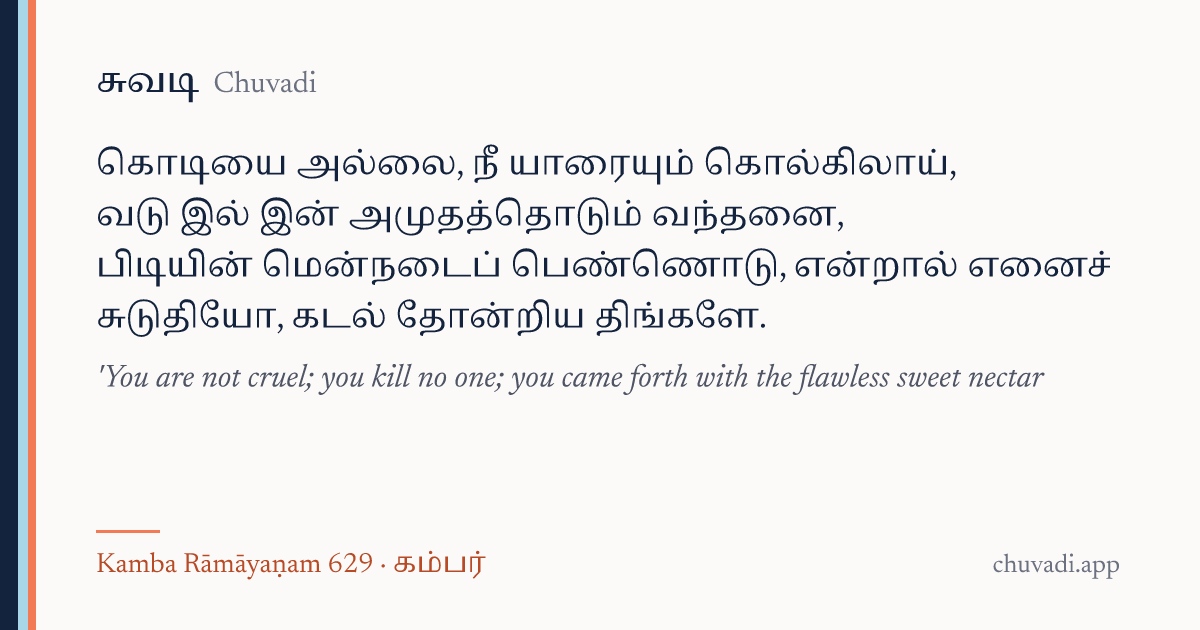
கடல் தோன்றிய - கடலிலிருந்து உதித்த; திங்களே - சந்திரனே!; நீ கொடியை அல்லை - நீ இயற்கையில் கொடியவன் அல்லன்; யாரையும் கொல்கிலாய் - (அது எவ்வாறு எனில்) உலகத்தில் எவரையும் கொல்கின்றாய் இல்லை; வடு இல் - (தவிர நீ) குற்றமற்ற; இன் அமுதத்தொடும் - இனிய அமுதத்துடனும்; பிடியின் மென்னடை - பெண்யானை போன்ற நடையுடைய; பெண்ணொடும் - திருமகளுடனும்; வந்தனை - பிறந்தாய்; என்றால் - இவ்வாறு இருப்பதால்; எனைச் சுடுதியோ - என்னைச் சுடுவதும் தக்கதோ?
'சந்திரனே! நீ எல்லோரையும் கொல்லும் தன்மையை இயற்கையாகப் பெற்றாய் இல்லை; ஏனெனில் கடலினின்று தோன்றியவன் ஆதலால் இயல்பாகவே குளிர்ச்சி பொருந்தியவன்; அமுதத்தோடு பிறந்தவனாதலால் பெண்ணிடம் அன்பு வைக்கத் தக்கவன். அவ்வாறு இருக்க நீ பெண்ணாகிய என்னை வருத்துவது முறையோ' என்கிறாள் சீதை.
ஆங்கிலம் · English translationAI
Translation
- 'You are not cruel; you kill no one;
- you came forth with the flawless sweet nectar
- and with the woman whose gait is the soft gait of a cow elephant — and yet
- do you burn me, O moon who rose from the sea?'
What the poem says
Cītai reasons with the moon. By nature it is not cruel and harms nobody: it was born from the ocean of milk, so it should be cool, and it came up at the churning together with the nectar of immortality and with the goddess Lakṣmī, who walks gracefully like a female elephant, so it ought to be kind to women.
How then, she asks, can it scorch her? Her question shows how love has turned every gentle thing into a torment.