



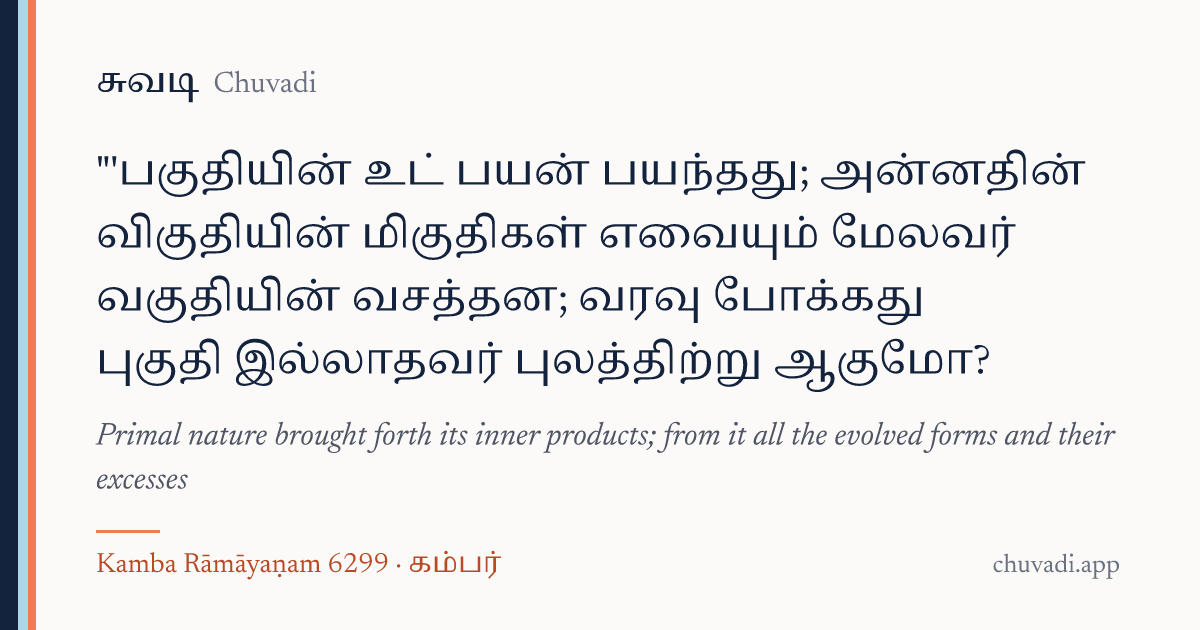
கம்பராமாயணம் 6299 · யுத்த 3.69
பாடல் · The poem
Tap a word to see its gloss in the commentary and where else it occurs.
பொருள் · Meaning in Tamil
பகுதி- மூலப் பிரகிருதி; அழிவில்லாதது, அளவற்றது; முக்குணமுடையது; உலகுக்கு முதற்காரணமானது; தோற்றமும் அழிவும் இல்லாதது. பரமன் திருவிளையாட்டுக்குக் கருவியாய் விளங்குவது மூலப் பிரகிருதி. இதனைப் பரிபாடல் தொண்டு என்னும். இந்த மூலப்பிரகிருதியிலிருந்து "மான்" முதலான தத்துவங்கள் தோன்றும். இதிலிருந்து பலவாய் விரிந்து தோன்றும் பொருள்கள் 'விகுதி' எனப்படும். விகுதி-வகை. மூலப்பகுதியாகிய தத்துவம் உலகுக்குக் காரணமாய் - தன்னில் விரிந்த இருபத்துநான்கு தத்துவமாய் - திருமாலுக்கு உடலாய் விளங்கும் என்ற சரீர - சரீரிபாவம் வைணவ சமயத்தின் அடிப்படைக் கொள்கையாகும். வேதாந்தம், சைவசித்தாந்தம் போன்ற பிற தத்துவங்களும் இக்கருத்துடையனவே. ஐயரவர்கள் நூலகப் பதிப்பில் விரிவு காணலாம். பிரமன் இராமனை நோக்கிக் கூறும்,
"பகுதிஎன்றுளது யாதினும் பழையது பயந்த விகுதியால் வந்த விளைவு மற்று அதற்கு மேல்நின்ற புகுதி யாவர்க்கும் அரிய அப்புருடனும் நீ இம் மிகுதி உன்பெரு மாயையினால் வந்த வீக்கம்"
என்ற பாடல் (10051) ஒப்பு நோக்கத்தக்கது.
ஆங்கிலம் · English translationAI
Translation
- Primal nature brought forth its inner products; from it
- all the evolved forms and their excesses
- are under the control of the One above all; their coming and going
- could they be grasped by those who have no entry to it?
What the poem says
This dense philosophical verse uses Sāṅkhya terms. Primal matter, prakṛti, unfolds into the evolved principles of the world, and all of these are governed by the supreme Being, who is beyond them. Their appearance and dissolution cannot be understood by those with no access to that truth. The commentary explains the Vaiṣṇava doctrine that matter is God's body.