



கம்பராமாயணம் 6358 · யுத்த 3.128
பாடல் · The poem
Tap a word to see its gloss in the commentary and where else it occurs.
பொருள் · Meaning in Tamil
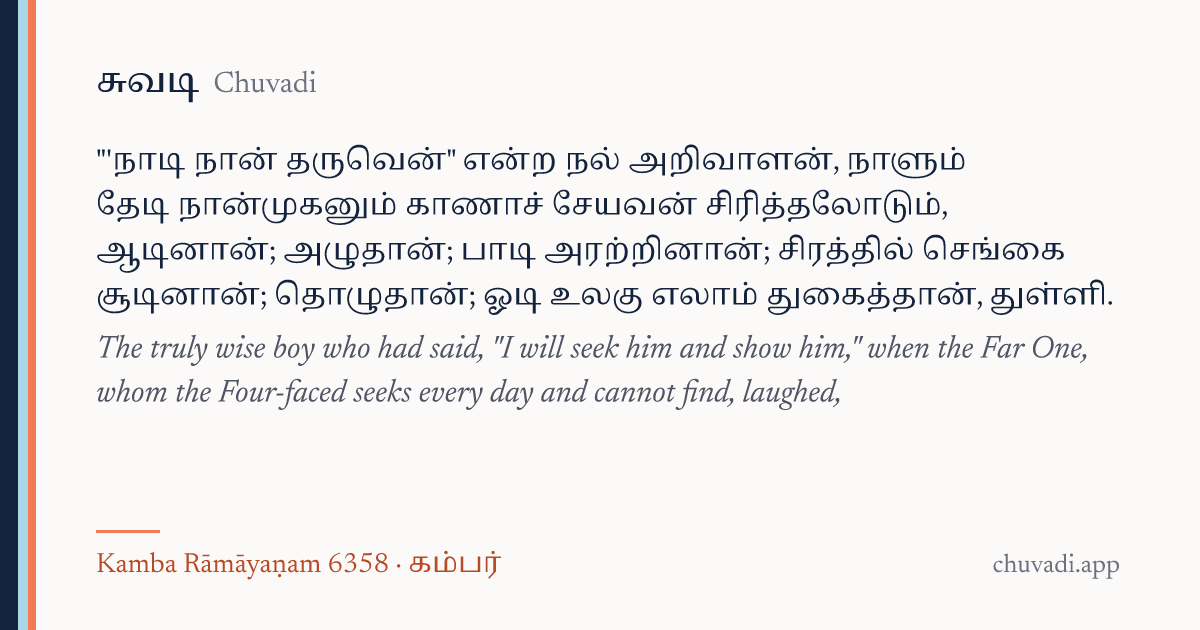
நாடிநான்தருவன் என்ற நல்லறிவாளன் - பரமனை நானே தேடி, உனக்குக் காட்டித் தருவேன் என்று கூறிய சிறந்த அறிவுடையவனாகிய பிரகலாதன்; நாளும் தேடிநான்முகனும் காணா - நாள்தோறும் தேடியும் பிரமன்முதலான தேவர்களும் காணாதபடி; சேயவன் சிரித்தலோடும் - நெடும் தொலைவில் உள்ளவனாகிய பெருமான் சிரித்தவுடனே; ஆடினான் அழுதான் பாடி அரற்றினான் - மிகவும் மகிழ்ந்து ஆடினான் அழுதான் பாடி அலறலானான்; சிரத்தில் செங்கை சூடினான் தொழுதான் - உச்சியின் மீது கைகளைக் கூப்பி வணங்கினான்; உலகெலாம் துள்ளித் துகைத்தான் - உலகெங்கும் துள்ளிக் குதித்துத் துகைக்கலானான்.
நாடி - தேடி. தருவன் - காட்டிக் கொடுப்பேன். நல்லறிவு - மேலான ஞானம் (மெய்யறிவு). காணா - காணாத (ஈறுகெட்ட எதிர்மறைப் பெயரெச்சம்). சேயவன் - தூரத்தில் உள்ளவன். அரற்றுதல் - அலறுதல். துகைத்தல் - மிதித்துக் குழப்புதல். மகிழ்ச்சி விளைக்கும் மெய்ப்பாடுகள் இப்பாடலில் மிகச் சிறப்பாக ஓதப்பட்டுள்ளன. 'சேயவன்' என்பதற்குச் செம்மையான பண்பு (கல்யாண குணம்) உடையவன் எனினும் பொருந்தும்.
ஆங்கிலம் · English translationAI
Translation
- The truly wise boy who had said, "I will seek him and show him," when
- the Far One, whom the Four-faced seeks every day and cannot find, laughed,
- danced, and wept, sang and cried aloud; his red hands
- he set upon his head and worshipped; running and leaping, he trampled all the earth.
What the poem says
Hearing God's laugh, Pirakalātaṉ is overcome with joy. The God whom even Brahmā cannot find has come at his word. He dances, weeps, sings, cries out, joins his hands over his head and leaps about the earth. The commentary praises the verse for its vivid picture of the outward signs of ecstasy. "The Far One" can also be read as "the one of perfect qualities".