



கம்பராமாயணம் 6364 · யுத்த 3.134
பாடல் · The poem
Tap a word to see its gloss in the commentary and where else it occurs.
பாட வேறுபாடு · Project Madurai reads
பொருள் · Meaning in Tamil
முடங்கு வால் உளை- வளைந்த அந்தத் தூய்மையான பிடரிமயிர்; அவ்வண்டம் முழுவதும் முடிவில் உண்ணும் - இந்த அண்டம் முழுவதையும் முழுதாக உண்ணும்; கடம் கொள் வெங்காலச் செந்தீயதனை வந்து அவிக்கும் - அனைத்தையும் அழிக்கும் கடமைபூண்ட ஊழித் தீயையும் அவித்து விடும்; கால மடங்கலின் உயிர்ப்பும் - காலனை ஒத்த அந்த நரசிங்கத்தின் மூச்சும்; மற்று அக்காற்றினை மாற்றும் - அந்த ஊழிக்காலக் காற்றினையும் வெல்லும்; ஆனால் அடங்கலும் - ஆனால் பிடரி மயிர், உயிர்ப்பு ஆகிய எல்லாம்; பகுவாய் யாக்கை - பிளவுபட்ட வாயை உடைய சிங்கத்தின் உடம்புக்கு; அப்புறத்து அகத்தது அம்மா - மேற்புறமும் உள்ளும் அமைந்திருந்தன.
முடங்குதல் - வளைதல். வால் - தூய்மை. உளை - பிடரிமயிர். கடம் - கடமை. வெம் காலம் - ஊழிக் காலம். பகுவாய் - பிளந்துள்ள பெரிய வாய்.
ஆங்கிலம் · English translationAI
Translation
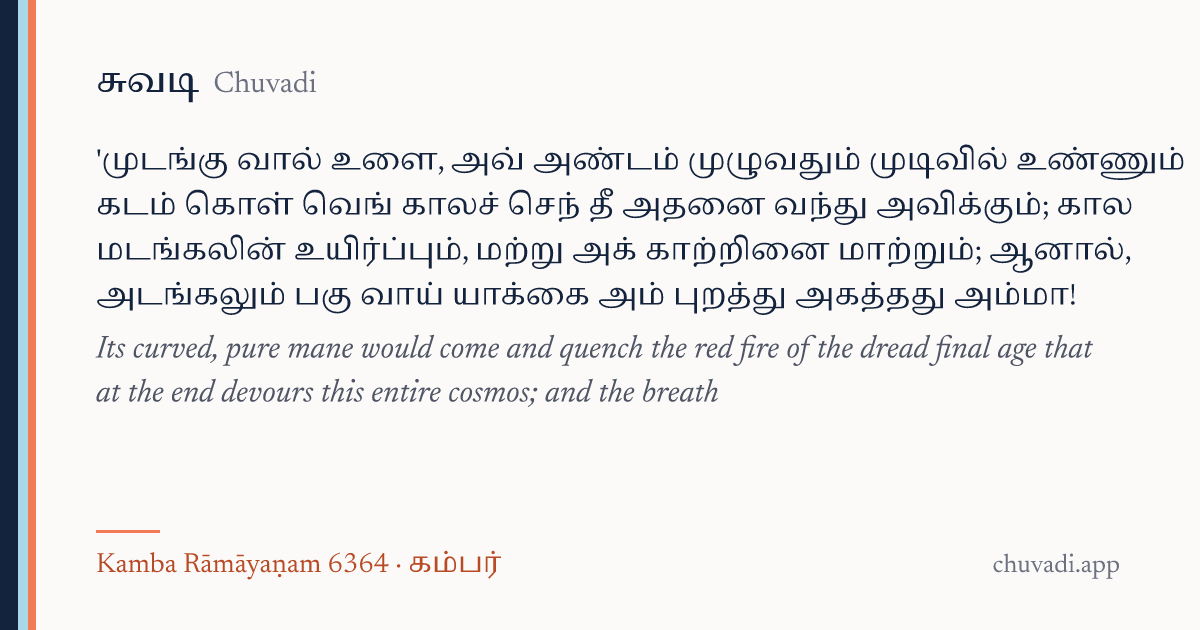
- Its curved, pure mane would come and quench the red fire of the dread final age
- that at the end devours this entire cosmos; and the breath
- of that Lion, like Death himself, overpowers even that age's wind; and yet
- all these were but the outside and the inside of that gaping-mouthed body!
What the poem says
The poet describes the Man-Lion's power. His mane could put out the fire that burns up the universe at the end of an age, and his breath is stronger than the wind of that age. Yet these terrible forces are only parts of his own body, outside and within.