



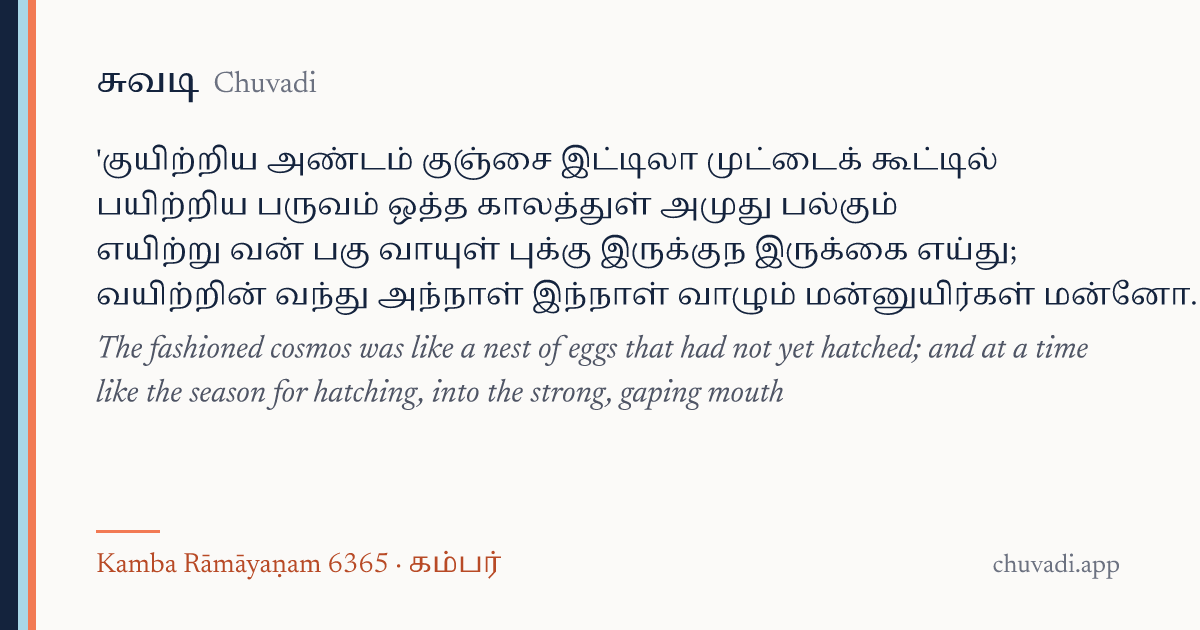
கம்பராமாயணம் 6365 · யுத்த 3.135
பாடல் · The poem
Tap a word to see its gloss in the commentary and where else it occurs.
பாட வேறுபாடு · Project Madurai reads
பொருள் · Meaning in Tamil
அந்நாள் வயிற்றின் வந்து - (ஊழிக் காலமாகிய) அந்நாளிலே (திருமாலின்) வயிற்றிலே வந்திருந்து (பின்பு வெளிப்பட்டு); இந்நாள் வாழும் மன்னுயிர்கள் - இந்நாள் வரை உலகில் நிலை பெற்று வாழும் உயிர்களெல்லாம்; குயிற்றிய அண்டம் - அப்பரமனால் படைக்கப்பட்ட இந்த அண்டமானது, குஞ்சை இட்டிலா முட்டைக் கூட்டில்- குஞ்சுகளைத் தாராத முட்டைகளை உடைய கூட்டில்; பயிற்றிய பருவம் ஒத்த காலத்துள் - அவை குஞ்சு பொறிக்கத்தக்க பருவமாகிய காலத்திலே; அமுது பல்கும் எயிற்றுவன் பகுவாயுள்- நரசிங்கப் பெருமானது அமுதத்தைச் சுரக்கும் பற்களை உடைய வலிய பெரிய வாயினுள்ளே; புக்கு இருக்கை எய்தி இருக்குந - புகுந்து, தமக்குப் பாதுகாப்பான இருப்பிடத்தை அடைந்து இருப்பனவாயின.
அந்நாள் - ஊழிக்காலம். குயிற்றிய - படைக்கப்பட்ட. இட்டிலா - தராத. பல்குதல் - பெருகுதல்.
ஆங்கிலம் · English translationAI
Translation
- The fashioned cosmos was like a nest of eggs that had not yet hatched;
- and at a time like the season for hatching, into the strong, gaping mouth
- with its nectar-yielding teeth they entered and took their safe abode —
- the lasting creatures that came from his belly that day and live on to this day.
What the poem says
When the Man-Lion appears, all the creatures of the world, which once came forth from God's belly at the dissolution of an age, take shelter inside his mouth. They are compared to chicks in unhatched eggs. God's mouth, so terrible to the demons, is a place of nectar and safety for them.