



கம்பராமாயணம் 6383 · யுத்த 3.153
பாடல் · The poem
Tap a word to see its gloss in the commentary and where else it occurs.
பாட வேறுபாடு · Project Madurai reads
பொருள் · Meaning in Tamil
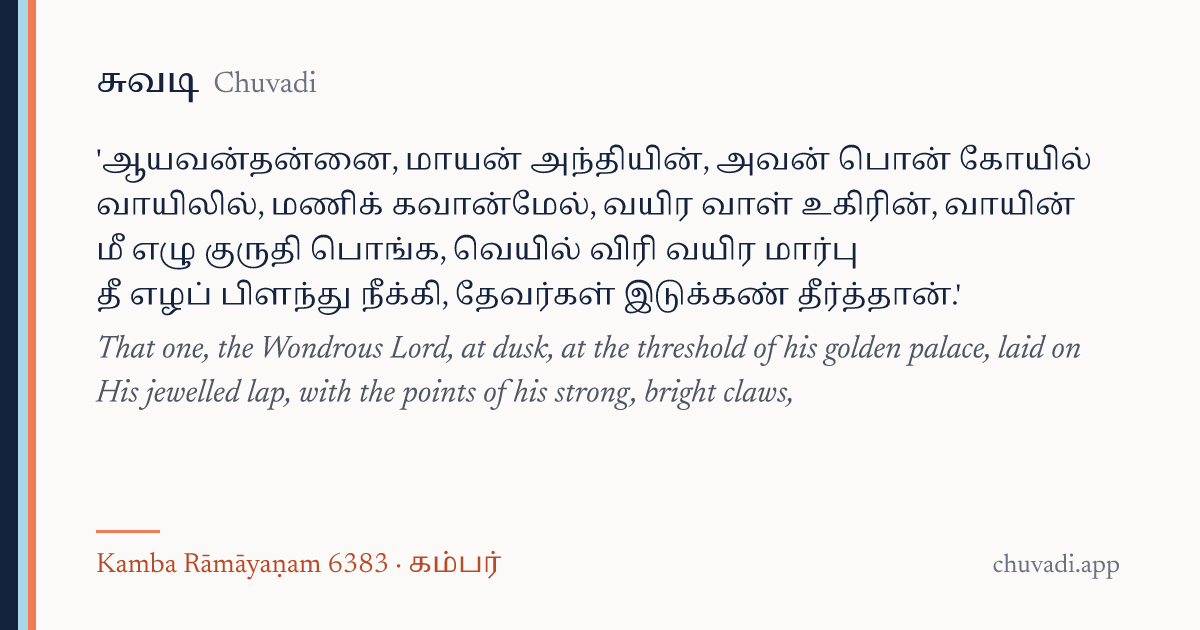
ஆயவன் தன்னை - அந்த இரணியனை; அந்தியின் - மாலைப் பொழுதிலே; அவன் பொன் கோயில் வாயிலில் - அந்த இரணியனுடைய அழகிய அரண்மனையின் வாயிலிலே; மணிக்கவான் மேல் - தனது அழகிய மடியின் மீது (கிடத்தி); வயிர வாள் உகிரின் வாயின் - உறுதியுடைய ஒளி பொருந்திய தனது கை நகத்தின் முனையாலே; மீ எழு குருதி பொங்க - இரணியன் உடலிலிருந்து இரத்தம் மேலெழுந்து பொங்கிவர; வெயில் விரி வயிரமார்பு - ஒளியைப் பரப்பும் அவ்விரணியனது வைரம் பாய்ந்த மார்பினை; தீஎழப் பிளந்து நீக்கி - நெருப்பெழும்படி இருபிளவாகப் பிளந்து இரணியனைக் கொன்று; தேவர்கள் இடுக்கண் மாயன் தீர்த்தான் - தேவர்கள் அதுவரை பட்ட துன்பத்தை மாயைவல்ல திருமால் போக்கினான்.
மாயன் - ஆச்சரியப்படத்தக்க செயல்களை உடைய திருமால். இரணியன் பெற்ற வரங்களிடையே முரண்பாடின்றி வதைபுரிய வழி கண்ட மாயம் செய்தவனாதலின் 'மாயன்' என்றார். இரவிலும் பகலிலும் சாகக் கூடாது. வீட்டுக்குள்ளும் வெளியேயும் சாகக் கூடாது. விண்ணிலும் மண்ணிலும் சாகக்கூடாது. பறவை, விலங்கு, மனிதர், தேவர் அரக்கர்களால் சாகக்கூடாது, எந்தப் படைக்கலத்தாலும் சாகக் கூடாது என்று பிரமனிடம் வரம்கேட்டுப் பெற்றவன் இரணியன். எனவே, மாலைப் போதில், வாயிற் படியில் கிடத்தி நரசிங்கப் பெருமான் நகத்தால் உடலைப் பிளந்து இரணியனைக் கொன்று, தேவர்களின் துன்பத்தைத் தீர்த்தார் என்பது கருத்து. இரணியன் பெற்ற வரங்களின் திறனை 6203-6206 ஆம் பாடல்களில் காண்க.
ஆங்கிலம் · English translationAI
Translation
- That one, the Wondrous Lord, at dusk, at the threshold
- of his golden palace, laid on His jewelled lap, with the points of his strong, bright claws,
- the blood surging upward, the adamant chest that shed radiance
- He split open so that fire leapt out, cast him aside, and ended the sorrows of the gods."
What the poem says
Iraṇiyaṉ had won boons from Brahmā that he could not be killed by day or by night, inside or outside a house, in the sky or on the earth, by man, beast, god or demon, or by any weapon. The Man-Lion gets round every one of them. He kills Iraṇiyaṉ at dusk, on the threshold of his palace, laid across his own lap, with his claws, in a form that is neither man nor beast. So ends the story that Vīṭaṇaṉ tells Irāvaṇaṉ, and the gods are freed from their suffering.