



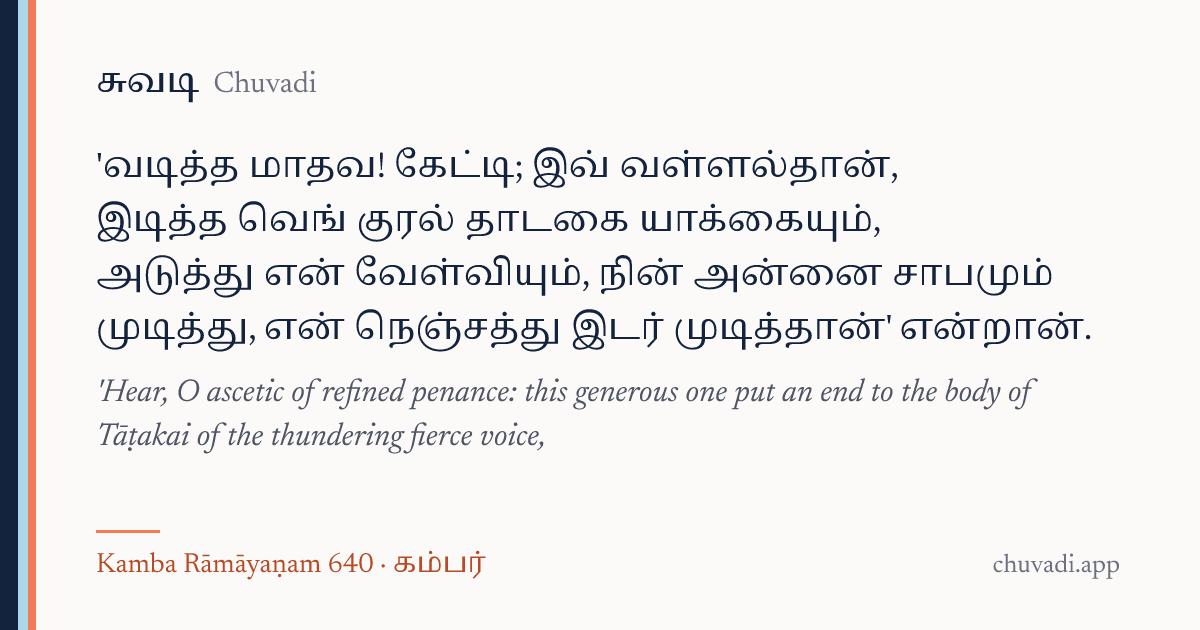
கம்பராமாயணம் 640 · பால 10.88
பாடல் · The poem
Tap a word to see its gloss in the commentary and where else it occurs.
பொருள் · Meaning in Tamil
வடித்த மாதவ - தெளிந்து செய்த பெரிய தவமுனிவரே; கேட்டி - (நான் கூறுவதைக்) கேட்பீராக; இவ்வள்ளல்தான் - இந்த வள்ளலான இராமன்; இடித்த வெம்குரல் - இடிபோன்ற குரலுடைய; தாடகை யாக்கையும் - தாடகை என்னும் அரக்கியின் உடம்பையும்; என் வேள்வியும் - என் யாகத்தையும்; நின் அன்னை சாபமும் - உன் தாயான அகலிகையின் சாபத்தையும்; அடுத்து முடித்து - ஒன்றன்பின் ஒன்றாக முடித்து; என் நெஞ்சத்து - என் நெஞ்சில் கிடந்த; இடர்முடித்தான் - துயரங்களைத் தீர்த்து வைத்தவன் ஆவான்.
மூவகை முடித்தல்களைச் செய்தவன் இராமன்: 1. தாடகையைக் கொன்று முடித்தல். 2. வேள்வியை முடித்தது. 3. அகலிகையின் சாபம் ஒழித்து நீக்கியது. முடித்தல் என்ற சொல் பல பொருளில் வந்தது. சொற் பின்வரு நிலையணி.
ஆங்கிலம் · English translationAI
Translation
- 'Hear, O ascetic of refined penance: this generous one
- put an end to the body of Tāṭakai of the thundering fierce voice,
- then brought my sacrifice to completion and ended your mother's curse,
- and so ended the distress in my heart,' he said.
What the poem says
Vicuvāmittiraṉ tells Catāṉantaṉ what Irāmaṉ has done on the journey: he killed the thunder-voiced demoness Tāṭakai, guarded the sage's sacrifice until it was completed, and released Catāṉantaṉ's own mother Akalikai from her curse. In doing so he removed all the sage's anxieties.
The verse plays on one verb, "to finish", used in several senses — to kill, to complete, to remove — a figure of repeated words with shifting meaning.