



கம்பராமாயணம் 6415 · யுத்த 4.9
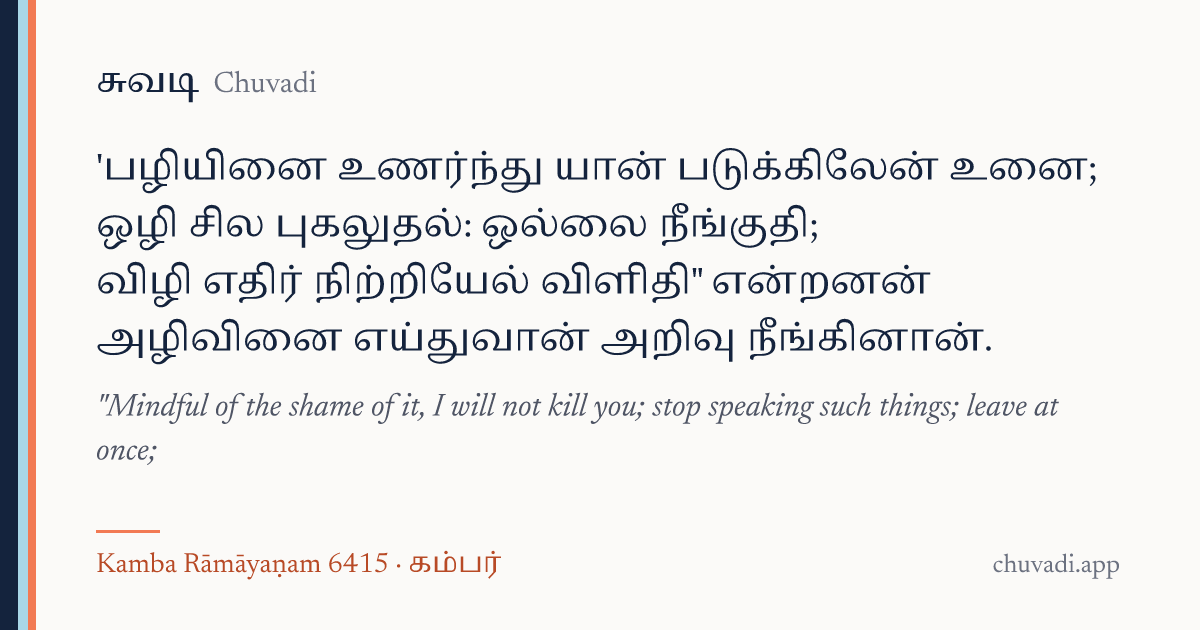
பாடல் · The poem
Tap a word to see its gloss in the commentary and where else it occurs.
பொருள் · Meaning in Tamil
அழிவினை எய்துவான் - தனக்கு அழிவை அடைவதற்கேற்ப; அறிவு நீங்கினான்- நல்லறிவு நீங்கப் பெற்ற இராவணன்; (வீடணனை நோக்கி) 'பழியினை உணர்ந்து - எனக்கு நேர இருக்கும் பழியை எண்ணி; உனையான் படுக்கிலேன் - உன்னை நான் கொல்ல மாட்டேன்; சிலபுகலுதல் ஒழி - (எனக்கு இது போன்ற அறிவுரைகள்) சில கூறுவதை விட்டு விடு; ஒல்லை நீங்குதி - சீக்கிரம் இங்கிருந்து நீங்கிப் போய்விடு; விழி எதிர் நிற்றியேல் - என்கண் எதிரில் நீ இனி நிற்பாயானால்; விளிதி என்றனன் - 'சாவாய்' என்று கூறினான்.
அழிவை அடைவதற்குரிய விதியுடையவனாதலின் இராவணன் 'அழிவினைஎய்துவான்' எனப்பட்டான். பேதைப் படுக்கும் இழவூழ் (372) என்னும் திருக்குறளின் கருத்தினை இணைத்து உணர்க. நிற்றியேல் - நிற்பாயானால். விளிதி - சாவாய். எய்துவான் - முற்றெச்சம் (வினைமுற்று எச்சப் பொருள் தந்து நின்றது).
ஆங்கிலம் · English translationAI
Translation
- "Mindful of the shame of it, I will not kill you;
- stop speaking such things; leave at once;
- if you stand before my eyes again, you die!" he said —
- he who was headed for ruin, and whose good sense had left him.
What the poem says
Irāvaṇaṉ, already doomed and robbed of judgment, will not kill his own brother for fear of the shame. He orders Vīṭaṇaṉ out of his sight on pain of death. The commentary recalls a Tirukkuṟaḷ couplet: when fate means to destroy someone, it first makes him foolish.