



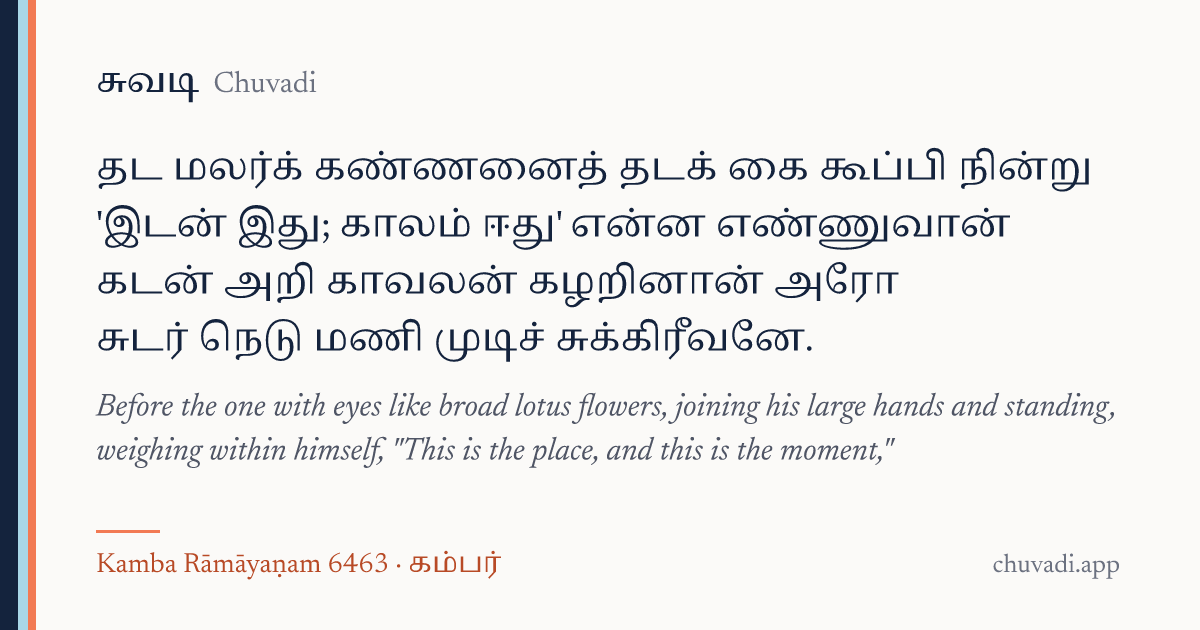
கம்பராமாயணம் 6463 · யுத்த 4.57
பாடல் · The poem
Tap a word to see its gloss in the commentary and where else it occurs.
பொருள் · Meaning in Tamil
கடன் அறிகாவலன் - தனக்குரிய கடமையை அறிந்த கிட்கிந்தை மன்னனும்; சுடர் நெடு மணிமுடிச் சுக்கிரீவன் - ஒளிமிக்க நீண்ட மணிமுடியைத் தரித்துள்ள வானர வேந்தனுமான சுக்கிரீவன்; தடமலர் கண்ணனை - அகன்ற தாமரை மலர் போன்ற கண்களை உடையவனாகிய இராமபிரானை; தடக்கை கூப்பி நின்று - விசாலமான தனது இரண்டு கைகளையும் தலைமீது குவித்து வணங்கி நின்று, இடன் இது காலம் ஈது - வீடணன் வந்துள்ள இடம் இது. அவன் இங்கு வந்துள்ள தருணம் இது; என்ன எண்ணுவான் - என்றெல்லாம் எண்ணிப் பார்த்தவனாய்; கழறினான் - இராமபிரானிடம் கூறுவானானான்.
தனக்குரிய கடமை இதுவென நன்றாக அறிந்தவன் என்பதால், 'கடனறிகாவலன்' என்றார். வீடணன் வந்த இடம் வந்த காலம் இவற்றையெல்லாம் எண்ணிப் பார்த்த சுக்கிரீவனை 'இடம் இது காலம் ஈது என்ன எண்ணுவான்' என்றார். கழறுதல் - கூறுதல். எண்ணுவான் - எண்ணியவனாக (முற்றெச்சம்). தடமலர் தடக்கை என்பவற்றில் அமைந்த 'தட' அகன்ற என்னும் பொருள் உடையது.
ஆங்கிலம் · English translationAI
Translation
- Before the one with eyes like broad lotus flowers, joining his large hands and standing,
- weighing within himself, "This is the place, and this is the moment,"
- the guardian who knew his duty spoke out:
- Cukkirīvaṉ, wearing the tall, gleaming jewelled crown.
What the poem says
Vīṭaṇaṉ, Irāvaṇaṉ's younger brother, has left Ilaṅkai and come to Irāmaṉ's camp asking for refuge. Irāmaṉ has asked his allies what should be done, and Cukkirīvaṉ, king of the monkeys, is the first to answer.
The poet calls him the guardian "who knew his duty": before speaking he weighs where Vīṭaṇaṉ has come and at what moment, on the eve of war. He folds his hands above his head in reverence before he gives his counsel.