



கம்பராமாயணம் 6464 · யுத்த 4.58
பாடல் · The poem
Tap a word to see its gloss in the commentary and where else it occurs.
பாட வேறுபாடு · Project Madurai reads
பொருள் · Meaning in Tamil
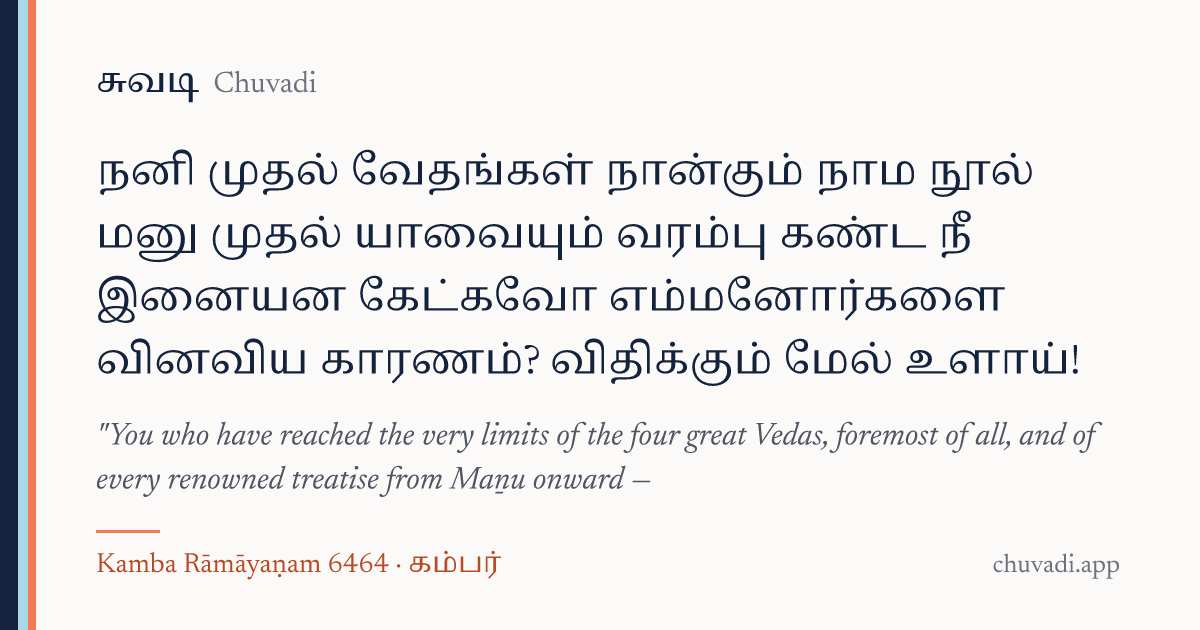
விதிக்கும் மேல் உளாய் - விதிக்கும் விதியாக அதற்கு மேம்பட்டு விளங்குபவனே! தனி முதல் வேதங்கள் நான்கும் - தனிச்சிறப்புடைய, முதன்மை வாய்ந்த நான்கு வேதங்களுக்கும்; நாம நூல் மனுமுதல் யாவையும் - புகழ் மிகுந்த நூல்களான மனு முதலிய எல்லாவற்றுக்கும், வரம்பு கண்ட நீ - எல்லை கண்டறிந்துள்ள நீ; எம்மனோர்களை வினவிய காரணம் - எங்களைப் போன்றவர்களைக் கேட்பதற்கான காரணம்; இனையன கேட்கவோ - (கைப்புகற் பாலனே, கழியற் பாலனே) என்பதனைக் கேட்டுத் தெரிந்து கொள்ளவோ? என்றான்.
உயிர்களின் வினைகளுக்கேற்ப பயனைத் தருவது விதி என்பர். அந்த விதியைக் கூட மாற்றும் வித்தகன் இறைவன். "விதிக்கு நாயகன்' என்றார். நாமம் - புகழ். மனுமுதலிய நூல்கள் புகழ் மிகுந்து விளங்குவனவாதலால் 'நாம நூல் மனு முதல் யாவையும்' என்றார். வரம்பு காணுதல் - முழுதும் கற்றுணர்தல். 'தென்சொற் கடந்தான் வடசொற் கலைக்கு எல்லை தேர்ந்தான்' (1741) என முன்னும் கூறினார். 'நான்மறையின் கனி' (2610) எனவும் மறைகளுக்கு இறுதியாவான் (4740) எனவும் முன்னர் வந்துள்ள தொடர்களை நினைக்க. எங்களைப் போன்றவர்களைக் கேட்டுத் தெரிந்து கொள்ளவோ கேட்டாய்? கேட்க வேண்டும் என்ற முறை பற்றிக் கேட்டாய் என்பான், "எம்மனோர்களை வினவிய காரணம் இனையன கேட்கவோ” என்றான்.
ஆங்கிலம் · English translationAI
Translation
- "You who have reached the very limits of the four great Vedas, foremost of all,
- and of every renowned treatise from Maṉu onward —
- is it to learn such things that you put your question
- to the likes of us? You who stand above fate itself!"
What the poem says
Cukkirīvaṉ opens with humility. Irāmaṉ has mastered the Vedas and the law-books such as the code of Maṉu; he is even above fate, the force that deals out the fruits of each being's deeds. Why, then, should he need to ask monkeys whether Vīṭaṇaṉ ought to be accepted or turned away?
The implication is that Irāmaṉ asks only because it is proper for a king to take counsel, not because he lacks the answer.