



கம்பராமாயணம் 6466 · யுத்த 4.60
பாடல் · The poem
Tap a word to see its gloss in the commentary and where else it occurs.
பொருள் · Meaning in Tamil
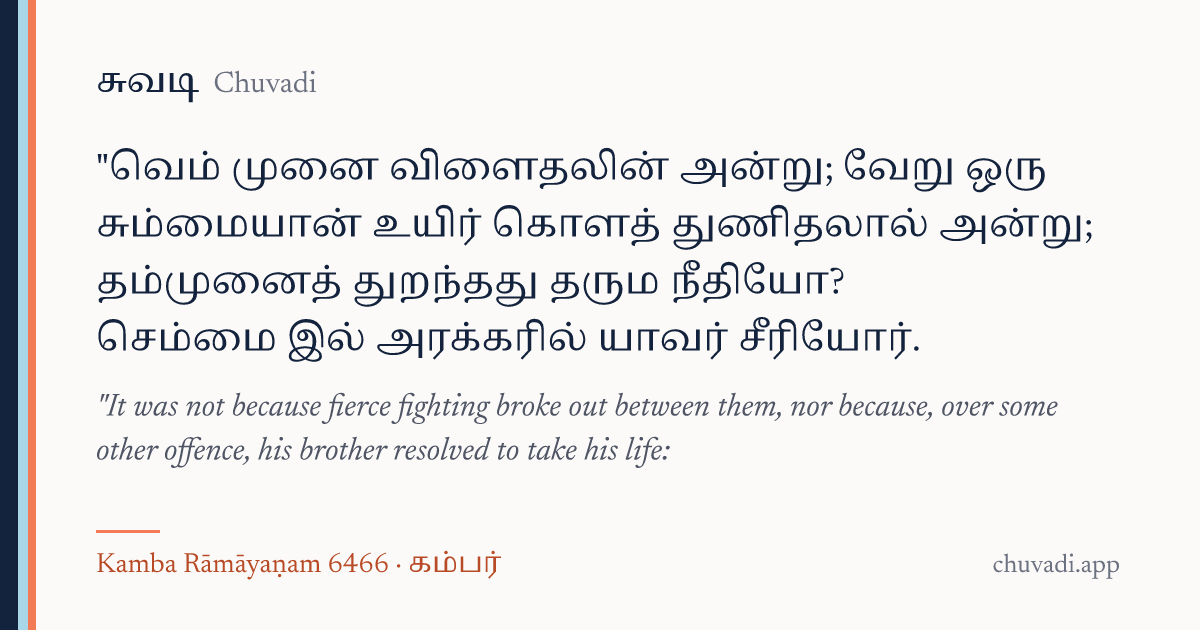
வெம்முனை விளைதலின் அன்று - இந்த வீடணன் இராவணனை விட்டு நீங்கி வரக் காரணம் அவனுடன் கொடிய போர் விளைந்ததால் அல்ல; வேறொரு சும்மையான் - வேறான ஒரு பழிக்கத்தக்க செயலால்; உயிர் கொளத் துணிதலால் அன்று - இவனது உயிரை அபகரிக்க அந்த இராவணன் துணிந்ததாலும் அல்ல; தம்முனைத் துறந்தது - ஏற்றுக் கொள்ளத்தக்க காரணம் ஏதுமின்றி தனது அண்ணனான இராவணனை வீடணன் பிரிந்து நீங்கி வந்தது; தரும நீதியோ - அறத்தொடு பொருந்திய நீதியாகுமோ? செம்மையில் அரக்கரில் - நல்ல பண்பற்ற அரக்கர்களில்; யாவர் சீரியோர் - யார் சிறந்த மேலோர்கள் உள்ளனர்?
சுக்கிரீவனைக் கொல்லவும் வாலி முயன்றான் என்பதால், இராமனைத் துணை கொள்ள வேண்டியதாயிருந்தது. வீடணனுக்கு அத்தகைய நிலை இல்லை என்பது சுக்கிரீவன் கருத்து. நேரிடையாக பகைமை இல்லாதபோதும் அண்ணனைப் பிரிந்து வந்த வீடணன் செயல் அறமாகுமா என்பது சுக்கிரீவன் கேள்வி. அரக்கர்களிடையே நல்லவர்கள் இருக்கமுடியாது என்பதும் அவன் கருத்து.
ஆங்கிலம் · English translationAI
Translation
- "It was not because fierce fighting broke out between them, nor because,
- over some other offence, his brother resolved to take his life:
- is this desertion of his elder brother the justice of dharma?
- Among rākṣasas, who have no uprightness, which ones are noble?"
What the poem says
Cukkirīvaṉ points out that Vīṭaṇaṉ was not attacked by Irāvaṇaṉ, nor was his life threatened. Without such a cause, leaving one's elder brother cannot be righteous.
The contrast is with Cukkirīvaṉ's own story: his brother Vālī tried to kill him, which forced him to seek Irāmaṉ's help. Vīṭaṇaṉ, he argues, had no such necessity. He ends by doubting that any rākṣasa can be good at all.