



கம்பராமாயணம் 6467 · யுத்த 4.61
பாடல் · The poem
Tap a word to see its gloss in the commentary and where else it occurs.
பொருள் · Meaning in Tamil
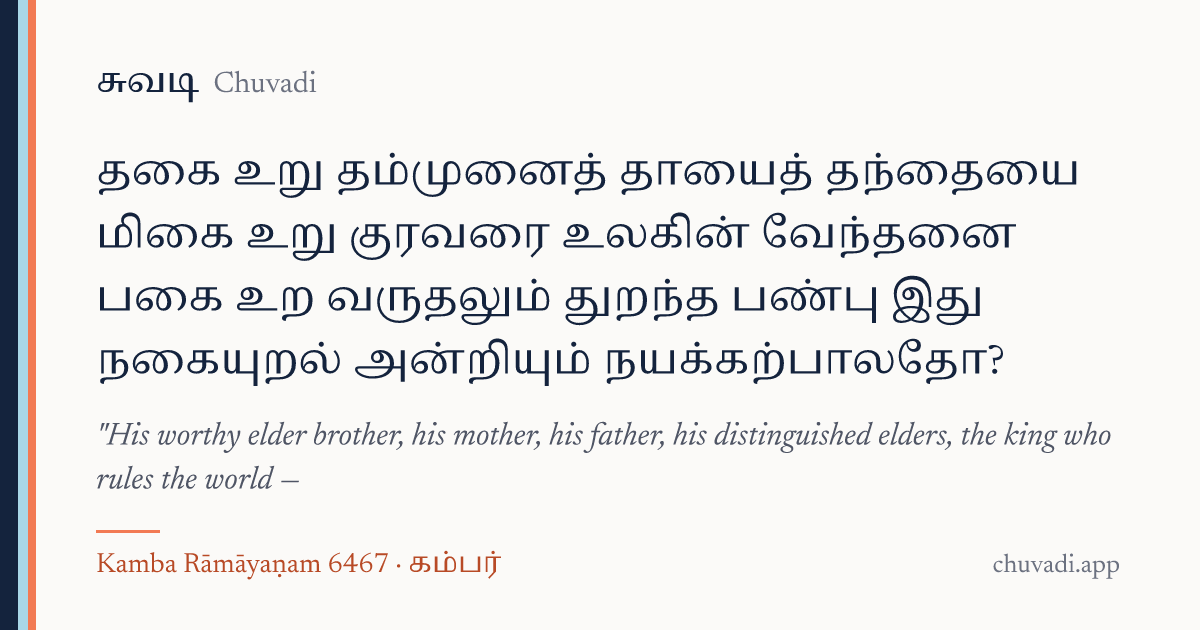
தகை உறு தம் முனை - தகைமை உடைய தனது முன்னோனையும்; தாயை தந்தையை - தாயையும் தந்தையையும், மிகை உறு குரவரை - சிறப்புடைய சான்றோர்களையும்; உலகின் வேந்தனை - உலகாளும் மன்னனையும்; பகை உற வருதலும் - பகைத்துக் கொண்டு வருவதும்; துறந்த பண்பு இது - பிரிந்து நீங்குவதுமான இந்தத் தன்மை; நகை உறல் அன்றியும் - சிரிப்புக்கு இடமாவதே அல்லாது; நயக்கற் பாலதோ - விரும்பத்தக்க செயலாகுமோ?
தகுதியில் சிறந்த மேலான தமையன் முதலானோரைத் துறப்பது நகைப்பிற்கிடமாகுமேயல்லாது விரும்பத்தக்க செயலாகாது என்கிறான்.
ஆங்கிலம் · English translationAI
Translation
- "His worthy elder brother, his mother, his father,
- his distinguished elders, the king who rules the world —
- to turn hostile to them and abandon them: this conduct,
- apart from inviting laughter, is it anything to be welcomed?"
What the poem says
Cukkirīvaṉ continues his case against accepting Vīṭaṇaṉ. To turn against one's elder brother, parents, revered elders and one's own sovereign is, in his eyes, a disgrace.
Such behaviour, he says, can only make a person a laughing-stock; it cannot be something a righteous prince like Irāmaṉ should approve.