



கம்பராமாயணம் 6469 · யுத்த 4.63
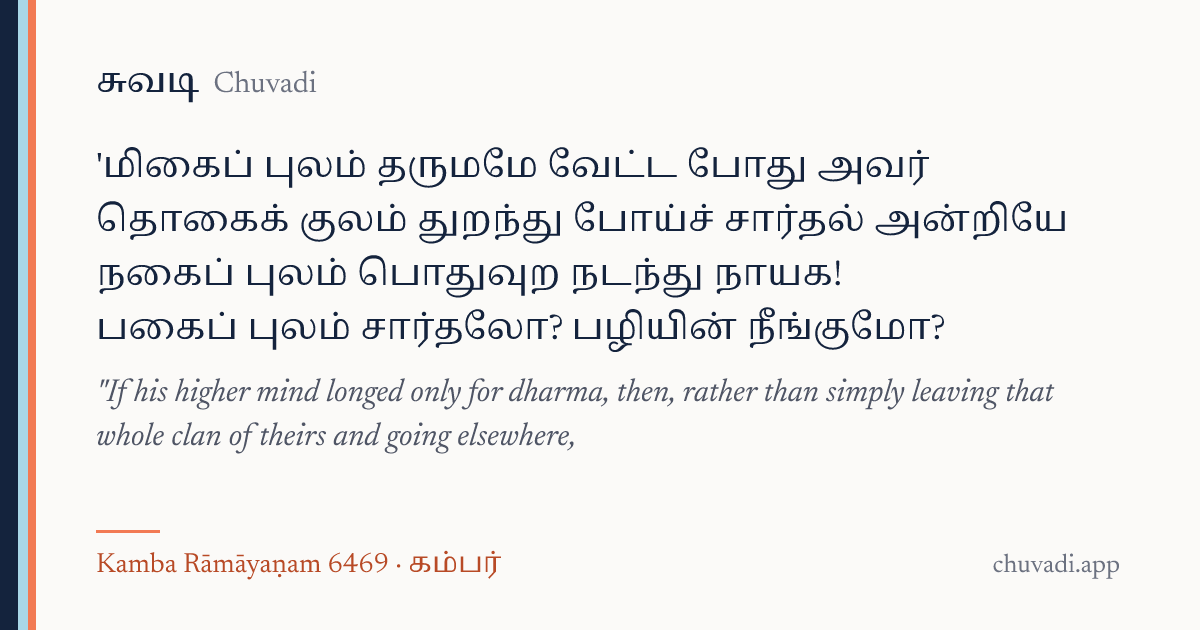
பாடல் · The poem
Tap a word to see its gloss in the commentary and where else it occurs.
பாட வேறுபாடு · Project Madurai reads
பொருள் · Meaning in Tamil
நாயக! - தலைவனே! மிகைப்புலம் - தனது மேலான அறிவு; தருமமே வேட்டபோது - அறநெறியையே விரும்பிய போது; அவர் தொகைக்குலம் துறந்து போய் - அறத்துக்கு மாறுபட்ட அவர்களது தொகுதியான கூட்டத்தை விட்டு நீங்கி; சார்தல் அன்றியே - வேறிடம் செல்லுதலை விட்டு; நகைப்புலம் பொதுவுற - பொதுவாக எல்லோரும் பழித்து நகைப்பதற்கு இடமாக; நடந்து பகைப்புலம் சார்தலோ - நடந்து வந்து பகைவருடன் சேர்வதோ? பழியின் நீங்குமோ - இந்த வீடணன் பழியிலிருந்து நீங்குவானோ?
மகாபாரதத்தில் விதுரன் இருபாலும் சாராமல் தனித்து நின்றதை நினைக.
ஆங்கிலம் · English translationAI
Translation
- "If his higher mind longed only for dharma, then, rather than
- simply leaving that whole clan of theirs and going elsewhere,
- to walk, O lord, where all the world would laugh,
- and join the enemy's side — will he be free of blame?"
What the poem says
Cukkirīvaṉ grants that Vīṭaṇaṉ may truly love righteousness. But if so, he could simply have left his wicked kin and gone away somewhere. Going over to the enemy instead exposes him to everyone's scorn.
The commentary recalls Vidura in the Mahābhārata, who, disapproving of his own side, still refused to join either party in the war and stood apart.