



கம்பராமாயணம் 6475 · யுத்த 4.69
பாடல் · The poem
Tap a word to see its gloss in the commentary and where else it occurs.
பாட வேறுபாடு · Project Madurai reads
பொருள் · Meaning in Tamil
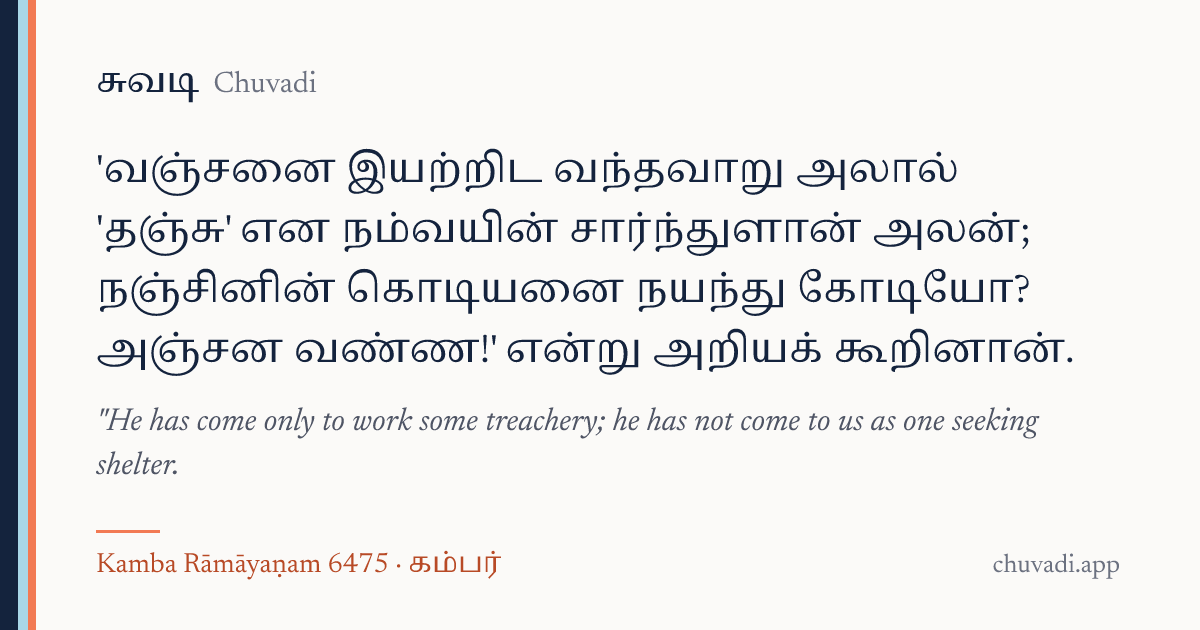
அஞ்சன வண்ண - மை போன்ற நிறத்தை உடையவனே! வஞ்சனை இயற்றிட - வஞ்சகம் செய்வதற்காக; வந்தவாறு அலால் - வந்திருப்பதே அல்லாமல்; 'தஞ்சு' என நம் வயின் சார்ந்துளான் அலன் - அடைக்கலம் என்று நம்மிடம் அடைந்தவன் அல்லன்; நஞ்சினில் கொடியனை - விடத்தினும் கொடியனான இந்த அரக்கனை (வீடணனை); நயந்துகோடியோ - விரும்பி ஏற்றுக் கொள்வாயோ? என்று அறியக் கூறினான் - என்று தன் கருத்தை இராமபிரான் அறியும்படி சுக்கிரீவன் கூறினன்.
இராவணனிடம் மிகுந்த அன்புடைய தம்பி இவன். 'தஞ்சம்' என்று, நம்மிடம் வந்தது வஞ்சகச் செயலே என்பது சுக்கிரீவன் கருத்து. தஞ்சு - தஞ்சம்.
ஆங்கிலம் · English translationAI
Translation
- "He has come only to work some treachery;
- he has not come to us as one seeking shelter.
- Will you welcome and take in one crueller than poison,
- you whose colour is like collyrium?" So he spoke, making his mind known.
What the poem says
Cukkirīvaṉ ends his speech by calling Vīṭaṇaṉ's plea for refuge a trick. Vīṭaṇaṉ, he thinks, is Irāvaṇaṉ's beloved brother and has come only as a spy or saboteur.
Irāmaṉ is addressed as dark like collyrium, the black eye-paint, a common image for his dark-hued body.