



கம்பராமாயணம் 6477 · யுத்த 4.71
பாடல் · The poem
Tap a word to see its gloss in the commentary and where else it occurs.
பாட வேறுபாடு · Project Madurai reads
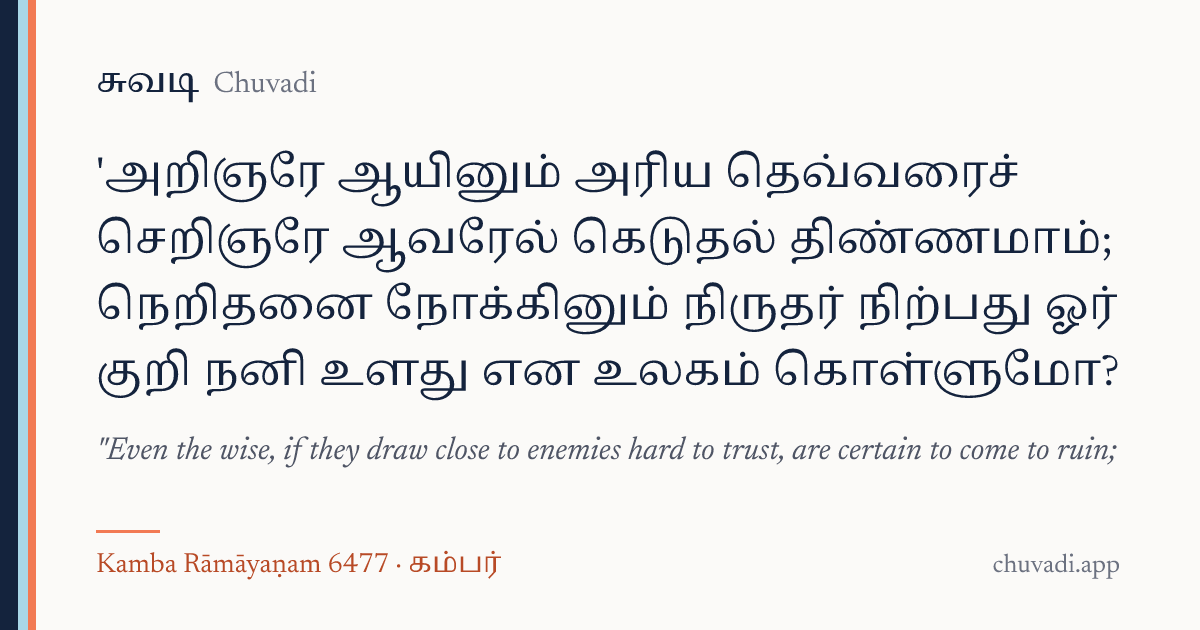
1'அறிஞரே ஆயினும் அரிய தெவ்வரைச்
செறிஞரே ஆவரேல் கெடுதல் திண்ணமால்;
நெறிதனை நோக்கினும் நிருதர் நிற்பது ஓர்
குறி தனி உளது என உலகம் கொள்ளுமோ?
பொருள் · Meaning in Tamil
அறிஞரே ஆயினும் - அவர் கற்றறிந்த அறிஞர்களே ஆனாலும்; அரியதெவ்வரை - நம்புவதற்கரிய பகைவர்களை; செறிஞரே ஆவரேல் - சேர்ந்தவர் ஆவார் என்றால்; கெடுதல் திண்ணமாம் - அவர்களைச் சேர்த்துக் கொண்டவர்கள் கெடுவது உறுதியாகும்; நெறிதனை நோக்கினும் - வீடணனுடைய அற நெறியை ஆராய்ந்தாலும்; நிருதர் நிற்பதோர் குறி - அரக்கர்கள் நிற்பதாகிய ஒரு குறிக்கோளான அற நெறி; நனி உளது என - மிக உள்ளது என்று; உலகம் கொள்ளுமோ - உலகம் ஏற்றுக் கொள்ளுமோ?
ஆங்கிலம் · English translationAI
Translation
- "Even the wise, if they draw close to enemies
- hard to trust, are certain to come to ruin;
- and even if we look at his conduct, will the world accept
- that rākṣasas truly have any goal of righteousness to stand by?"
What the poem says
Cāmpaṉ begins with a maxim: even learned people are ruined if they take in enemies who cannot be trusted.
Even if Vīṭaṇaṉ's own conduct seems righteous, he asks, will anyone believe that a rākṣasa holds firmly to dharma? So Cāmpaṉ too leans towards caution.
ஒலிபெயர்ப்பு · Transliteration (ISO 15919)
1'aṟiñarē āyiṉum ariya tevvaraic
ceṟiñarē āvarēl keṭutal tiṇṇamām;
neṟitaṉai nōkkiṉum nirutar niṟpatu ōr
kuṟi naṉi uḷatu eṉa ulakam koḷḷumō?