



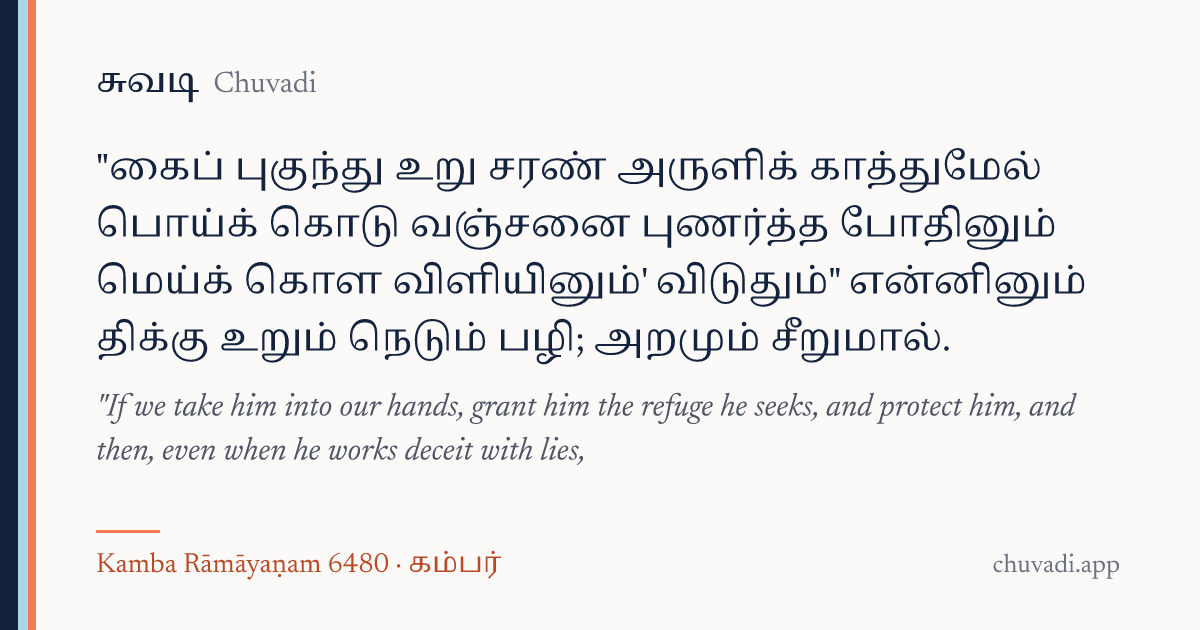
கம்பராமாயணம் 6480 · யுத்த 4.74
பாடல் · The poem
Tap a word to see its gloss in the commentary and where else it occurs.
பொருள் · Meaning in Tamil
கைப்புகுந்து - வீடணனைப் போன்றவர்கள் நமது பக்கம் வந்து சேர்ந்து; உறுசரண் அருளி - நாம் அவர்களுக்குப் பொருந்திய அடைக்கலம் கொடுத்து; காத்து மேல் - காப்பாற்றுவோமானால்; பொய்க்கொடு வஞ்சனை புணர்த்த போதினும் - பொய்மை யுடையவராய் கொடிய வஞ்சகம் செய்தாரென்றாலும்; மெய்க்கொடு - இவர்களது உண்மைத் தன்மை புலப்பட; விளியினும் - நம்மை வெகுண்டு மாறுபட்டாலும்; விடுதும் என்னினும் - (அதன் காரணமாக) நாம் அவர்களை விலக்கி விடுவோமென்றாலும்; நெடும் பழிதிக்குறும் - எல்லாத் திசையிலும் நமக்குப் பெரும் பழியுண்டாகும்; அறமும் சீறும் - அறக்கடவுளும் இவர்களுக்குப் புகல் தந்து காத்தற்கு நம்மைச் சீறும்.
கை - பக்கம். "நாடாது நட்டலின் கேடில்லை நட்டபின் வீடில்லை நட்பாள்பவர்க்கு” என்ற குறள் (791) நினைவு கூரத்தக்கது. "நல்லார் என நாம் விரும்பிக்கொண்டாரை அல்லார் எனினும் அடக்கிக் கொளவேண்டும்” என்ற நாலடியார் (221) ஒப்பு நோக்கத்தக்கது.
ஆங்கிலம் · English translationAI
Translation
- "If we take him into our hands, grant him the refuge he seeks, and protect him,
- and then, even when he works deceit with lies,
- or turns on us so that his true nature shows, we say, 'We cast him off' —
- great blame will spread to every quarter, and Dharma itself will rage at us."
What the poem says
Cāmpaṉ raises a dilemma. Once refuge is granted, it cannot honourably be withdrawn. If Vīṭaṇaṉ later proves false and they then expel him, the world will blame them, and even the god of Dharma will be angry with them for sheltering him at all.
The commentary cites the Tirukkuṟaḷ (791): nothing is worse than befriending without first examining, since once friendship is made it cannot be given up. It also cites a Nālaṭiyār verse saying those once accepted as good must be borne with even if they turn out otherwise.