



கம்பராமாயணம் 6496 · யுத்த 4.90
பாடல் · The poem
Tap a word to see its gloss in the commentary and where else it occurs.
பாட வேறுபாடு · Project Madurai reads
பொருள் · Meaning in Tamil
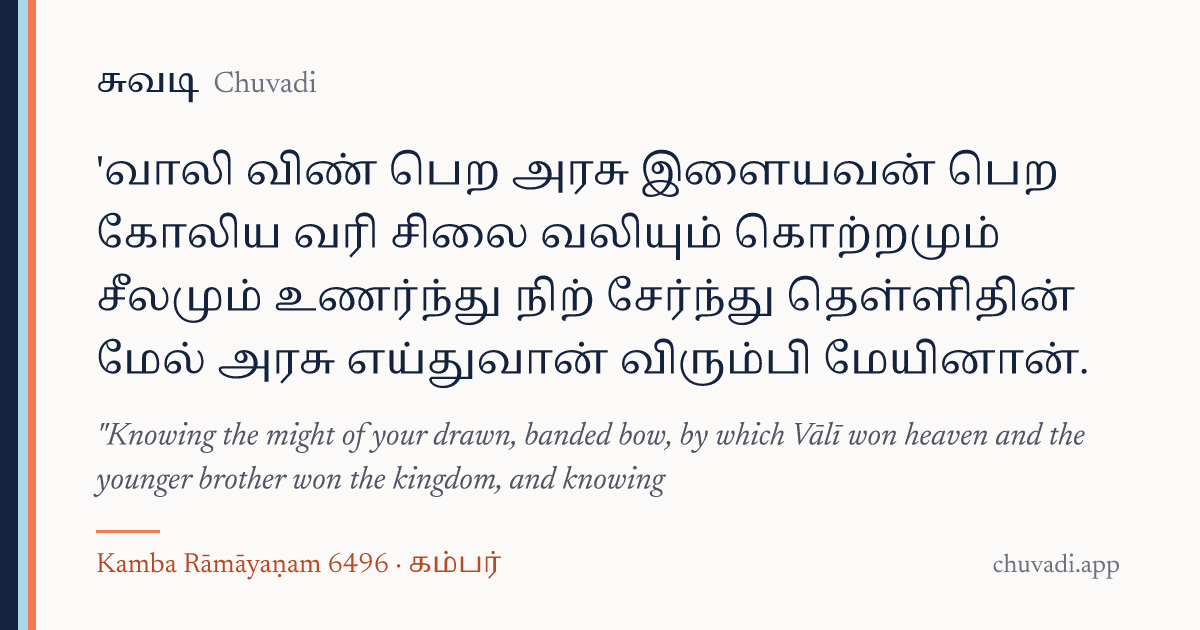
வாலிவிண் பெற - வாலி விண்ணுலகு சேரவும்; அரசு இளையவன் பெற - அவன் தம்பியான சுக்கிரீவன் கிட்கிந்தை ஆட்சியைப் பெறவும், கோலிய வரி சிலை வலியும் - வளைந்த நின் கட்டமைந்த வில்லாற்றல் பற்றியும், கொற்றமும் சீலமும் - அதன் வெற்றியைப் பற்றியும், சீலத்தைப் பற்றியும், உணர்ந்து - இந்த வீடணன் தெரிந்து உணர்ந்ததால்; நிற் சேர்ந்து - உன்னை அடைந்து; தெள்ளிதின் - தெளிந்த ஞானத்தால், மேல் அரசு எய்துவான் - மேலானதாகிய வீட்டரசைப் பெறும் பொருட்டு; விரும்பி மேயினான் - விரும்பி இங்கு வந்தடைந்தான்.
மேல் அரசு எய்துவான் என்ற தொடர் எதிர்காலத்தில் இலங்கை அரசை அடைவதற்காக என்ற கருத்தையும் உட்கொண்டுள்ளது. தெளிந்த ஞானம் உடைமையால் வீட்டரசை விரும்பி வந்தானாவான் என்பதை "மேலரசு எய்துவான் விரும்பி வந்தனன்' என்றான். இராவணனையும் தோல்வியுறச் செய்த வாலியைக் கொன்று, சுக்கிரீவனுக்கு ஆட்சியை வழங்கிய ராமபிரான் இராவணனைக் கொன்று தனக்கு இலங்கை அரசைப்பெற உதவுவான் எனத் தெளிவாக உணர்ந்தே வந்தான் என்பதும் ஒரு பொருள். வைணவ மரபுக்கும் வீடணன் பண்புக்கும் அரசாட்சி ஆசையை முன்னிறுத்துதல் பொருந்தாது; எனினும், உலகியல் மட்டுமே கருதுவோர்க்கு அவ் ஆசைபற்றிய நினைவு இருக்கும் என்பதைக் கம்பன் சொல்லாட்சி புலப்படுத்துகிறது.
ஆங்கிலம் · English translationAI
Translation
- "Knowing the might of your drawn, banded bow, by which Vālī won heaven
- and the younger brother won the kingdom, and knowing
- your victory and your virtue, he has come to you, and with clear understanding,
- longing to attain the higher kingdom, he has arrived."
What the poem says
Aṉumaṉ explains Vīṭaṇaṉ's motive. He has heard how Irāmaṉ's bow sent Vālī to heaven and gave the throne of Kiṣkindhā to his younger brother Cukkirīvaṉ, and he knows Irāmaṉ's power and goodness.
"The higher kingdom" carries two meanings. Spiritually it is liberation, the kingdom of release that a devotee seeks by surrendering to the Lord. In worldly terms it hints that Vīṭaṇaṉ may expect to rule Ilaṅkai after Irāvaṇaṉ, just as Cukkirīvaṉ gained his throne. The commentary notes that the devotional tradition stresses the first sense.